In Camouflage, director Jonathan Perel circles around his subject, Argentinian writer #Felix Bruzzone#, in the same way, the writer jogs around the site of Camp de Mayo, a notorious Argentinian concentration camp: circumspectly and with a vague sense of dread.
This is a film that almost does not dare enter the depths of the dark territory that is its subject matter.
Campo de Mayo
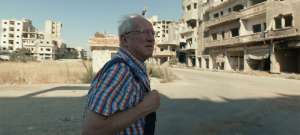
Bruzzone, a wiry man in his late 40s with a head of unruly dark curls, was a toddler when the #military junta# seized his mother in the mid-1970s. Taken to Campo de Mayo, she was never seen again. Her family know nothing of her fate, when or how she died. Only that she – like 30,000 others – never came back.
The grandson of post-war Yugoslav immigrants, Bruzzone knew only that his mother disappeared during the darkest days of Argentina’s military rule of the time.
Only when he buys a plot to build a house close to Campo de Mayo, 19km northwest of #Buenos Aires#, does he learn of its past.
The vast area, bisected by roads open to traffic during the day – provided cars do not stop – is still off-limits, patrolled by soldiers. That does not stop Bruzzone’s curiosity from drawing him ever closer to the wild terrain behind the fences.
Only when he buys a plot to build a house close to Campo de Mayo, 19km northwest of Buenos Aires, does he learn of its past.
The fringes
Camouflage opens with a long (several minutes) shot of Bruzzone running around the fringes of the camp. It is followed by nearly 10 minutes of him speaking with an elderly relative about his mother; for the uninitiated, this is a difficult introduction to a peculiarly personal film that darts closer and closer to its subject without ever really revealing anything more than the director’s apparent fear of going deeper.
It is not easy watching, and the director risks boring a casual viewer with his approach – Bruzzone is in every shot, and often he is running as a flow-of-consciousness narrative runs over the film.
There is little here that tells us much about why Bruzzone’s mother was taken, the context within which she was seized, or why the military still half-heartedly guards a largely abandoned military station that housed the concentration camp.
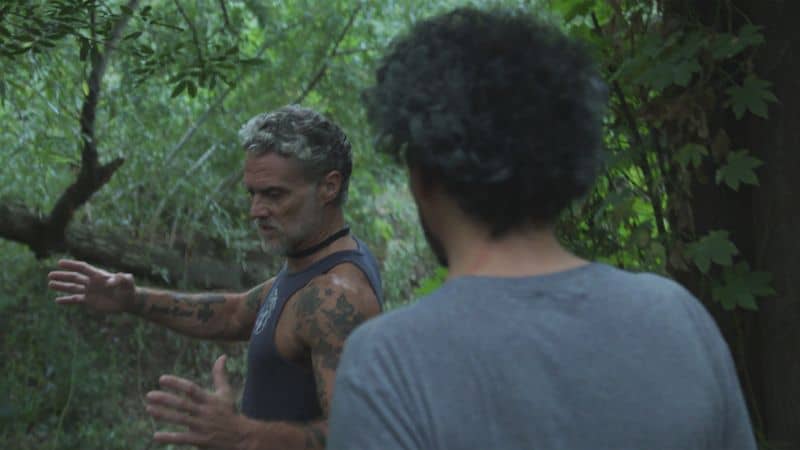
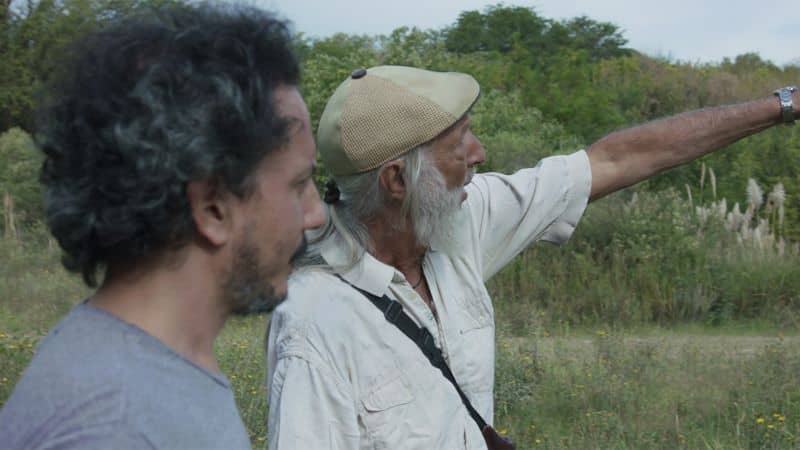
Bruzzone’s fear and loathing take up much of the film, along with lengthy digressions into possible future uses for the old camp: a palaeontologist wants to turn it into a nature reserve-cum-dinosaur park; a local estate agent wishes to sell development plots on its fringes, emphasising its ecological features. There are local women involved in an arts project who enter to explore ruined buildings, and even a woman who collects earth to sell to tourists who still gather for the weekly observation in Buenos Aires of a ceremony by relatives of the disappeared.
Bruzzone gathers his courage for increasingly lengthy forays into the overgrown territory, jogging alongside a friend who says he has been «warned off» entering the territory «thousands of times», but the soldiers stationed only ever politely tell him to leave.
A former inmate talks a little about her time there but mostly discusses how she was elected president of an association that set up a memorial.
Bruzzone dons virtual reality goggles, and we see crude cartoon images of huts with mattresses strewn on bare floors where only grass and trees flourish today.
Dispeling demons
There is no discussion of what went on in the camp, who was sent there, for how long, and why. Indeed, there is barely any context beyond the knowledge that Bruzzone is seeking to dispel his demons as he enters and re-enters the forbidden territory.
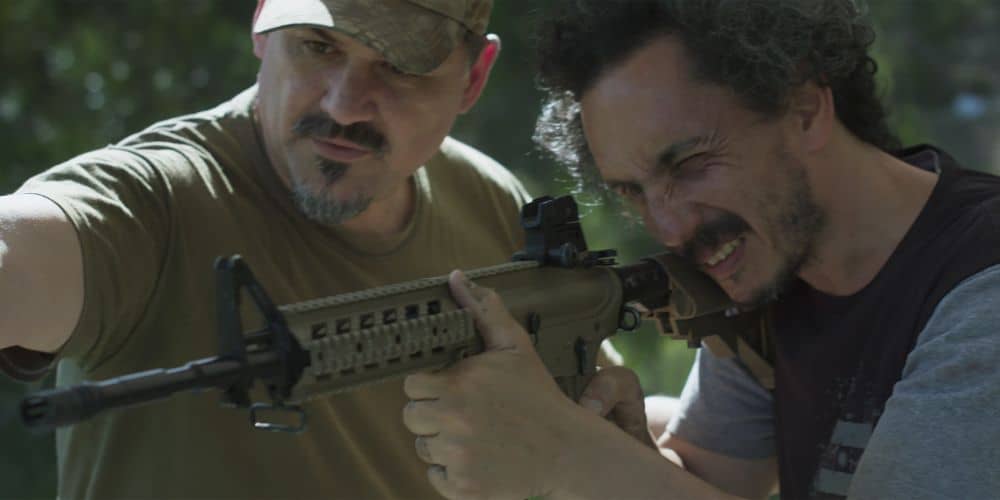
Although, at some levels, the film is oddly affecting – such as when the Bruzzone takes part in a «Killer Run» organised and patrolled by military police (and bizarrely at one point is instructed in how to fire an automatic rifle – though whether this is part of the fun run or not, we are not told) – and he later discards his «Killer Run» tee-shirt and competition medal in a skip – the film leaves one with an odd sense of ennui.
Perhaps that is the point. He can never know what happened to his mother. A passing reference to bones found in the old camp’s soft dirt (presumably human remains) is never followed up on. Quite what his purpose is remains unclear. Just like the last days of his mother, who, like so many of her generation, was simply «disappeared» by a dictatorship. And to what ends they disappeared, and how that has affected Argentina to this day, also remains unclear.