In 2027, a collection of recordings will be released to the public via the US’ National Archives. The recordings, audio #surveillance of Dr. Martin Luther King Jr, may very well prove a substantial shift within the court of public opinion (at least among the current alt-right sympathising population – a number higher than many of us understand). They will not, however, influence the historical legacy of this monumental figure of world history – the premier champion of #Civil Rights#, as well as a staunch supporter of the non-violent approach to protest.

«Fear of a Black Messiah»
Between 1955 and his untimely death in 1968 via an assassin’s bullet (although, questions remain: with such constant surveillance how could a potential assassin go unnoticed?), Dr. King was the undisputed voice of the #African American# struggle for equality and dignity within the ongoing American experiment. A charismatic member of the baptist seminary, Dr. King would eventually become a Nobel Laureate, bringing international exposure and solidarity to his mission, as well as the plight of those he represented. His prominent appearances were many – The March on Selma, Montgomery Bus Boycotts, and the March on Washington, to name but a few – and his tangible accomplishments undisputed – integral in the passage of the 1964 Civil Rights Act and 1965 Voting Rights Act. Yet, despite accolades that would make even the most prominent historical titans jealous, he was, of course, a Black man. And, in America, whether in 1618, 1776, 1862, 1964, or 2020, that means being a continued outsider to the white supremacist mechanisms, institutions, laws, and policies of your own country.
Throughout his career, Dr. King was the subject to audio surveillance via J. Edgar Hoover’s #FBI and a squad of G-Men (white, athletic former fraternity brothers or football players) who made up the bureau’s grunts. Hoover once called King «the most dangerous Negro in America» and that he (Hoover) had a «fear of a Black Messiah». These sentiments, coupled with Hoover’s mission to present King as morally unfit to be a leader (of any description), resulted in a pervasive and widespread imposition on his freedoms via phone taps, embedded informants, and even more nefarious means (an FBI helmed letter under the guise of a disenfranchised King supporter urging suicide). One can ask, however, what could a minister, intellectual, and freedom fighter possibly do to sully their name in the eyes of law enforcement? For Hoover and the FBI, the answer stands in the demonizing and humiliating tactic in targeting Black male sexuality.
Hoover once called King «the most dangerous Negro in America» and that he (Hoover) had a «fear of a Black Messiah».
As old as its history
Though Dr. King was an honourable man, it is known that he was also an adulterer. As the FBI increasingly caught wind of these activities, they sought to exploit them, both within the King home, as well as amongst the millions of supporters who saw him as a beacon of dignity. Their goal was to paint Dr. King with the brush of sexual deviance as they had done to so many others. Of course, the demonization of Black male sexuality is also nothing new. It is another dynamic as old as the country itself. As the only race enslaved on the North American continent, even emancipation did not bring the kind of dignity afforded to others. The conservative movement painted Black men as sexual predators, unable to control their own libidos, thus posing grave threats to white women everywhere. The horrific murder of 14-year-old #Emmett Till# in 1955, lynched for allegedly whistling at a white woman (the woman has since admitted her claim was false), is but a single example of this shameful history. To this day, pop culture extrapolates on this sentiment as well, whether directly or otherwise, in a constant suggestion of sexual virility amongst Black men as unnaturally aggressive and a linear narrative where Black political aspiration presents a sexual threat (think about the prevalent depiction of Black male genitalia as somehow being hurtful, if not completely unnatural in its form). It is interesting, though, that Hoover, a closeted #homosexual, transvestite, and staunch #conservative #Christian would assume such tactics for these reasons but such are the contradictions that lay at the heart of America.
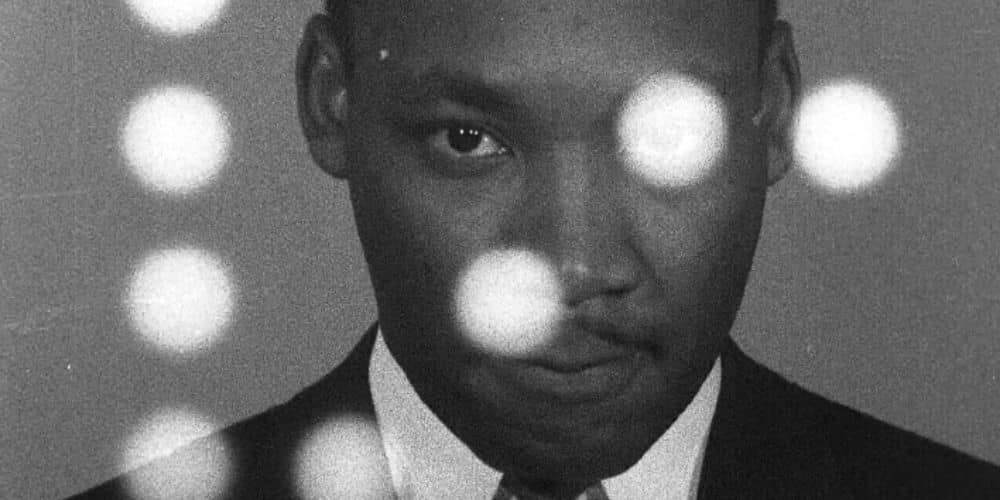
Sam Pollard’s documentary MLK/FBI, screening as part of Porto/Post/Doc‘s «Highlights» programme, constructed from archive footage and voice-over interviews, holds the distinction as the first film to uncover the sheer extent of this harassment by the FBI. The film traces Dr. King’s life, juxtaposing it with an explanation surrounding the #paranoia, concerns, depictions, and pseudo deifications of law enforcement officials in America with timely urgency. It shows Dr. King in all his righteous glory, but also clearly depicts the contested ideals that continue to spill over within the American (and #colonialist West) dynamic.

A clear line
These days, surveillance seems like a given throughout society. Not even speaking about the world’s autocratic states, the West sees its fair share as well. #London, for example, is the most surveilled city in the world. In recent American history, whistleblower #Edward Snowden# showed the extent it was practiced on everyday citizens via the National Security Agency, as another. On a more theoretical level, big technology utilizes data-driven surveillance as integral to its business model – #algorithms, ads based on search behavior, data harvesting ala Facebook/Cambridge Analytica, et al. Yet, the very idea of surveillance runs contrary to the democratic ideals of the West, and the insatiable claims/demands of freedom frequently spewed by its very perpetrators. This is the message at the very heart of MLK/FBI. It is one attempting to define this contradiction through the narrative of Dr. King’s life, accomplishments, transgressions, and ideals. In using such a prominent figure of history as its foundation, Pollard is able to draw a line directly through the systematic oppression of the African American, while clearly defining the subliminal tactics at play within that worldview.
Like all of us, Dr. Martin Luther King Jr was not a saint, nor a savage. He was a man, both determined and defiant, noble yet flawed, but resilient throughout. His friend, the recently deceased Georgian Senator and March on Selma co-organizer, #John Lewis# spoke in his own memoir and documentary about «Good Trouble» – the kind where breaking the law (non violently) is ultimately motivated by the better angels of our nature; where defiance against power in the name of equality and progress should yield virtue, not scorn. In the FBI’s determination to harm King’s character, despite the pain, discomfort, and problems it may have caused, it counts as overwhelming support toward the value of Dr. King to history and the value of such troublemakers. When those in power seek to destroy you, you are doing something right.