Budapest, #Hungary: 28th May 2020. More than 3,000 people demonstrated in the city centre as a protest against what they dubbed «Gypsy crime.» Their outrage sparked by the deaths of two young men on the streets of the capital the week before, reportedly stabbed by a youth of #Roma background. Prominent among the organisations taking part in the demonstrations was #Mi Hazánk#, a #far-right political party, whose name translates as «Our Homeland.» And the demonstrations — not much «social distancing» being practised — looked and sounded very much like the marches and rallies which have become a familiar part of the European landscape over the last decade or so. Black attire; red hand-held flares; nationalist slogans; flags on long poles; a preponderance of short-haired, stocky males in their twenties and thirties. The languages and the flags may change from #Ukraine to #Greece to #Serbia to #Germany to #Italy to #Slovakia to #Russia, but the manifestations of #nationalism, usually, and somehow, allied to besuited populist parties, essentially speak with one strident voice. But just who are these people?
ONR
Seeking to personalise and thus gain a greater understanding of this phenomenon, Polish student filmmaker Michał Edelman spent six months with members of #ONR (Obóz Narodowo-Radykalny) — «National Radical Camp» — one of his country’s most high-profile far-right groups. His production was made under the auspices of the internationally renowned film school at #Łódź, whose illustrious alumni include the director’s father Pawel, an Oscar-nominated DoP best known for his collaborations with #Roman Polanski# including on The Pianist.
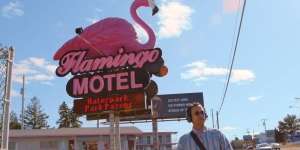
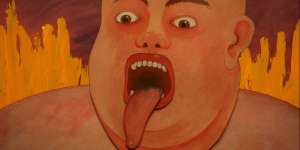
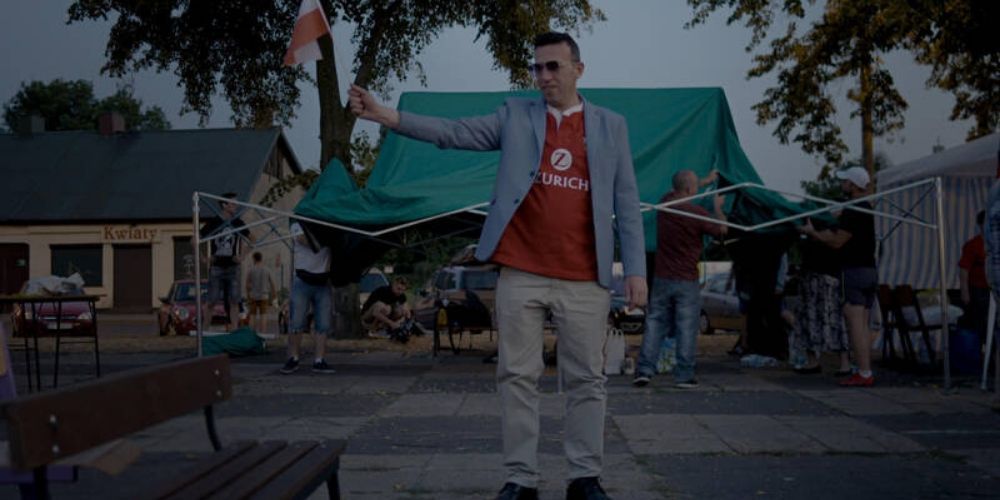
As with many European cities where far-right parties have found particular support, Łódź is a former industrial hub that has fallen on economic hard times in the last few decades. Edelman focuses mainly on ONR members from the area, interviewing them in their homes. These include regional co-ordinator Marek, a chatty and cheerful sort who from certain angles resembles John Waters regular Divine (sans make-up and drag, of course.) In between the talking-head footage, we observe ONR groups «in action» in the provincial city #Radomsko, where they turn up to oppose a #Pride march, and twice in #Warsaw, where they gather with like-minded sorts to commemorate the anniversary of the city’s #WWII uprising in 1944, and—in the film’s climactic section, the only one featuring soundtrack score — national independence day on November 11th.
The latter annual commemoration has gained increasing global attention in the last few years, as it has become synonymous with raucous manifestations of nationalism from organisations such as ONR. The right-wing Polish government attracted criticism in 2018 when its representatives marched alongside extremist groups. Edelman’s film delves behind the headlines and news-footage; he walks a tricky line that experienced documentary-makers often have trouble successfully navigating, and which is an audacious undertaking for a director at the start of his career.
As with many European cities where far-right parties have found particular support, Łódź is a former industrial hub that has fallen on economic hard times in the last few decades.
Observations
As well as the issue of providing the nationalists with the oxygen of publicity — and what could be seen as the «endorsement» of being considered sufficiently important and interesting to be the focus of such extended reportage — the film also adopts the somewhat questionable strategy of allowing its participants to expound their reactionary views without a word of challenge or query. Early on, middle-aged Andrzej, a softly-spoken sort in a one-on-one interview, is presented on a coach trip making insulting #anti-Semitic remarks about how Jewish people are all «cockroaches.» This is brought up only in the closing moments, when Marek poses questions of his own to Edelman and the director mentions how uncomfortable he felt during this particular juncture, being himself of Jewish background. Previously a cocky hard-liner, Marek now adopts a more conciliatory approach: «you’ve got to be a human» is his final comment, and indeed the last line in the film.
At such moments viewers may feel impatient for Edelman and his off-screen collaborators (who include his brother Maciej) to engage Marek and the other ONR individuals in some kind of proper debate. But Last Knights of the Right Side largely operates on the level of detached journalistic observation; not quite fly-on-the-wall, instead with more of «embedded» approach. Dealing with people very wary of (and quite sophisticated in their suspicion of) regular media, film-student Edelman opts for a non-confrontational mode, seeking to maintain the trust and even the protection of individuals with whom he palpably feels very little in common.
Last Knights of the Right Side largely operates on the level of detached journalistic observation
Harder than it looks
Maintaining this level of trust—crucial to the intimate access gained by the filmmakers is harder than it looks, and the personal risks run by Edelman are not to be underestimated. His method is risky and requires a bravery which could, from some angles, be construed as foolhardiness. And while there is the uncomfortable feeling that ONR could actually be rather pleased with, and even proud of, their presentation in this film, the reality of the situation is that the picture will mainly find circulation among those already firmly predisposed to reject the political philosophies expounded therein — and who will appreciate the psychological insights Edelman’s reticent, ostensibly sympathetic stance intermittently unearths.