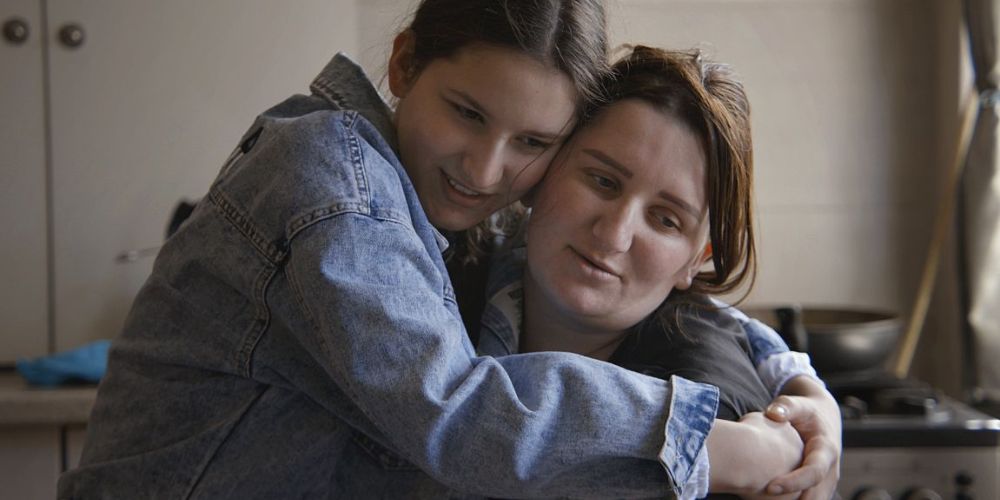
There are many different ways for women’s bodies to be exploited. It begins in the entertainment industry, such as working behind a bar, followed by prostitution or organ sales, and finally surrogacy. The latter is the central theme of Keteven Vashagashvili’s documentary 9-Month Contract, which is now screening in the International Competition at the Sarajevo Film Festival.
$14,000
Zhana lived on the streets of #Tbilisi with her daughter Elene for years. Her attempts to find steady work failed because of her #homeless status. She never experienced motherly love. She lived in orphanages for a time and then struggled from job to job until she gave birth to a daughter. When her daughter was 4 years old, the filmmaker met them. She immediately appreciated Zhana’s personal strength and authenticity. She managed to find accommodation for the two, but their precarious status in daily survival didn’t end there. Taking advantage of the job opportunities, Zhana was now physically exhausted. Night shifts at the supermarket were no exception.
But their income isn’t enough. The mother wants to do everything she can to spare her daughter a fate similar to her own. A good education is the focus of their intimate and affectionate relationship. Elene is supposed to study, ideally to become a lawyer. Her daughter doesn’t disappoint her, bringing home excellent grades. She is a bright and active child who, at the age of four, already teaches her mother how to draw a moon.
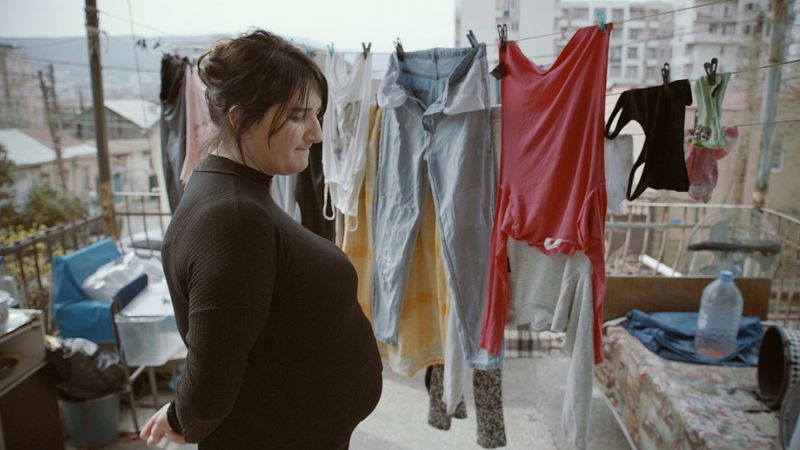
Zhana sees only one way to give her daughter a real future. She becomes a surrogate mother. She is paid $14,000 for the nine months. Because Zhana repeatedly uses this option, she becomes increasingly physically degraded. At the same time, she continues to work at the supermarket, even while heavily pregnant. During her fifth pregnancy, she lost her uterus. She tries to hide her pain from her daughter so as not to worry her. But Elene is too alert to be fooled and tries to guide her 29-year-old mother down other paths, such as going back to school and getting a degree, which is exactly what she expects of her as a daughter.
Keteven Vashagashvili accompanies the proceedings with sporadic off-screen commentary, apart from an introductory passage. She doesn’t hide her presence in the room either. After all, she has become a friend of this dedicated mother. She even accompanies her mother and daughter for a few days by the sea or in the snow. Zhana does everything she can to offer her daughter a life free from fear.
Vashagashvili’s work opens up to a wider political panorama the moment it becomes clear that the agency exploiting Zhana hasn’t even provided her with a contract; more than that, it now demands that she pass off the newborn as her own children to avoid trouble with the authorities and travel to London with her fake husband, where she will stay for three years.
Because Zhana repeatedly uses this option, she becomes increasingly physically degraded.
Hostile social status
Surrogate mothers enjoy a hostile social status in Georgia as people who sell their babies. Therefore, they usually live in secret. The status of surrogate mothers is legal in Georgia, but not regulated. There is a lack of emotional or physical support. The biological parents predominantly live abroad and take advantage of affordable surrogacy options in Georgia. It is estimated that approximately 1,000 births occur annually under these circumstances.
Zhana is now forced to seek help. She turns to the women’s rights organisation «Sapari.» They assist her in filing charges. This leads to severe verbal attacks from the sperm donor, who also uses his resources to persuade the hospital’s lawyers, who were aware of the surrogacy, to testify to the contrary. Even if this fails, the case is ultimately reduced to the issue of compensation and dismissed, while Zhana and the women’s organisation effectively want to sue the surrogacy agency and force it to cease its activities to avoid a similar fate for other women. The agency had previously offered Zhana $30,000 for the sale of a kidney. Zhana is also barred from filing a civil lawsuit because she lacks sufficient evidence of her payment and does not know the whereabouts of the child she carried.
Keteven Vashagashvili leaves it unclear whether the difficulties with the agency and the authorities that ultimately manifest here hadn’t begun earlier. She ends her film with two optimistic sequences. Zhana returns to school, and Elene, now almost an adult, is seen participating in a pro-European demonstration in front of the parliament building. Her gaze seems to open, fascinated, to other realities. Only at the end of the film does music play a role, and a song composed by Vashagashvili plays, which unfortunately isn’t subtitled. Otherwise, no background music or sounds are used.
Personal experiences
Keteven Vashagashvili’s particular interest in #motherhood is also based on personal experiences. While working abroad, she herself was physically separated from her son for a year. In her documentary Online Mothers (2020), she explores similar fates of mothers separated from their families, often for years due to precarious financial circumstances. For Zhana, this would be an incomprehensible decision. Children, she insists, need their mother above all else, even if they have to live on the streets.
Social and human rights issues remain the focus of the filmmaker, who now lives in Georgia and works on online platforms as well as local and national TV channels.