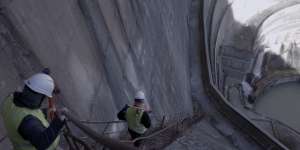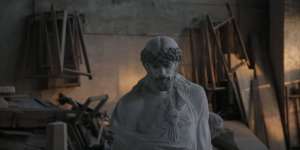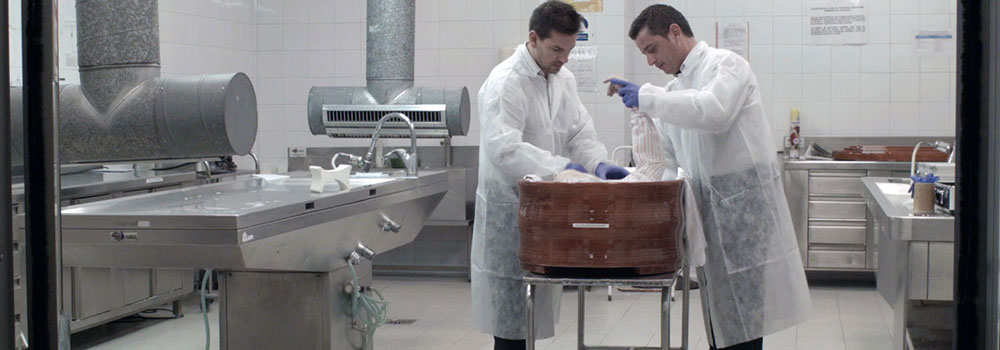
Filmed over a period of one year, #Miguel Eek’s# new film is a portrait of life as usual at the large cemetery de Palma, Palma de Mallorca. This might not sound like much, but this observational documentary has humor and depth and is so much more than its synopsis can promise. Seen through the daily life of its workers and the people who come to visit or say goodbye to their loved ones, #City of the Dead# is essentially a warm and fear-taming portrait of the human condition surrounding the last important landmark in everyone’s life: the end of the line.
Team work
The camera explores, with nuance and feeling, the reality of people who spend their workdays dealing with what most of us tend to avoid thinking about: the knowledge that we all eventually die. Yet in the company of Jose (the sales agent meeting with families that come to arrange funerals), David and Sergio (the undertakers), Jaume and Mohammed (the gardeners), Jose Luis (from the crematorium) and Manuela (who does the cleaning), the reality of our impermanence becomes surprisingly less frightening and only human. Sometimes dramatic and often humorous, their daily routines and interactions often take place in the company of the deceased, yet witnessing this makes one realize just how necessary, unavoidable and also meaningful their work is.
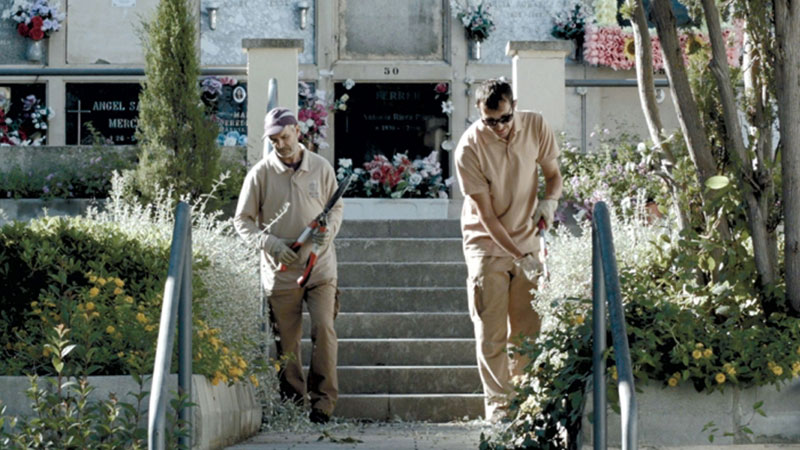
Day in and day out, managing the graveyard is teamwork. There are routine and idle moments, some days are busier than others, and there is traffic to be managed around All Saints Day when everyone comes to visit their lost ones. As it seems, dying does require some hands-on preparations and some admin work, and there are numerous decisions to be made. The cemetery seems to operate like any business, with an offer for everything, from clothing to music to a final resting place – all with a price tag attached. Jose – the sales agent – speaks to each family in a low voice. He seems to have a catalogue for everything. And all the questions and choices seem like reality strike intermezzos in the blur of a dramatic event. Should the deceased be cremated or buried? Should there be a Christ on the coffin? If there is music, should there be a singer or should there be more?
Event planning
In common terms, what the cemetery staff does is event planning. They help prepare the last important event in a person’s life, and that implies many aspects to be discussed, but also a degree of gentleness for the families involved. Watching Jose at work builds up a larger picture. It reveals that saying goodbye to a loved one feels so unique and personal to the ones that go through it, but it is something all families end up going through, a universal human experience, and unavoidable.
The humanness of all the interactions, the humor, routines, and magical thinking that surface from the dialogue – they all inspire empathy and a surprising sense of calm. Having seen it all, one would expect the cemetery employees to act numb, detached or at least blasé. But this is clearly not the case. They seem to keep a healthy degree of dark humor and seem to have endless patience. An important part of their job is to listen to the stories they are told, and in their raw moments, people do want to talk, recalling stories and memories, their words without a filter, part just wanting to be heard and part hoping to be reassured.
It comes with the territory
Incredible stories of seeing angels or feeling the departed nearby come with the job description. Comforting someone who came to see her grandfather’s grave as a tribute to her father, as she is facing her own imminent death, comes with the job too. Dealing with the dead professionally means actually dealing with the living, people in a vulnerable moment in which masks.
The after taste of the film is a sense of a commonly shared human experience surrounding the departure of someone loved.
The after taste of the film is a sense of a commonly shared human experience surrounding the departure of someone loved. This realm links life and death in a surprising and indistinguishable bond. The cemetery is a micro-city within the city, populated by all sorts of people, dead or alive. And its entire portrait is richer than the sum of all the people there, people who loved and have been loved, in a place managed by a handful of characters, as the buzz of the city outside of the cemetery’s walls goes on with life as we know it, undisturbed.