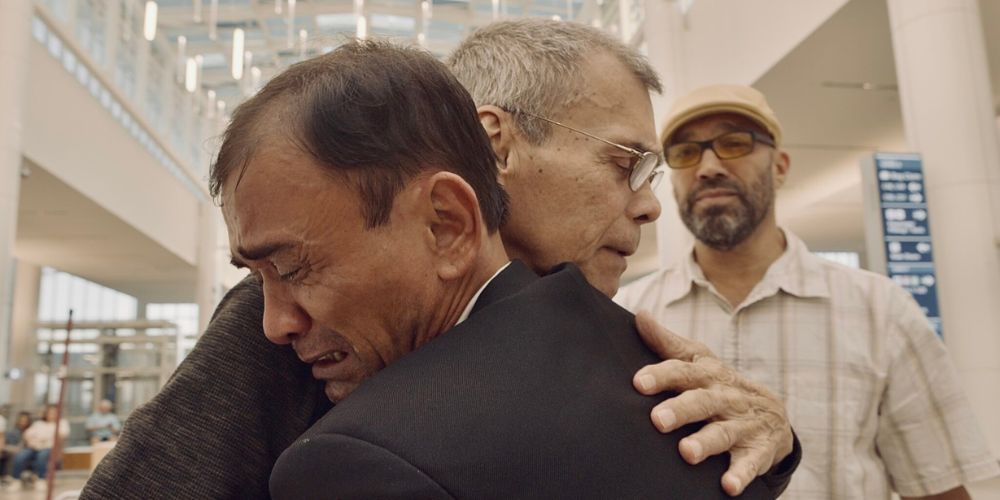
Sang Ngo Thanh was born in 1967, at the very peak of the #Vietnam War#, to a Vietnamese mother and a USA soldier. Child of Dust is a story of his life. This feature doc premiered at the Thessaloniki Film Festival in March this year. Its director, Weronika Mliczewska, has just won the award for Best Film Director at the Kraków Film Festival. The film is not only timely with the 50th anniversary of the end of the war in Vietnam but also a bitter reminder of humanity’s incapacity to learn from mistakes.
The consequences of war
Produced by top-tier producers from five different countries, it stands out for its exceptional production quality, beginning with outstanding archival material, particularly poignant black-and-white recordings of Vietnamese civilians, mostly children, during the war. Their frail, poorly clad bodies and big eyes visibly enlarge the range of the casualties of armed conflicts – the war affects those who don’t participate and reaches far into the future. Like 50 and more years forward, when Sang, now 55 years old, through a DNA test and with the help of a USA-funded program, found his biological father and moved to the America.
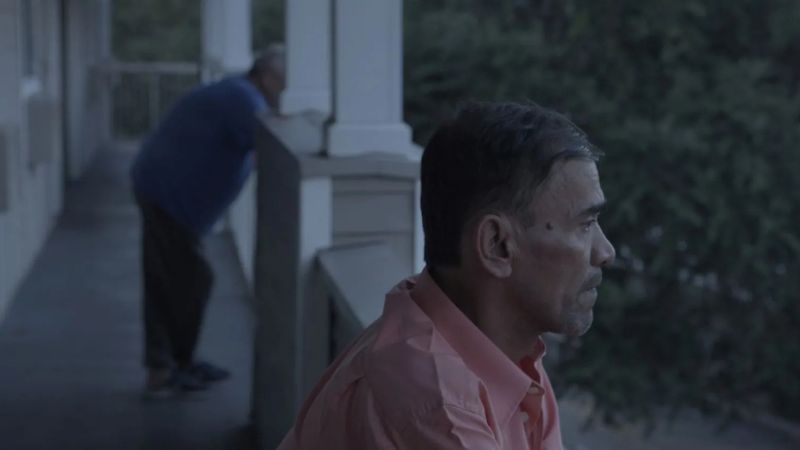
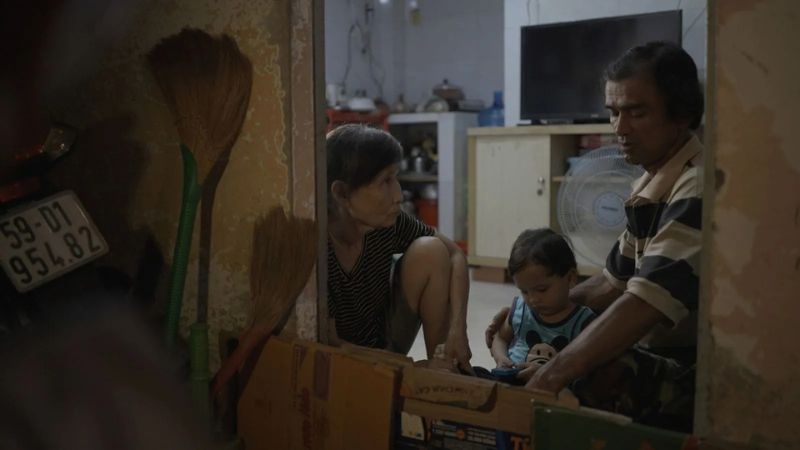
Mliczewska’s outstanding observational sensibility and her attentive visualisation of tactility result in a unique representation of similarity and difference. Such as Sang’s spontaneous touching, with naked fingers, of the tiles that cover the floor where he and his family live, eat, and sleep in his Vietnamese home. And his meticulous endeavour to clean, with a white towel, the apparently fresh bed and pillow sheets in his motel room in the USA. Similarly telling is the parallel established between Sang and his newly found father in their eagerness to develop intimacy and show warmth and care towards their children and grandchildren – something they were both deprived of as sons due to their emotionally and physically absent fathers.
The film is not only timely with the 50th anniversary of the end of the war in Vietnam but also a bitter reminder of humanity’s incapacity to learn from mistakes.
Amerasians
The day and month of Sang’s birth remain unknown. His father returned home from the front in the same year he was born and suffered the traumas of war ever since. His mother was sent to a reformatory and later died. Her brother took over her son but, unable to provide for him, gave the baby into foster care. His foster parents abused Sang and forced him to work from an early age. He never had the chance to attend school, and at the age of 14, he escaped and began living on his own.
American soldiers, we learn at the start of the film, left behind hundreds of thousands of children born to Vietnamese women. An entire community of people without identity, called #Amerasians. Many times in Child of Dust, people repeat that in Vietnamese society, the father means everything, and if a child has no father, their life has no worth. Mliczewska’s close observation focuses on Sang’s endeavour to break this stigma, from his regular performance of religious rituals to putting on a fresh shirt before starting masonry work and his concern for his estranged daughter. But, most of all, his loving care for her newly born son, Sang’s grandchild, whom she had abandoned and was now living with his grandparents. Through this attentive and respectful portrayal of the contemporary wretched of the earth, the director conveys another parallel: that of war and the common people’s struggle for survival.
The Birth of a Hero
Most Amerasians never found their American fathers, and those who did were often rejected by them. Sang was lucky. From the start, we hear him complain that he never belonged anywhere and that nothing is more painful than not having a father. We also see his desire to know what it feels like to have a father fulfilled. Part of the outstanding production quality of Child of Dust is a firm, intelligent script that makes it comparable to the best feature films: its protagonist undergoes a transformation that makes him a hero. In his early prayers, Sang Ngo Thanh pleads with his dead mother to help him find his father. Eventually, he obtains his father’s name and learns English enough to say aloud, «I am Sang. Sang Torres. I am American.» He takes a flight and moves to live with his American family. Yet, when there, he has to face another struggle – the struggle to bridge the gap between two different worlds and cultures. The outcome is expected, but given the traditionalist backlash of the last decades, this film’s cosmopolitan closure seems fresh and promising. One’s identity and belonging might not lie in genes after all, but in deeds and ties, one creates for oneself.