This year’s CPH:DOX offered a rich vein of psychedelic-inflected work – among them Phenomena, an immersive voyage through the science of natural wonders, and Daughters of the Forest, a sci-fi documentary following mycologists in Mexico celebrating the mushroom’s spiritual roots. But Marcel Wyss’s autobiographical film Open My Mind approaches psychedelics as a repurposed drug – a desperate but reassuring bid to repair mental health. Restrained in visual spectacle, the film is rich instead in its unguarded gaze – on one of the world’s most progressive legal frameworks for psychedelic-assisted therapy, and on one man’s brave, methodical pursuit of both a subject and his own healing.
Familial struggle
Open My Mind starts like an elegant urban indie film – a father and his two daughters in the car, on their way to visit the grave of an uncle who died from drug addiction. Shot facing up through the windshield against Basel’s grey sky, the girls talk, and their conversation gradually reveals how much they already know about his illness – and how sharply hostile they are toward addiction. For Wyss, the theme of substance abuse and mental struggle runs painfully close. His own uncle took his own life, unable to cope with addiction, and once his beloved brother died from the consequences of heroin use, it served as a final breaking point. Yet rather than reaching for the same cure his family members had sought, he never touched drugs. Instead, he developed a consuming hypochondria, exhausting himself with doctors’ visits and, more so, exhausting his own family. His wife appears in the film through a talking-head interview, walking the viewer through the slow unravelling of their marriage, and calmly articulates how increasingly hard it became to live with his sadness and his absence.
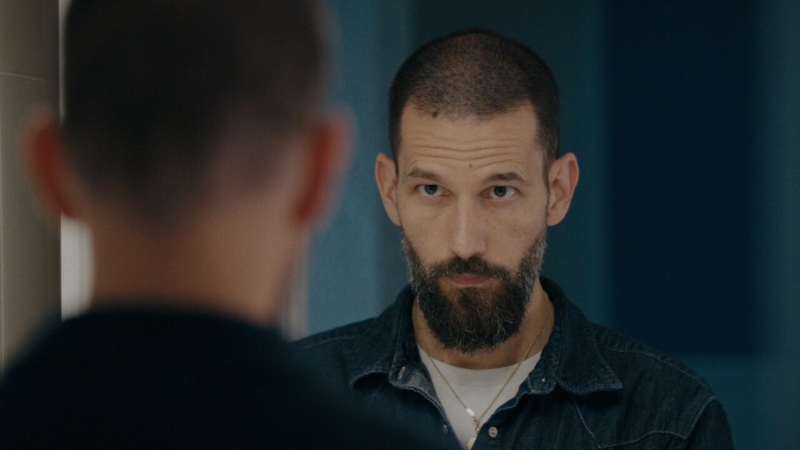
After years of conventional therapy, and even making films that processed the grief – a farewell to his brother (After the Fall), a portrait of cocaine culture (Work Hard Play Hard) – he decided on something more radical: psychedelic-assisted psychotherapy. Reading that the therapy could help people with deep-rooted fears, the prospect was as promising as it was scary. Positioning himself in front of the camera, he embarks on a journey of self-recovery and curious research.
It is also quite extraordinary, or even strange, to watch a camera be permitted inside such raw moments of mental openness.
Treating fear with fear
From the 1940s onwards, scientists fascinated by the brain’s capacity to shift into entirely different states pointed to its transformative potential for treating mental illness. But Nixon’s politics suppressed the research, and a growing narco-phobic stance that did little to prevent the opium addiction epidemic from spreading across Europe and the West in the years that followed. It took several lost decades before psychedelics returned to scientific research in earnest.
But it seems like progress is finally being made, as psychedelic-assisted therapy has grown rapidly in recent years. A new generation of researchers is filling university labs, generating studies and building a compelling case, for instance, proving how well MDMA-assisted therapy works for PTSD. In a few privileged countries, including Switzerland, this is no longer fringe. Making use of the legal route implemented in 2014, Wyss immerses himself in this journey, meeting a series of warm, articulate doctors who walk him through everything he has already anxiously researched. Chief among them, and his guide, is Peter Gasser, who offers a simple but essential wisdom – psychedelics are about dissolving personal borders, leaving the fortress of comfort and control in order to risk a new existential perception. All of this the director-character ultimately embraces, under the gaze of the film’s other two DoPs.
Open My Mind also offers genuinely interesting conversations with therapists about the drug’s legal grey zones and the deeper meaning of the therapy. Taking those capsules under doctors’ supervision, Wyss has to fight not only the intense anxiety of the experience itself, but also the weight of social stigma, the crude black-and-white understanding of drugs that dominates common perception. But when he takes the psilocybin capsule in the hospital room, he finally smiles and relaxes.
The Trip
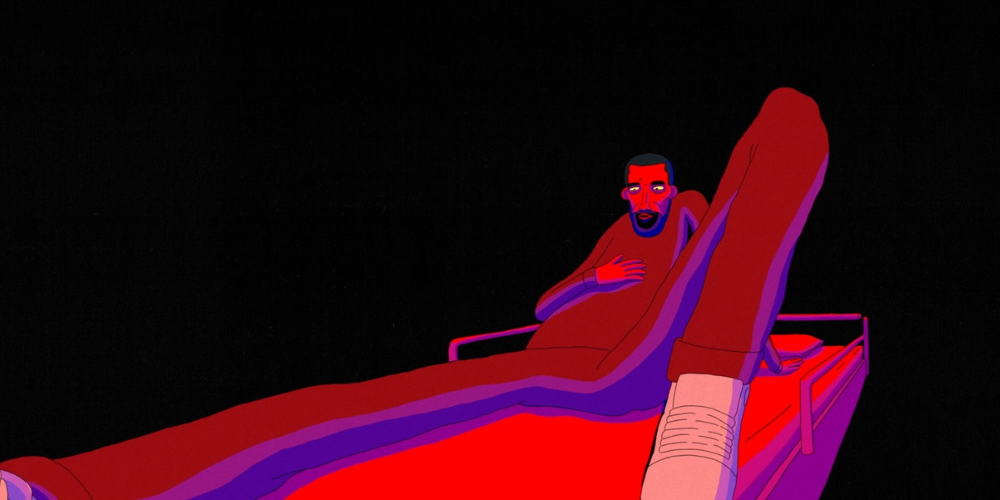
The film pays particular attention to the scenes with enthusiastic therapists, which were in fact the original core of the film’s concept, until it reshaped itself into a subjective essay film. The nature of this documentary mode, rooted in personal openness and artistic expression as a form of processing, emerged and deepened as the director’s journey progressed. To balance his personal overexposure under the omnipresent camera, the film turns to animation sequences. Where other films reach for animation to conjure the trippy spectacle of the drug itself, here it serves as a symbolic projection of his inner landscape, which the camera cannot reach.
What gives Open My Mind film its special force is not merely what Wyss discovers in his inner trips, but how far he is willing to go in pursuit of them, eventually reaching beyond the borders of Europe and his own perception of drugs. As a kind of ‘final boss’, both of the psychedelic experience and of the film itself, he ultimately gathers the courage for ayahuasca. Travelling to Ecuador to meet a substance so deeply bound to spirituality and indigenous tradition, it registers as the most formidable experience yet, one in which a frightening sense of spiritual death and rebirth seems embedded. It is also quite extraordinary, or even strange, to watch a camera be permitted inside such raw moments of mental openness. There are few faces, and more of the extreme vulnerability of bodies, with slightly surreal touches in the echoing sound and in post-production editing.
In a voiceover reflecting on this encounter, Wyss circles back to the same simple wisdom his doctor, Peter Gasser, offered early on. The experience can be mind-opening and existential, but the intake is only the beginning. The real effort is learning to integrate these lived impressions and insights into ordinary life. And that, precisely, is what aligns it with any other form of therapy – demanding, but with much to offer in return.