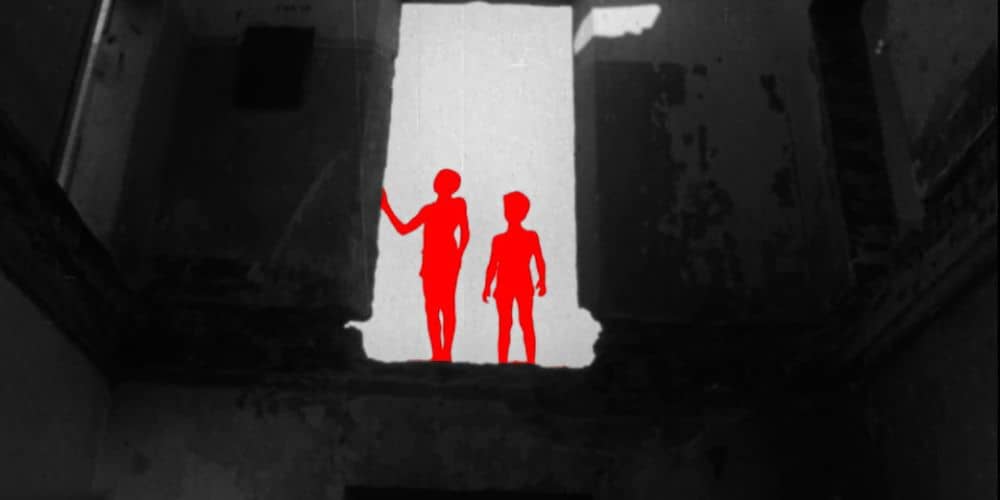
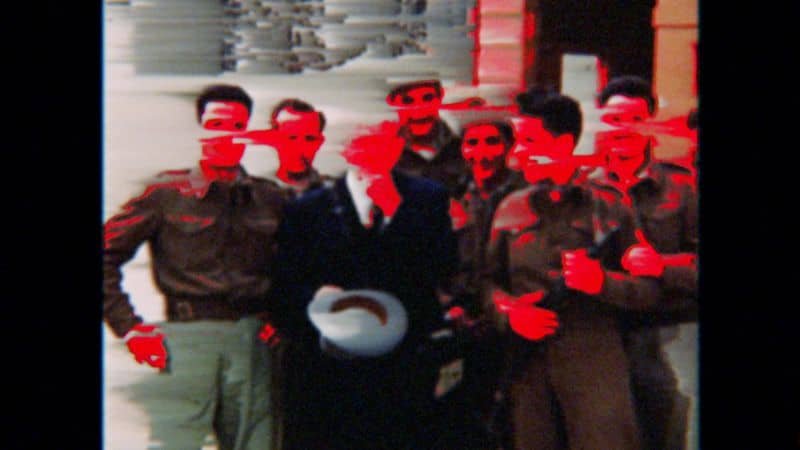
Kamal Aljafari’s big international co-production, A Fidai Film, a title that denotes sacrifice, the Palestinian anthem, and the long history of #Arab culture, is a postmodernist and postcolonial film monument aiming to preserve Palestinian history, presence, and perspective. Composed of the scraps of archival footage taken over by the Israeli military from the Palestinian Research Center in #Beirut in 1982, it features Palestine as seen by Palestinian cameras from the early 1920s until the 1980s. The footage is not only a witness to everyday life of the past, of its beauty and blood-stained cruelty, but also bears visible marks of behind-the-camera tribulations the film copies themselves went through. The cinematographic material is complemented by the author’s artistic visual interventions that, through the crimson red colour superimposed on certain fragments of pictures, deepen, symbolise, and allegorise the meanings, connoting all the ferocious events that are not documented and have since disappeared outside the film frame.
Reclaiming national memory
A Fidai Film is at once a political, artistic, and salvaging endeavour of reclaiming national memory and identity through copies of original archival materials, which have been captured by the power willing to erase their existence. The Palestinian Research Center was founded in 1964 as the official archive of Palestinian knowledge, history, culture, and identity. It ran its own publication house and gathered books, magazines, newspapers, historical documents, and films, acting as a library and cultural centre. Its headquarters in Beirut was plundered and destroyed by #Israel, which seized the whole archive and, until now, has kept it captive in an unknown location, except for its tiny part contained in 120 uncatalogued boxes returned as a part of a prisoner swap in 1983. Despite various official and unofficial attempts to recover the archive throughout the years, which all have failed, the archive is elusive and has grown to be perceived as a mythical, lost source of Palestinian heritage.
the archive is elusive and has grown to be perceived as a mythical, lost source of Palestinian heritage.
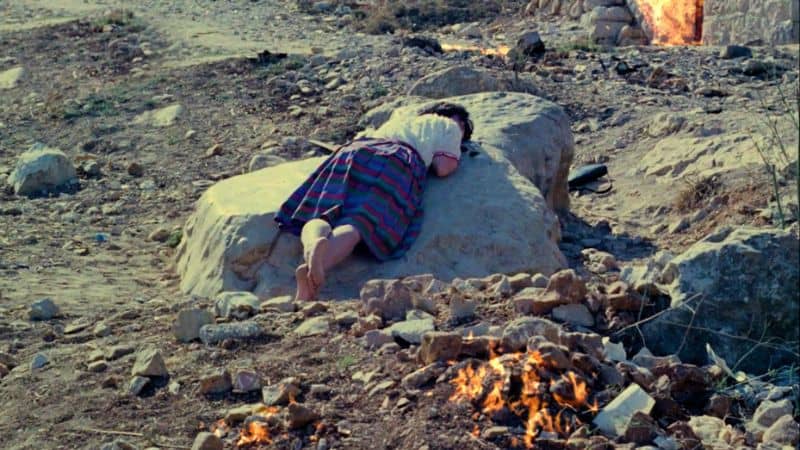
Infused with Ghassan Kanafani’s prose and Anis Sayegh’s memoir, the film cross-cuts between the distant past and the contrasting future, delineating the development of historical events and the capture of the PRC archive. It starts with pictures of Palestine’s peaceful and lively reality during the #Ottoman Empire#. The oldest archival footage is at times full of astonishing beauty, pristine nature, and a visible love of life, which contrasts with growing social tensions during British rule in the 1920s, rising fires, and shootings. The vivid streets change into refugee camps, ruins, wire fences, and destruction of Palestinian houses, mosques, and whole cities; the scenes of peaceful everyday life in various decades see Palestinians being pushed to the margin. The film rests upon the Palestinian archival footage as a groundwork for disclosing and affirming the historical truth, as «it is more difficult to foreclose the image and its effect of immediate presence,» as #Jacques Derrida# observes in his conversation on photography «Copy, Archive, Signature» from 2000. Shot throughout decades, the pictures testify to the generations of Palestinian cinematographers’ «reflection on temporal auto-affection in perception,» as Derrida puts it, as they pointed their lenses on events and phenomena that affected them—those they deemed important and worthy of memorising.
Derrida
The footage bears conspicuous signs of tear and wear, as well as various archival and technical inscriptions—descriptions of missing materials, skipping frames, time codes, gaps, overexposed frames, and the frames destroyed, full of scratches, and film bends. They reveal the usually hidden, behind-the-camera space of handling and preserving the film prints, the one that, in this case, is particularly portentous and ingrained in the history and politics of national memory, subjugation, and anti-colonial struggle. As Derrida describes it: «Art also enters into the development process, and to a certain extent, into the handling of data. […] In relation to the temporality of the shot, the objective reference, we find here the intervention of another temporality, of a certain context, of a signification.» The marks visible on the PRC Archive’s films speak of long years that have passed and the numerous hands, more and less careful, that touched them.
Through the various narrative levels, encompassing the archival footage, its technical state and archival inscriptions, and the crimson red overlap, A Fidai Film articulates an act of reclaiming the past and history that is in danger of erasure. It becomes a materialisation of Palestinian artists’ choice in reality because of the absence of the proper source materials. As Derrida explains: «It would be necessary to choose between art and death. Or else to choose between an art linked to technics, on the one hand, and on the other, an art that would exceed art and technê, while also fulfilling their authentic destination, in order to set into the work truth itself.» Such means make it possible to present and reconstruct a unique Palestinian perspective, identity, and memory out of scraps and fragments of the whole that has been colonised and intentionally kept away from the public sphere. With it, the film gains another meaning: «When photography becomes an art, there is a surplus-value of the archive […], and suddenly, photography thus becomes as ‘cultivated’ – in the sense of both culture and religious cult – as the book was before cinema and television, as writing by hand was before printing […]». A Fidai Film implements all these discursive tools to achieve the highest aim of preserving the national memory and becomes a cinematographic monument, a film–memento fighting for the life of Palestinian history and identity against death and disappearance.