The best scene for me in Before the Flood is when Indian environmental activist Sunita Narain turns the tables on Leonardo DiCaprio. The American presenter-producer has just shown jolting images of Indians shoveling coal out of open pit mines and described how vast numbers of Indians rely on coal as a source of pollution-causing energy. “If it was really that easy to move to solar then why hasn’t the US done so?” she asks. To which DiCaprio shrugs and meekly nods.
Unlike DiCaprio, Narain is the real thing. She is an out-there-in-the-field advocate who is credible and believable because she offers a nuanced, balanced understanding of the dilemmas involved with combating climate change. (see her blog at http://www.downtoearth.org.in/blogger/sunita-narain-3). She also is not afraid to confront an interviewer, even if he happens to be a world-famous Hollywood actor.
Before the Flood proudly advertises Academy Award winner Dicaprio as its star, but to me DiCaprio is more of a liability than an asset. He is not credible as an interviewer-journalist-presenter; and the way he exploits his celebrity status to gain access to interviewees and to draw an audience is a lazy-man’s approach to documentary filmmaking. No matter how personable and handsome DiCaprio may be, he is no substitute for ordinary people with real life stories to share about how they are affected by the consequences of climate change or for inspirational stories told by innovative individuals.
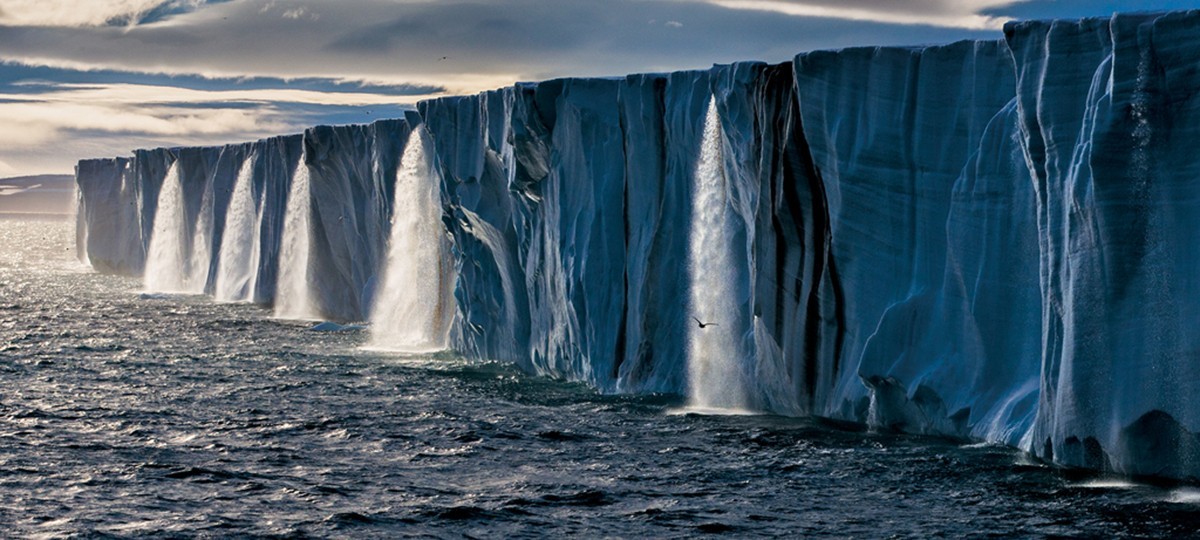
What the film does offer is a kind of world tour –through the eyes of DiCaprio who more often than not is observing from an airplane above – of a long list of industrial activities causing climate change endangering the future of the planet. DiCaprio shows us rainforests and the habitats of orangutans and tigers in Indonesia being destroyed so that palm tree oil plantations can be created for the production of processed foods, islands in the South Pacific and neighborhoods in Florida at risk of being washed away, the tar sands petroleum extraction project in northern Alberta that is the largest source of Canada’s climate warming pollution, glaciers disappearing in Greenland, and the heavy carbon impact of beef production.

Along with visuals of the above, all filmed according to high-quality National Geographic standards and accompanied by melodramatic Hollywood- style music, are scenes of DiCaprio hobnobbing with world leaders and interviewing experts such as polar climatologist Jason Box, mathematician Gidon Eshel, and Arctic explorer Enric Sala.
DiCaprio doesn’t challenge the statements of any of his subjects. He just looks on and responds with a kind of gee whiz banality using expressions like ‘really?… that’s interesting…amazing.’ It is more than ironic and quite revealing that early on in the film he comments that he is an actor ‘who makes his living by pretending.’
Because DiCaprio doesn’t make any effort to present the other side of the story, it is hard to accept information that is presented in such a Gospel Truth way. When DiCaprio does refer to those who may disagree with him he does so in a superficial way without giving them a chance to make their case in his presence. He simply shows brief Fox News sound bytes of politicians who he describes as being in the pocket of companies like Shell and Exxon. This could be true but why is DiCaprio afraid to meet them ? How about letting the viewer decide?

As Sunita Narain suggests, there some genuine dilemmas here. Do we really expect people in countries like India whose only chance to access energy may be through coal to wait for solar and wind power to be installed in their village?
The answer of course is a bit complicated, as DiCaprio ought to know from his own lifestyle. DiCaprio does not mention in the film that he has been attacked for his frequent use of private jets, with the press reporting that in one 6-week period he used a private jet six times.
As reported in The Telegraph, Robert Rapier, an environmental analyst, said that his lifestyle “diminishes his moral authority to lecture others on reducing their own carbon emissions.”
He continued: “He demonstrates exactly why our consumption of fossil fuels continues to grow. “It’s because everyone loves the combination of cost and convenience they offer. Alternatives usually require sacrifice of one form or another.”
And he said Mr DiCaprio’s schedule was no excuse. “Everybody says, ‘I’ve got a good reason for consuming what I consume.’ It’s the exact same rationalisation for billions of people.”
https://www.youtube.com/watch?v=codqzJ4onGc
Before the Flood offers a good catalogue of reasons for supporting activities that will protect the environment. For people unfamiliar with the subject there is much useful information to be gleaned here. But for those of us already convinced of the need, there isn’t much new here or anything likely to help us in our individual or collective efforts. And for those who don’t believe that climate change is an urgent and life-threatening problem, just because Leonardo DiCaprio says so isn’t likely to make much difference.
The use of a celebrity is a technique that documentary filmmakers should be wary of relying on. Finding a convincing way to tell a story is ultimately more important than finding a famous celebrity to tell the story.
We’ve seen the limits of celebrity power in other fields too; a long list of US celebrities including Leonardo DiCaprio himself publicly lined up behind Hilary Clinton. The results speak for themselves.