Two young men, Hakan and Ismail, are not quite sure what to expect when they begin work for a summer season at Nashira Resort, a massive all-inclusive hotel on the #Turkish Riviera#. Their experiences in this line of work and the changes it brings to their different world views as they are hurled up against the forces of #capitalism, global power hierarchies, and the rude entitlement and #exploitation that form the dark side of #tourism are charted in Belgian director Volkan Üce’s documentary All-In, which had its world premiere at the #CPH:DOX and which screens this month at #Fipadoc in Biarritz on the French coast.

The sense of fantasy
Eighteen-year-old Ismail is employed as a kitchen porter, having dropped out of school to earn money for his family. Hakan, who is twenty-five, works as a lifeguard at the hotel’s aquapark and hopes his position will help him overcome the #social anxiety# he has been struggling with. The film takes us into their living quarters, where late-night conversations solidify friendships between the employees and provide a much-needed space to vent about the pressures and indignities they are subjected to at the hotel. The «rules of the hotel business» as they learn them mean, after all, never answering back if guests complain and ensuring that an illusion of ease and happiness is maintained at all times. It is an inauthenticity that deeply bothers Hakan in particular, who is more headstrong and less able than Ismail to stuff down his own opinions and identity in the face of the demands for servile compliance of his job. He describes the constant contact with arrogant people as a real problem. After an accident lands him in hot water, he objects to the HR manager that the position has taught him that taking responsibility with honesty is not rewarded. It can be more advantageous to lie, given the unreasonable nature of many patrons.
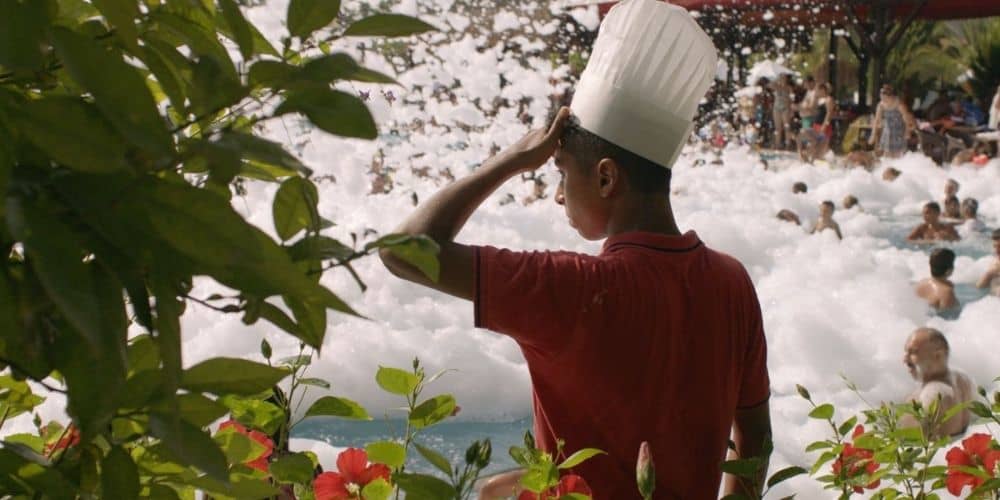
Such pressures may be common to any service industry, but there is a sense they are exacerbated by the culture of this resort hotel and the brand of tourism it sells. Foam bubbles are pumped out into the air as techno music blares around a pool and women adjust their bikinis in the hope of perfect, sun-drenched selfies — a surreal environment promoting a sense of fantasy. Tourists pay big money to get away from their daily grind and expect an illusion of carefree fun and over-the-top leisure to permeate all aspects of their stay. «As long as there is entertainment, they are happy,» say the employees of this kind of tourists, who have indulged in this enclave of hyper-capitalism, expecting all to be supplied on tap. Ismail gains confidence as he learns cooking and catering skills in the hectic kitchen and remains beguiled by the possibilities of life beyond his small village. But as a cog in this well-oiled machine, Hakan cannot help but feel dehumanised and increasingly disillusioned. Few guests bother to get his name right, and his earnest efforts to make real connections with the people around him through conversation while trying to study and practice English and Russian do not get far. «I no longer have any sympathy for Russians,» he states. An avid reader with an interest in philosophy, he had known Russians before only through Dostoevsky and other literary classics. Still, his deep thinking and curiosity find no reflection in the shallow poolside milieu. Cultural exchange is minimal within a power differential that restricts his being to sheer use-value. The mountains of food in the kitchen buffet span French fries and other symbols of international consumption, catering to a placelessness that renders local specificities beside the point and unnecessary to negotiate; a mirage of endless choice as opposed to rigorous thought and any need to adapt to the unfamiliar and new.
The rules of service
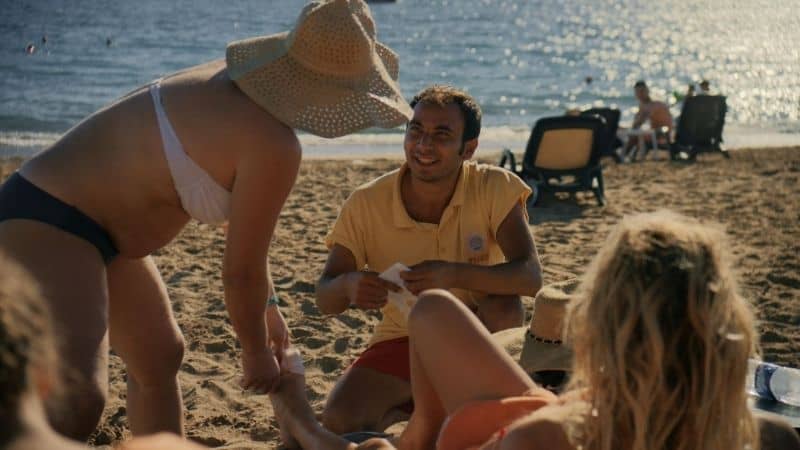
The rules of service and engagement in this site of cloistered mega-leisure may be faceless and mechanical. Still, Üce is sure to keep the perspective on the hotel’s functioning firmly with its workers, while the tourists stay more or less anonymous to us. We see the summer trajectories of Hakan and Ismail through the lens of their personal development and wider ambitions, as their jobs take the form of a loss of innocence and new maturity on what they want from life. The HR manager advises his employees in in-take sessions at the start of the season to remember themselves as they are at that point, as they will inevitably be greatly changed. He is not wrong — but as befits cinema of our current times and its great uncertainties and anxieties over travel and assumptions of borderless living, this worldly education can only be conditional, skeptical, and deeply ambivalent.