
A 2024 #CPH:DOX World Premiere, Can’t Feel Nothing, unveils the unsettling numbness pervading the digital age. Kickstarted by Director David Borenstein’s own struggle with #digital addiction# and #desensitisation (becoming a «screen zombie,» as he calls it), the film is a globe-trotting adventure through the emotional effects of the (still) surprisingly mainstream avenues of the web.
The light that shines on all
The film opens with an image that is all too familiar: a man lies in his bed, illuminated only by the eerie blue-white light of his #smartphone, mindlessly scrolling through an endless feed that swings wildly between the trivial and the traumatic, yet feeling utterly detached. We don’t know what features on his feed, but take a moment to think about what appears on your own these days: a relentless ethnic cleansing approved by some of the world’s most influential powers, a climate disaster well past a point of no return, continued manifestations of late-stage capitalist destruction, all scattered with the latest sociopathic tale of «rugged individualism» are but a few consistently appearing on mine.
With a professional life dependent on connectivity, I can hardly pinpoint my own point of desensitisation (sometime around 2010, maybe, deep in the throes of the ruthless and unrelenting New York City media sphere). Nevertheless, its all-consuming nature is heavy and persistent and trickles into virtually all aspects of my life, particularly decision-making. I all-to-frequently ask myself, «Do I even care?»
mindlessly scrolling through an endless feed that swings wildly between the trivial and the traumatic
Global nihilism
Imbued with light-hearted curiosity and critical interrogation, Borenstein explores who exactly orchestrates our digital emotions—anger, sadness, arousal, apathy—and questions if there is a path to reclaim our emotional integrity. These stories serve as practical illustrations of B.F. Skinner’s #reinforcement theory#, showcasing how digital platforms engineer emotional responses to cultivate addiction-like user engagement. In the context of #social media#, these concepts manifest through algorithmically catalysed mechanisms like likes, shares, saves, and comments, which serve as forms of said reinforcement.
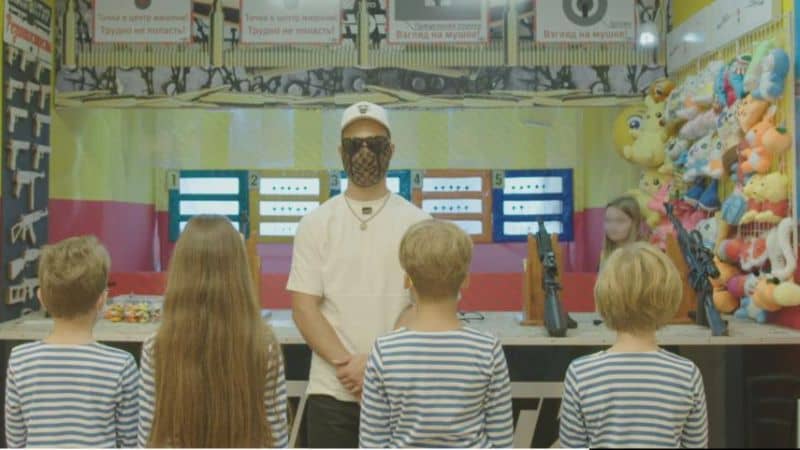
The film spans investigations across the USA, China, North Macedonia, and Russia. Throughout his travels, Borenstein encounters a diverse array of digital manipulators and victims. Each segment introduces viewers to different visuals that embody the effects of this digital over-engagement: an admittedly lonely American internet troll who thrives on the chaos of online animosity, a burnt-out Asian influencer superstar seemingly one of many in the factory-like online friendship industry, a Danish therapist with an increasing number of clients feeling emotionally numb, and an operative and full-time doctor from a fake-news factory in Eastern Europe who exposes the calculated spread of disinformation. Perhaps most striking is the segment featuring a Russian state propagandist who manipulates emotions for a living. In mentioning how Trump supporters and Western feminists are particularly easy targets, he explicitly illustrates the commodification of human interaction in stark, almost dystopian terms.
For me, the young Chinese man who has spent some $75K on his gamified digital friend (of which he is happy to pay more in order to achieve various advanced «levels» of friendship) was the most striking vignette. In internet-speak, he would be the prime example of a «simp» (short for simpleton). Or someone who shows excessive sympathy and attention toward another person who typically does not reciprocate the same feelings in pursuit of emotional affection. This personality is rampant across the internet, particularly in the era of Pornhub and OnlyFans. It is the foundation of the modern «incel»—a group found everywhere, from gaming forums to mass shooter appreciation pages.
Despite its scope and the severity of its critique, Can’t Feel Nothing manages to provide a humanistic lens on all its subjects, ensuring we see the people (and, in many cases, their suffering) behind the online avatars. Therefore, the film doesn’t criticise. Instead, it seeks to understand the lure and impact of digital interaction on real lives, especially given its narrative is grounded in alarming real statistics. These include a report by the Pew Research Center that about 28% of adults in the U.S. are «almost constantly» online. The World Health Organization and UN Secretary-General have also highlighted concerns about digital media’s impact on #mental health#, particularly noting the rise in #anxiety, #loneliness, and #depression linked to heavy use.
These stories serve as practical illustrations of B.F. Skinner’s reinforcement theory, showcasing how digital platforms engineer emotional responses to cultivate addiction-like user engagement.
Post-emotion
While the film doesn’t necessarily break new ground in its critique of social media—that these platforms can lead to emotional numbing is by now a familiar argument—it distinguishes itself through its storytelling. It challenges its audience to consider the implications of living in a world where emotions can be algorithmically triggered and where human experiences largely occur through the inherent barrier of the screen.
Realistically speaking, it may be too little, too late. #Artificial Intelligence#, for example, has quickly proliferated to ubiquity. Aside from its productivity aides, it has lit a fire under the capabilities of emotional manipulation. App-based chatbot psychologists, AI «dream girls,» and, of course, deep fakes and degenerative audio are but a few. There are also the «chans.» Alternative social media, which served as a breeding ground for incel culture and the #alt-right. All of these have extended beyond the individual and digital and permeated throughout real society, evolving it into something where a post-emotion mindset may be as vital to self-survival as a diversified asset portfolio and medicinal marijuana prescription.