At the beginning of February 2012, Uganda’s Anti-Homosexuality Bill was resurrected in Parliament. After its initial conception in 2009, an international plea from activists and governments forced the Ugandan government to shelve the discriminatory bill, with some donors even threatening to drop aid to Uganda if it did not comply. As a result, the bill was curbed in August 2011. According to politician David Bahati, who recently re-introduced the bill, it no longer contains a provision for the death penalty and proposes reduced prison sentences for homosexual acts instead of a life sentence.
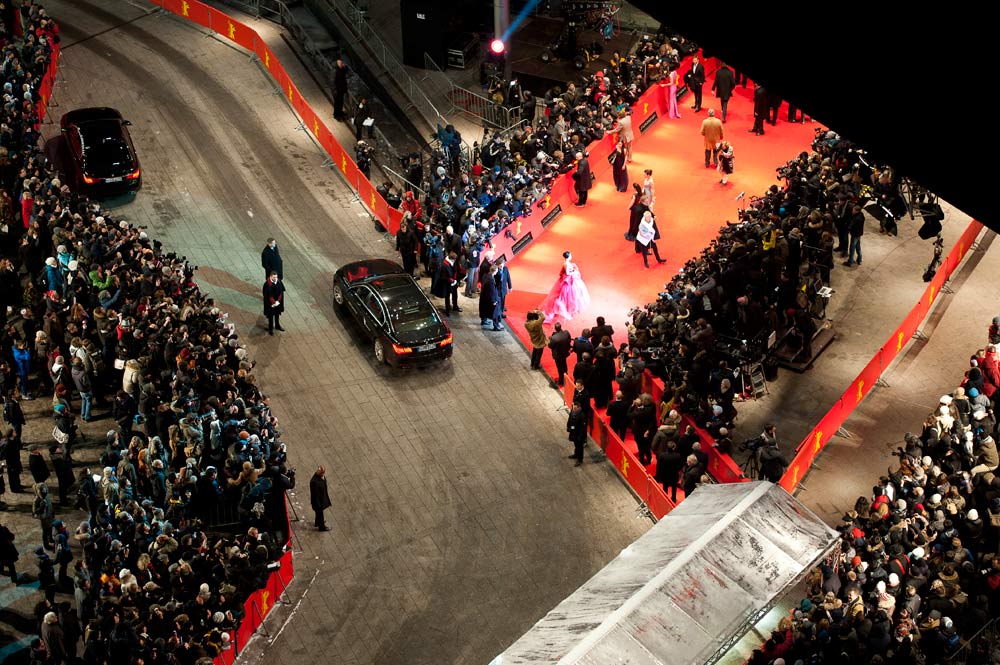
With impeccable timing, filmmakers Malika Zouhali-Worrall and Katherine Fairfax Wright came to the Berlinale International Film Festival with Call Me Kuchu, a moving and urgent portrait of the LGBT community in Uganda and their daring struggle to be themselves – and stay alive – in an ultra conservative and violent climate for gays. The film took second place for the Audience Award in the Panorama Best Documentary Competition and won the festival’s Teddy Award for Best Documentary for films related to LGBT1 topics.
http://https://www.youtube.com/watch?v=tn2fwqrejhE
At the center of the struggle in Call Me Kuchu is David Kato, a charismatic homosexual who is the only publicly gay rights activist in Uganda and the first in his community to come out. In an unmarked office on the outskirts of Kampala, Kato labors to repeal Uganda’s homophobic laws and liberate his fellow lesbian, gay, bisexual and transgender men and women, or kuchus, as they’re called. But for his cause he must face the consequences – watching his back at all times and even sleeping with a weapon by his side.
The co-directors were in the midst of making the documentary at the time of Kato’s death and continued rolling to report on the state of Kato’s community. In an especially difficult scene, anti-gay protestors hijack Kato’s funeral while his friends and family are in the midst of mourning. What ensues is a painful battle of rest in peace vs. burn in hell.
We also meet many of Kato’s inner circle: his best friend Naome, a fellow human rights activist, Kato’s bishop Christopher Senyonjo, the only priest who openly supports the homosexual lifestyle, Cong Jones, who fears he might be the next victim, and Stosh, a young lesbian who was raped and consequently infected with HIV.

Over in Serbia, the anti-homosexuality sentiment continues to reach a boiling point, but the LGBT community did manage to have one small victory for their team, even if it’s simply cinema. Parada, written and directed by Srđan Dragojević, is the most successful co-production of the ex-Yugoslavian countries since the war. Winning the Audience Award in the Panorama section, Parada tells the story of a life-saving operation on a gangster’s pitbull that brings together two very different worlds: homophobia meets overblown gender display as a number of former foes – Serbs, Bosnian Muslims, Kosovo-Albanians and Croatian war veterans – find themselves obliged to form a tenuous bond with a bunch of gay activists. The motley crew is sent on an impossible suicide mission to hold a gay pride parade against an onslaught of nationalists and neo-Nazis.

Call Me Kuchu shows the urgency of addressing the oppression of human rights that is occurring in Uganda. As a film, the least it can do is encourage other media to examine the potential of the Anti-Homosexuality Bill – a frighteningly real prospect that Ugandans will be imprisoned for their sexual orientation and possibly killed. It’s a flawless work, both as a film and as a journalistic work, which measures the temperature of hate, on the part of Church and state, against the survival tactics of the LGBT community.
Faced with a failed history of ‘Pride’, it’s remarkable and reassuring that Parada fared exceedingly well during its theatrical release last autumn in the former Yugoslavian countries. But while Serbia struggles to come into the 21st century, Germany has been considered a tolerant nation for decades, with minimal discrimination towards gays, both on the streets and in Parliament. Legal recognition of same-sex couples allows them the same basic rights and obligations as marriage. Even German Foreign Minister Guido Westerwelle is openly gay.
Through interviews with six East German men – among them, Eduard Stapel, an academic theologist who founded a GDR-wide homosexual association, Frank Schäfer, a barber and shrewd individualist, Jürgen, a humble painter – we come to understand their practices and their social codes. Nowadays, gay men openly nurture their relationships but of course, this was not always the case. Among Men allows the safe space for these men, now in their golden years, to finally ‘come out’ of the Iron Closet and tell the story of their struggle to come to grips with their hidden desires. In that aim, the film is admirable.