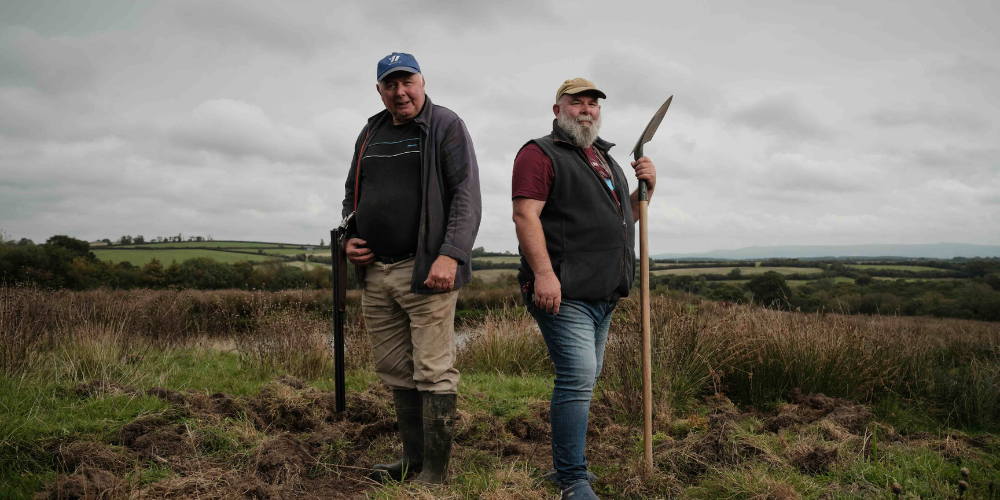
Fields in Britain used to buzz with insects and birdsong; now there exists a rapidly growing, unsettling silence. When watching Derek vs Derek, I am yet again reminded of Rachel Carson´s legendary book The Silent Spring. Her predicaments and her warnings have now become a part of everyday life.
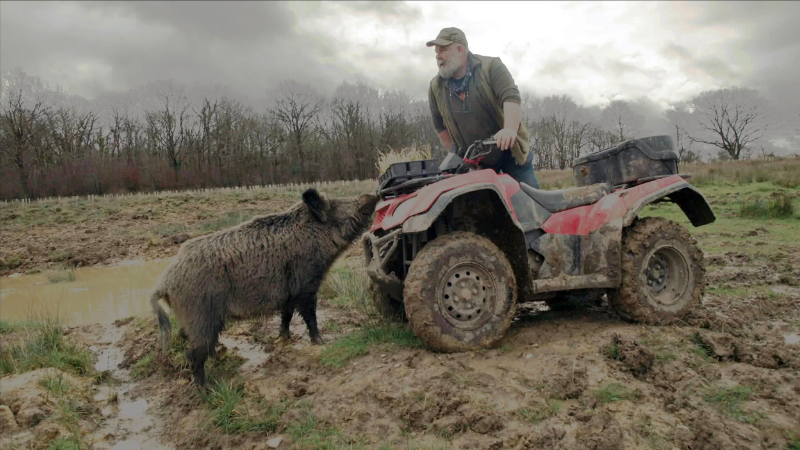
The two Dereks
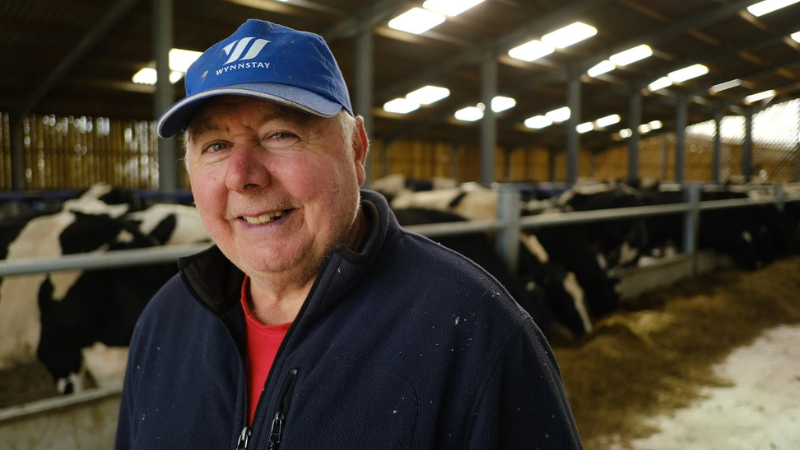
In the countryside in Devon, there live two neighbours, both called Derek. Derek Banbury is a stubborn conventional farmer on a mission to feed England with his intensive dairy production. As a third-generation dairy farmer, he is set on producing industrially farmed food at any cost. He believes in chemical agriculture as if it were a religion. The feature documentary is full of his philosophy with funny, tragicomic one-liners like: My cows come before wildlife, I’m afraid. At the beginning of the story, he has few kind words for his neighbour, Derek Gow, calling his land a total devastation.
The other Derek is just as stubborn as Banbury, but he is on a totally different mission. As a young man, Gow was inspired by the famous conservationist Gerald Durrell and is part of a growing rewilding movement that commits to restoring nature by reversing biodiversity loss and reintroducing native species. He has given up farming completely and is busy rewilding his 400-acre land. Conventional farming has turned wetlands into drylands, so the government has dug up over a hundred ponds at the estate, and gradually he and his team have transformed the land into a sanctuary for wildlife by reintroducing nearly extinct animals such as water voles, white storks, wildcats, and beavers.
Fields in Britain used to buzz with insects and birdsong, now there exists a rapidly growing, unsettling silence.
Bringing back the beavers
The beavers are considered ecosystem engineers and are now recognised as a major keystone species. Absent in Britain for almost 500 years, beavers were hunted to extinction. When Gow started importing beavers, reintroducing them in the wild was illegal, but some of the population managed to escape and began living and spreading in the surrounding areas. The law has changed now, and the beaver population doesn’t need papers any longer to live in Britain and is, in fact, reintroduced in other areas as well.
The land next door is a grim contrast. In Derek Banbury´s fields, there is no sound of bees, no sight of butterflies and almost no insects. What we see are cows. As shown in footage of his farm, it’s clear that conventional farming has destroyed nature, leaving behind green deserts packed with poison.
Peeking through the hedge, Derek Banbury exclaims, «It’s not farming. It’s just a mess.» Compared to his neat, monocultural desert where he grows maize and grass for his dairy cows, it may look like a mess, but there is a thriving web of life on Gow’s land, encompassing plants, insects, animals, fungi, and microorganisms. Life that is elsewhere in England is on the brink of extinction, largely due to chemical-based agriculture.
The antagonists journey
Knowing that healthy ecosystems are essential to humans in providing clean air, water, and food security, we naturally understand from the start which of the two main characters to vote for. There will be a very barren future with a total biodiversity collapse. Still, Dawson gives both Derek and their room to articulate their views, and they are equally sympathetically portrayed. Even though he is clearly annoyed, the antagonist, Banbury, tells his story in a humble, sweet manner. We get to like the fellow, and even more so as he changes over the three years the movie was shot.
James Gold’s subtle editing complements the down-to-earth storytelling director Dawson has chosen. The scene is left for the clash between the Dereks and the two opposing views on nature. The footage is juxtaposed with historical footage of early chemical farming and former warnings of animal extinction, making the point clear that we have known this for a long time. The warnings have been there. We have known that the Silent Spring might come. It is here, and rewilding is an imperative response to that.
Paradigm change
Gow Banbury, along with other rewilding projects like the famous Knepp estate and permaculture and organic farming, are beacons of light in an apocalyptic time. Sadly, the most common way of thinking and managing farming still belongs to the chemical paradigm. But Derek vs Derek is a funny and warm movie, packed to the brim with English humour, hope and vitality, demonstrating that, despite life on Earth being in crisis, there is still hope for change.
The film has an impact campaign that promotes restoring nature. Here’s the crowfunder site if you want to be part of the change.