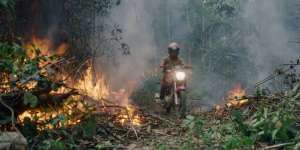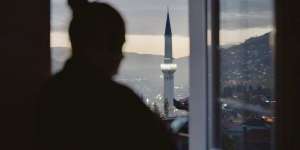
It was pouring rain in Iguala on the night of 26 September 2014. Students from a teachers’ college had hijacked or «borrowed» a bus, as they routinely did, to get to a march in #Mexico City#, when six were shot, and 43 abducted and disappeared. In the confused aftermath, the government set out an official account it declared to be the «historic truth» — that police had handed the students over to a local drug cartel, who’d killed them in a garbage dump and disposed of their incinerated remains because they’d mistaken them for members of a rival gang. The state’s version has been widely disputed and declared «scientifically impossible» by a panel of experts assembled by the Inter-American Commission on Human Rights. Vivos, the latest documentary from Chinese dissident, artist and filmmaker Ai Weiwei, which screens at #CPH:DOX# in Copenhagen, portrays the impact of the fateful night on the victims’ families, and a society in which trust in authority has been entirely corroded.

Bedrooms-turned-shrines
As a documentarian, Ai is ever the artist, with an eye for evocative detail, and an ear for deep, commonly shared humanity within a person’s retelling of their own experience. Investigative rigour is not his strong suit, and on this level, Vivos feels somewhat superficial alongside more extensively researched, recent documentaries on the topic. Julien Elie’s #Dark Suns#(2019), for instance, transmitted in its devastating sprawl some sense of just how totalising and entrenched the architecture of collusion between organised crime and state institutions is in Mexico. It is not so much the facts or socio-political context Ai is wishing to elucidate in his foray into this single, tragic chapter of Mexico’s contemporary reality, but something more ineffably universal. Ai came to the topic while on a residency at the University Museum of Contemporary Art in Mexico City in 2016 when he met family members of the missing students through a human rights organisation and talked with them about social justice. Rather than trying to grasp every inch of the mauling beast of institutionalised corruption in Mexico, he keeps his sights on a fragment, drawing a broad parallel outward to his own personal knowledge of oppression and resistance in China.
Ai is ever the artist, with an eye for evocative detail, and an ear for deep, commonly shared humanity
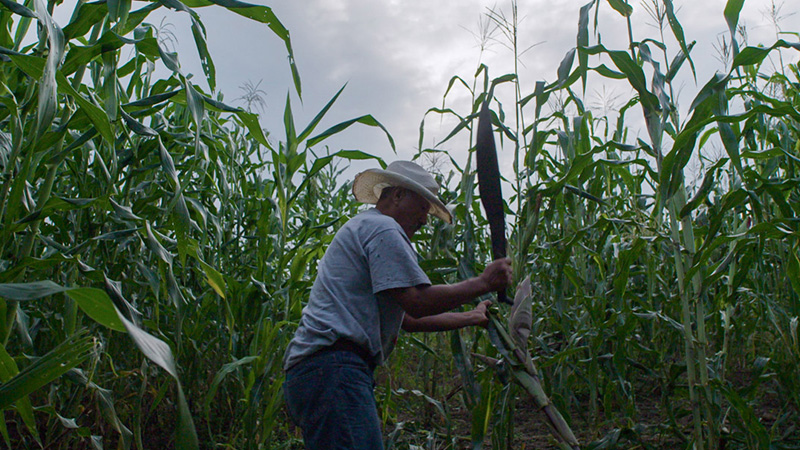
Ai’s previous documentaries on the refugee crisis, #Human Flow (2017) and #The Rest# (2019), are works of empathetic identification; tapestries of voices and singular points of experience through which we might put a human face to the dry words and numbers of the humanitarian catastrophe as it is summarised by the news media. In Vivos, Ai interviews family members of those disappeared, as they struggle to move on without the closure of knowing precisely what happened to their loved ones. Even if alive or dead, they are emotionally resonant. The students were from very poor, marginalised peasant communities, and the ongoing grief the families dampens their motivation for the toil required to simply survive their incessant economic hardship. The disappeared are hauntingly present in absence, their traces all around, from posters bearing their photographs calling for information to bedrooms-turned-shrines. Labour itself is tougher with fewer hands — and the government, which finds its monetary value in drugs, not corn, cannot be looked to for support. Several parents relate how they had put their all into menial labour (one woman worked years at a Burger King in the U.S. away from her small children) just to secure access to education for their sons, a dream now snuffed out in the most horrifying manner. The families’ lack of trust in the official account worsens their suffering. «We’re farmers — we know how much a fire can burn,» says one parent, suggesting the claim that the bodies were incinerated during the night’s downpour was an insult to their intelligence.
«human rights defenders»
Testing of the contents of the dump abroad in Innsbruck found its remains were not of the students. Several theories on what really happened that night are proffered, though Ai seems less concerned with establishing concrete detail than with positioning the tragedy as symptomatic of state repression of grassroots dissidence. We learn that 42% of American continental heroin production comes from the Guerrero region, and has to go through Iguala hidden in buses. It’s possible the students accidentally commandeered the wrong bus, sparking a cartel into action to recover their stash. But why then were the military and state police involved in the operation? The lawless reign of the cartels is almost downplayed in a film that seeks to hold the government to account for its failure of responsibility. The victims’ school, the Ayotzinapa Rural Teaching College, is historically associated with radical activism and its ties with leftist guerillas mean it is eyed with suspicion by the authorities. A large mural of #Che Guevara# is shown on a school wall; the students are referred to as «human rights defenders».
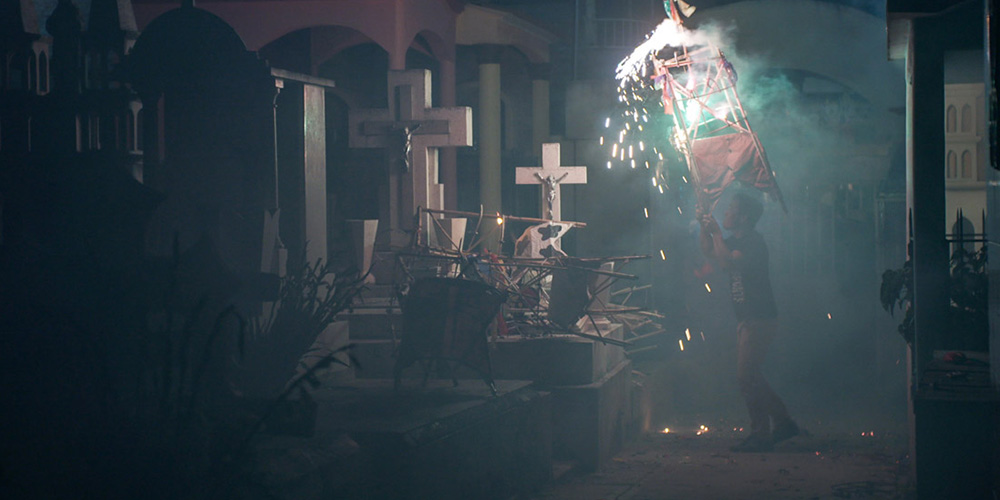
Lest he be echoing a colonialist gaze in singling out Mexico as uniquely morally bankrupt, Ai enlists American journalist John Gibler to point out that the United States also lies on an overwhelming scale. It mislead the public during the #Iraq War#, for example. «Don’t look at Mexico through some kind of exotic lens,» he instructs. Ai himself cannot quite resist a touristic gaze, with footage of #Lucha Libre# wrestling matches and Day of the Dead street celebrations presumably there to add local colour. But, outsider view or not, Vivos powerfully captures how fear becomes the dominant force in any society whose rulers so flagrantly disregard truth and transparency.
Vivos screened at #Sundance 2020 and will screen at CPH:DOX 2020