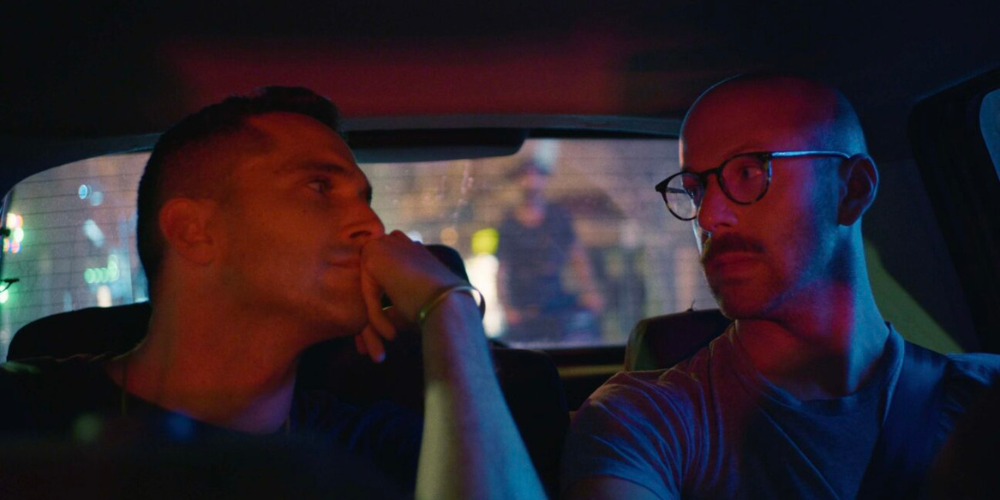
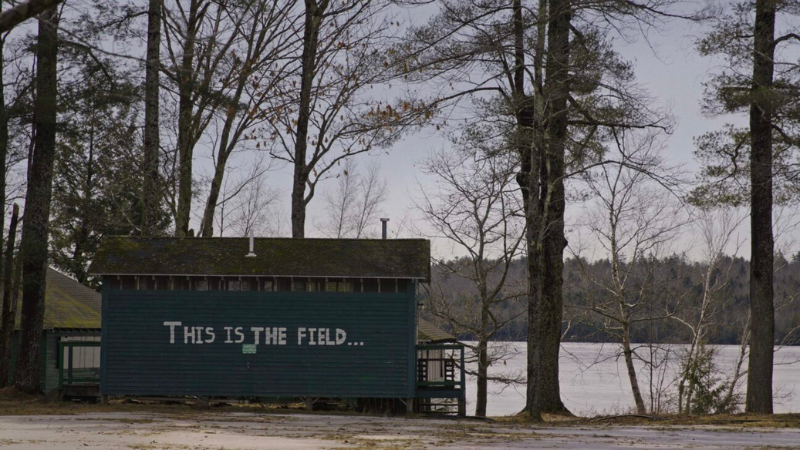
In the past 25 years, Arab-Jewish, queer filmmaker Roy Cohen has written a lot to his Palestinian friend and fellow peace activist Aseel Asleh, wondering how he would have reacted to what’s happening in Palestine and Israel. The two met in the mid 1990s at the Seeds of Peace camp in Maine, the US, where youths were to engage with each other across lines of conflict. A few years later, Asleh’s life was cut short when he was shot by Israeli police during the October 2000 protests, in the early days of the Al-Aqsa Intifada. He died in an olive grove at just age 17, wearing a bright green Seeds of Peace T-shirt. And he was buried in it, too.
«48 Palestinians»
«Israel is committing genocide in Gaza,» a sombre voice says as the film opens in pitch darkness. Addressing Asleh, the filmmaker continues, «I feel so ashamed.» Drawing from archives, memories of the peace camp, and present-day testimonies, Cohen looks back at a time when they felt hopeful about the future, seeking answers, or perhaps wisdom and courage in today’s unravelling violence. The letters, which he has penned in recent years, are anchored in his voice-over, blending with those he received from his friend before his death. Separated by more than two decades, they form a dialogue between the two men: Cohen today and Asleh in his youth, where past and present flow into one another.
As a Palestinian citizen of Israel, Asleh wasn’t afraid to be «a delegation of one,» the filmmaker recalls. He was part of the so-called ’48 Palestinians’ (or ’48 Arabs’), who remained inside what became the borders of the State of Israel in 1948. When he was placed with an Israeli delegation at the peace camp, he refused to sing the country’s national anthem, centring on the ‘Jewish soul’. Asleh wasn’t invited to rejoin the delegation after that, but he returned to the peace camp as a lone member, representing himself.
Have I mustered the same resolve? The filmmaker wonders. After his friend died, he didn’t refuse military conscription, fearing social rejection and penalties. However, amid the escalating war in Gaza and Israel’s tightening grip of repression, this question has grown heavier. For the filmmaker, it has carried a nagging sense of unease, evident even in seemingly mundane scenes: be it a family dinner with news of «military successes» spilling from the TV, or an outdoor gym, hearing blasting music, thick with threats of «starvation.» The toll of indifference is tragic. In one disturbing scene, his sister, living in an «idyllic» kibbutz, just a few kilometres north of Gaza, speaks of the «joys» of birdsong, her mango tree, and communal life, choosing to shut out the nearby explosions.
«Israel is committing genocide in Gaza»
Honest reflections
Cohen is honest in reflecting on his attachment to the land and the ways Israeli society has shaped him. He is a Jewish man of Arab heritage, who for years had no knowledge that his hometown of Ashdod had once been a Palestinian village of Isdud, and that most of its displaced residents had fled to Gaza. He attributes this to specific narratives instilled in young minds, including through his country’s education systems. He also contemplates the quandaries of raising a child in today’s Israel, particularly as a same-sex couple, and of remaining there at all. His partner is American, yet should they choose to leave, the US may not be the answer, he says, «I don’t know if America is any better. There isn’t a war, but there is another type of fire burning under the entire place.»
A quarter of a century since Asleh’s death, the space to protest Israel’s occupation and military actions in Palestine has all but shrunk, more so after 7 October 2023. Meeting with fellow activist Yousef Bashir in the US, where he reunites with other former peace camp participants and friends, they discuss the language and rhetoric present in Israeli media and narratives shaping views today. Dubbing it «as something he has not seen before,” Bashir argues, «they do an impressive job at making sure the Israelis think in a certain way.»
Little room for grief
In a society riven by deep divides, whose policies seem increasingly intent on marginalising and denying Palestinian identity and lived experiences, there is little room for grieving the loss of his Palestinian friend as an Israeli man, the filmmaker notes. However hopeful some of the youths’ ideals and ideas of peace may have been at the camp, in the years that followed, they were recast by the realities of war and enduring occupation. And as Asleh’s case shows, where the perpetrators were not brought to justice, accountability remains much to be desired amid what some describe as the country’s «near-blanket impunity» for its police and security forces.
Far From Maine had its world premiere at the International Film Festival Rotterdam (IFFR) this January.