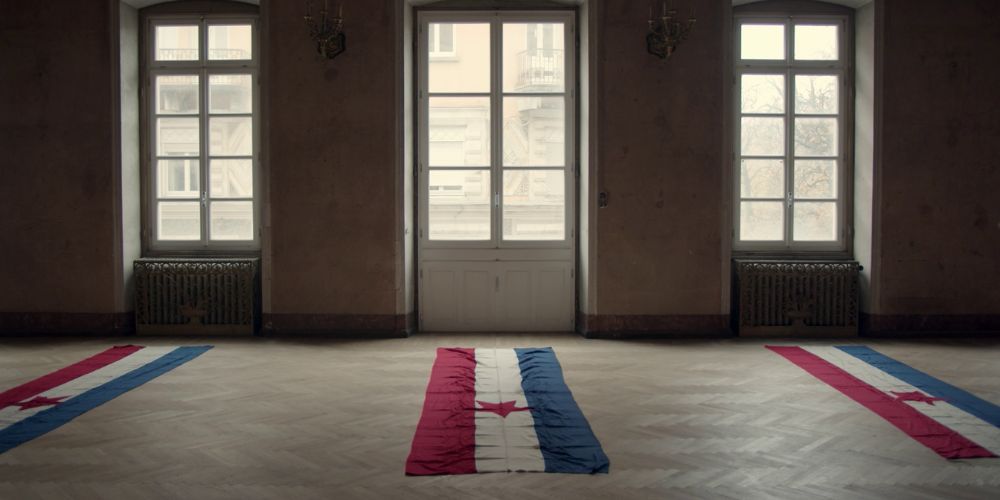
Wars and military conflicts, #radicalism of social media, extremist views in #politics, but also individual acts of violence in spaces such as city streets, schools, and even domestic spaces – there is practically no sphere of life today that would not scream out loud that differences necessarily lead to violence. But, is it really so? Are we humans really not able to live with each other without resorting to violence? A renowned Slovenian documentary filmmaker and screenwriter, Anja Medved, dedicated her first feature-length documentary to this, evoking another meaning of being a human: the one who forgets. Perhaps, asks Medved, this is why we always try to remember. Can remembering protect us from violence, too?
Between the Adriatic Sea and the Julian Alps
Anja Medved is a member of a lively film community connecting both sides of the border, Nova Gorica in Slovenia and Gorizia in Italy, and many of her former projects, for example, Moja meja (2002), are set on this border. It is also crucial for Forget Me Not, a film essay celebrating the #diversity and empathy of her co-citizens and, in general, people living in the region. In a certain sense, Gorica’s cultural heterogeneity reflects Slovenia as a small country that exists only as a border and as a multi-ethnic community. Wherever you head from the country’s capital, #Ljubljana, in less than one hour, you find yourself «abroad», in Croatia, Hungary, Austria, or Italy. Besides, Gorica is the most populous city of the northern part of another famed borderline entity, the so called Julian March, a region in Southern Central Europe which extends from Croatian Istria on the South to Austria on the North, carrying various names that each capture a part of its historic allure, Slovene «Julijska krajina” connects it to Julian Alps, Italian «Venezia Giulia» to the Venice and the Mediterranean.
Oblivion might serve as a survival strategy, but it is not the right strategy to avoid violence.
Against the Oblivion
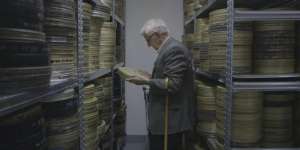
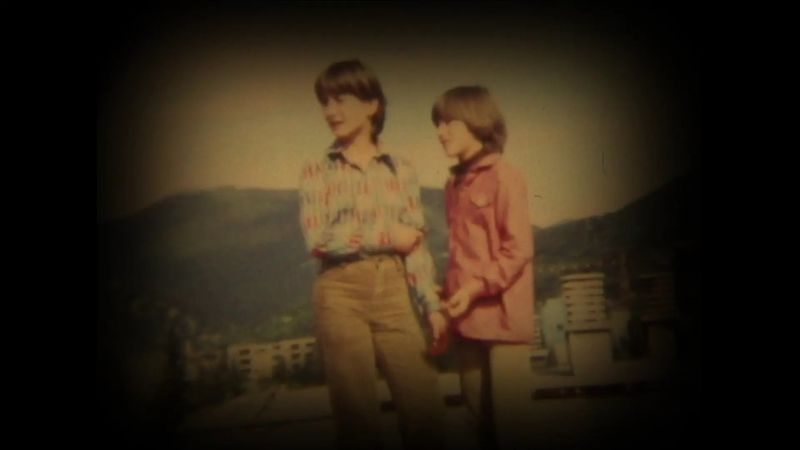
The narrative of Forget Me Not is triggered by Medved and her mother, Nadja Velušček, her regular collaborator and the film’s screenwriter, as they tidy boxes of photographs and film reels and try to reconstruct an unspoken family memory of World War II. «What did grandma say about the war?» asks Medved. «Not much», replies her mother. This strongly resonates with me and, I believe, many other Slovenes born after WW II, too. There was a lot of official talk about the «heritage of the national liberation struggle», but our grandparents were very reluctant to talk about their personal experiences. Perhaps «oblivion was their survival strategy,» ponders Medved in her calm voice-over. Or perhaps they wanted to protect us from knowing what a terrible world we were born into.
One War after Another
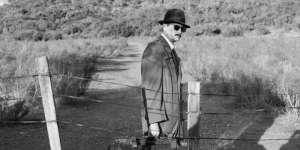
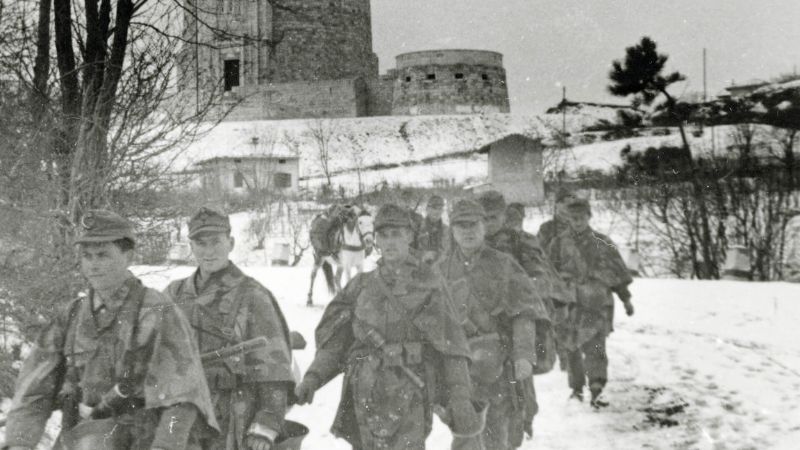
The film was produced for the European Capital of Culture 2025 Nova Gorica – Goriza, a celebration of the absence of the border, which, ever since Slovenia became a full member of the #European Union# in 2004, has ceased to exist. The most precious part of this film essay is the personal testimonies; yet, with the careful selection of rich, unseen archive materials, Medved also created a firm structure of historical events that serve as the background. These events reveal a dynamic multicultural environment: in footage of the war for Slovenia between June 27 and July 7, 1991, people speak Slovene, Italian, Croatian, and Serbian. During WWII, the city was briefly under German control, then under Allied Control, but the region was also crossed by Chetniks, Ustashi, and even the Cossacks. Before the war, people spoke Slovene, Italian, Friulian, Yiddish, and German. The zone was part of the Habsburg Empire since the 16th Century and only became part of Italy in 1918, when, after heavy Italian bombardment, the Austrians abandoned the city. «Was Gorica occupied or liberated?» asks Medved. Her complex narrative is slowly leading to a revealing paradox: despite the region’s rich multicultural nature, armed conflicts continue to reappear.
Forget Me Not has its origin in a research project about the crimes committed in this multi-ethnic area during WWII.
Profound Suffering
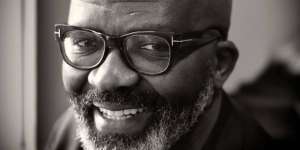
Forget Me Not has its origin in a research project about the crimes committed in this multi-ethnic area during WWII. Medved and Velušček, in charge of the audiovisual study, recorded testimonies from people, most of them children at the time. It is remarkable how skilfully they created an atmosphere in which people could find words for the most traumatic events. One person remembers they were told to never ask the grandfather about the number tattooed on his arm, and I think it is the unspeakable horror that prevented the people from talking about the war in general, too. Therefore, it is simply amazing how Medved recorded the testimonies and presented them in her film. From the memory of the silence brought by the arrival of the Allied Forces: unlike the German soldiers, who had iron soles on their boots and made a lot of noise, the soldiers of the Allied Forces arrived in boots with rubber soles. To the heartbreaking testimony of a brother and a sister who remember how Germans killed their father and burned the house, and while the whole house was in flames, the curtain of the sister’s bedroom, in flames, seemed as if it were waving goodbye. Or the boy who was to be shot by partisans because he fell asleep on guard but was saved in time, remembers how the only thing on his mind the moment before dying was, «Who will tell my mother?»
Human Acts
In Human Acts, the South Korean writer and Nobel laureate #Han Kang# writes about the #democratisation uprising in May 1980 in the Province of Gwangju, and the brutal suppression that followed. Structured as a set of testimonies, Kang documents the violence and suffering of the individual people in such a straightforward way that it is sometimes hard to endure. Yet, for Kang, this is the best way to ensure a painful historical event does not repeat itself. This came to my mind while watching Forget Me Not. Oblivion might serve as a survival strategy, but it is not the right strategy to avoid violence. Only remembering – never forgetting – will prevent demons from the past from returning.