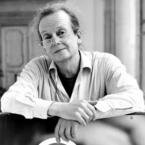
Werner Herzog is a filmmaker of extremes. To gamble with fate, he can eat his own shoe, climb erupting volcanoes to meet people who, like him, risk their lives, or create documents with forged signatures from dictators to fake filming permits in their countries. He advises his students to accept any job, even in a slaughterhouse, to be able to make a truly independent, idiosyncratic, and individual film.
Herzog is convinced, despite all the differences between his nearly 70 (!) fictional and documentary works, that common values and a homogenous worldview are manifested there. His declarations, «Everyone should pull a boat over a mountain once in their life» and «Civilisation is like a thin layer of ice on a deep ocean of chaos and darkness,» are clues to crystallising these values: challenging the unknown, sovereignty, independence, discipline, toughness towards oneself (and others), and, time and again, a joyful willingness to take risks.
The loner
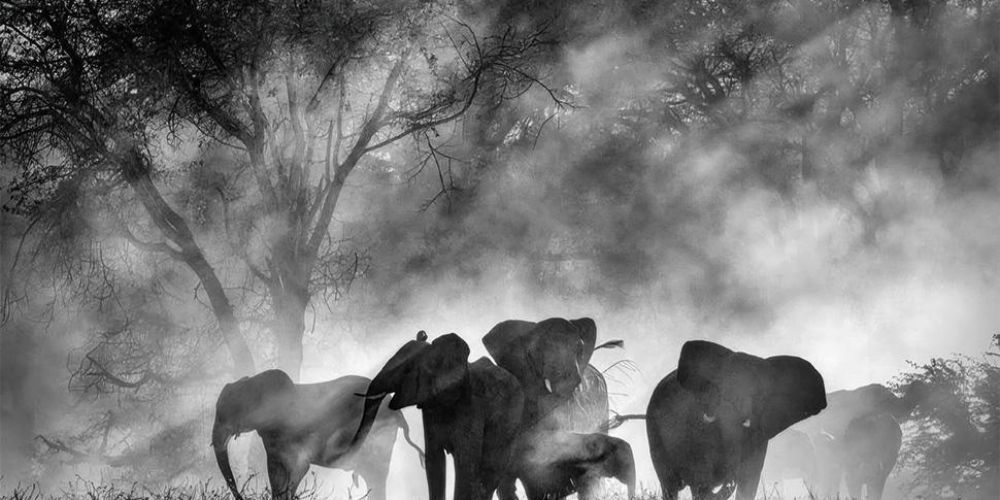
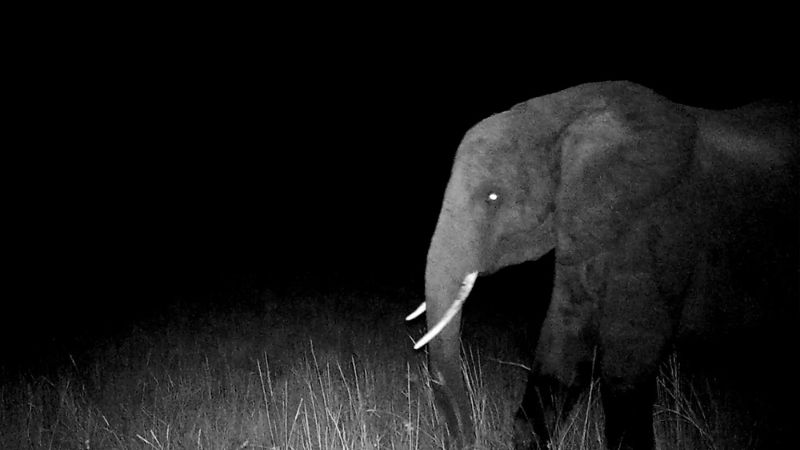
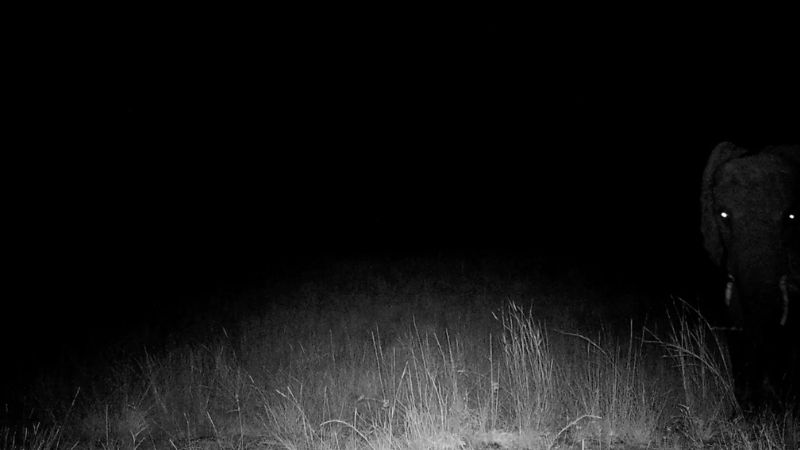
His actual work, Ghost Elephants, shown in Venice’s international competition, once again focuses on a loner. South African conservationist #Steve Boyes#, whom Herzog first met in a Los Angeles bar, has been researching the existence of a specific species of elephant for a decade, whose body weight is one-third higher than that of any known elephant. The only documented evidence of the physical existence of this species to date is a mummified elephant in the Smithsonian National Museum of Natural History in Washington, D.C., called «Henry» to avoid the official name of its slaughterer in 1955.
Herzog follows Boyes on his renewed attempt to search for this elephant «spirit»: for Boyes, the dream of his research efforts, for the indigenous people, the entity that keeps them in direct contact with the origin of their own human existence. From the beginning, Herzog emphasises the spiritual dimension of this search, which for him is at least as important as a possible actual discovery of what is sought. He compares it to the endless search for the white whale in Melville’s Moby Dick, where an actual encounter only occurs in the final pages of the novel.
In the evocative voice that accompanies all his documentaries, Herzog, as so often, commented extra dryly on the scene of an archaic villager tuning his musical instrument: «I know I shouldn’t romanticise him, but I know that … surrounded by chickens … it doesn’t get any better than that.”
Preparations begin in #Namibia, where Boyes contacts the most experienced trackers, the Ju/Hoansi San Bushmen in the #Kalahari, one of the oldest cultures on earth, considered the ancestral people of Homo sapiens, a place for Herzog, where the modern human soul awakes. Night-long rituals are performed to put the trackers into a trance, allowing the elephant spirits to enter them and to begin the journey.
Other great mavericks in Herzog’s works are evident here, at the very least. While not as fanatical as Grizzly Man, Fitzcarraldo, or Aguirre, the Wrath of God, Boyes is undoubtedly unthinkable without this anarchic, revolutionary energy.
Other great mavericks in Herzog’s works are evident here, at the very least.
A gruelling journey
A gruelling journey begins, first by four-wheel jeeps, then by motorcycles, which must be carried through river currents, and finally on foot, to the most remote regions of the Angolan plateau, which is the size of England and has never been touched by Western civilisation. Once again, permission is obtained through ritualised procedures from the tribal leader, the King of Nkangala, who declares his people to be the direct descendants of the elephants. Angolan trackers from the #Luchazi tribe, known for their extensive knowledge of the ecosystem, especially in the Okavango River Bay, join Boyes’ team, who is in constant contact with Herzog, who remains behind in #Nigeria to direct the film. The Luchazi call the plateau, the destination of the expedition, the «Origin of Life.»
Herzog integrates harrowing archive images and footage from the 1966 Italian documentary Africa Addio into his work. Here, helicopters herd distraught, panicked elephants into the guns of trophy hunters, who then slaughter them by the dozen, grinning into the camera. Henry’s butcher is one of them. During the 27-year Angolan civil war, countless elephants, hippos, and other wild animals were slaughtered by «sportsmen.» Others fell victim to landmines.
Counterworld
Herzog’s statement, «I believe the common denominator of the universe is not harmony, but chaos, hostility, and murder,» seems like an appropriate comment here, too. His fascination with the counterworld, the spiritual and magical realities that are more capable of communicating with the origins of life than our degenerate consumer culture, also becomes understandable. Pursuing dreams is not a mistake, since, as Herzog darkly notes, the future of animals will also be just a dream, a mere memory. This makes him all the more appreciative of the poetry of moments, like the seemingly playful prancing elephants captured by his camera underwater.
At the end of the expedition, there are a few fleeting sequences, hastily captured on Boye’s smartphone, featuring a few specimens of the elephant species being sought. Apparently, the further pursuit was then called off. Herzog again commented with extra soberness: «Steve would have to live with his success.»
Werner Herzog creates a film about the futile, limited, and dubious search in the service of an analytical grasp of reality. Yet what interests him is the inherent desire, the awakening, the commitment, and the vitalising dimension of dreams. After all, as Boyes recalls at the press conference, he managed to sight almost 270 previously unknown species on this expedition to #Angola. This, too, may be a futile but admirable rebellion against death, which Herzog’s work also represents. And Boyes, in turn, agrees with the tribal belief that interprets the disappearance of these elephants as a harbinger of the extinction of humans.