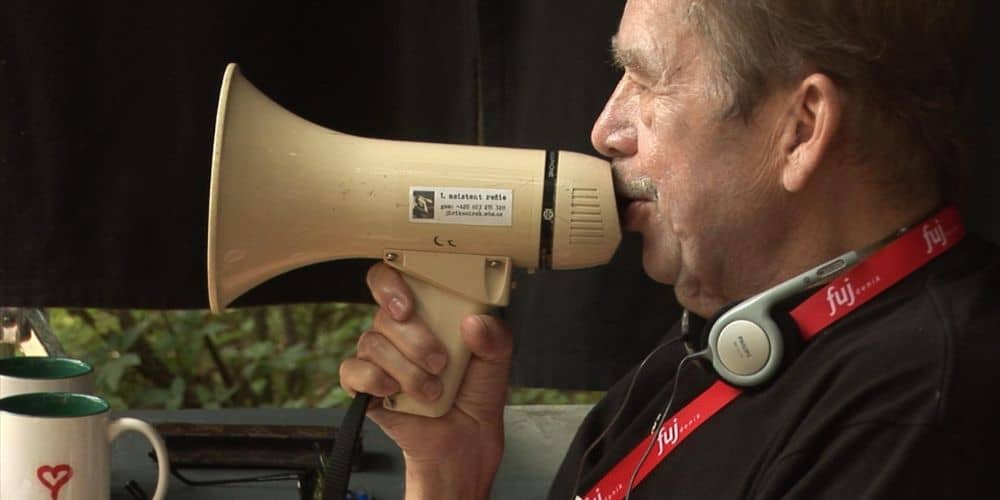
Vaclav Havel was «never an ordinary politician,» it is stated at one point in Czech filmmaker Petr Jancarek’s Havel Speaking, Can You Hear Me?, which captures the final two years in the life of the first President of the Czech Republic after the fall of #communism, and is screening in the Czech Competition of the One World festival in Prague.
Everyday resistance
Indeed, Havel became famous first as a playwright. He employed #absurdism to criticise the system, as did many artists of the creatively fruitful #Prague Spring#, and was blacklisted after the #Warsaw Pact# invasion and cultural crackdown on freedom of expression. Very active as a political dissident, he was one of those behind the famed civic call for human rights Charter 77, which was partly motivated by the arrest as non-conformists psychedelic underground band The Plastic People of the Universe members. Having turned his writing talents to overtly political essays, Havel’s texts, such as The Power of the Powerless, have become seminal works on everyday #resistance against the lies of totalitarian ideology, while the several years he spent in jail as a political prisoner granted him global kudos as a man willing to sacrifice himself for his principles — a quality which later sealed his overwhelming public support as a democratically elected leader.
Jancarek spares the first few minutes of the documentary for an admiring glide through this well-known biographical background, including footage of Havel describing himself as an author who always felt a need to get involved in public life as a citizen but never sought public office. The image of a humane philosopher of the people and reluctant political player that this sets up could not be more at odds with the idea of the cynical, power-hungry strongman that has swept our globe in an era of resurgent #fascism and populist, authoritarian personality cults. It’s a contrast the film does not explicitly make, or it seems, even intend, but it adds an air of sadness and nostalgia to this ostensibly gentle and sentimental portrait of the retired statesman’s final two days on Earth because it is hard to imagine, in today’s geopolitical landscape, the optimistic ascendancy of a subversive artist and community activist to the highest office of a European nation.
The image of a humane philosopher of the people and reluctant political player that this sets up could not be more at odds with the idea of the cynical, power-hungry strongman that has swept our globe in an era of resurgent fascism and populist, authoritarian personality cults.
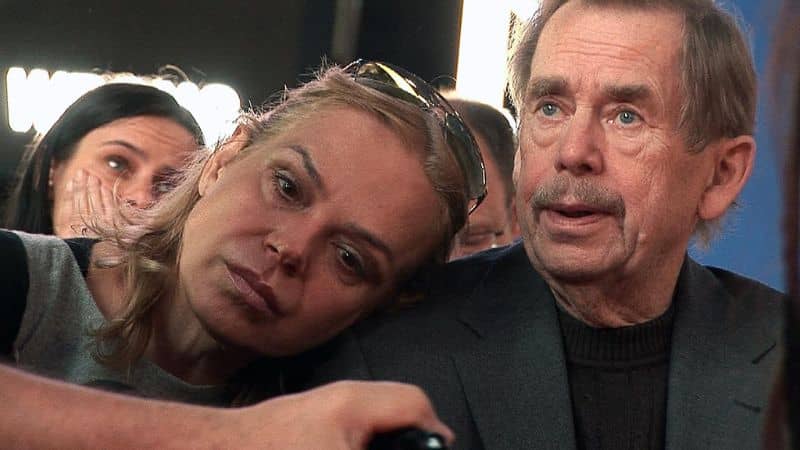
In 2009, Havel, at 73 years old, asked Jancarek if he would document the rest of his life — which turned out to be two more years, navigated by the former President with the director and his camera in tow. The bustle of venerable invitations, meetings and public appearances that Havel takes up in his twilight years can together seem a little perfunctory and toothless as a political portrait, even as iconic advocates of peace and freedom from protest singer #Joan Baez# to Tibetan spiritual leader the #Dalai Lama# pop up throughout, but they offer a sense that even in retirement such a towering political figure’s life is not their own. Havel laments that he had been wrong in his assumption he would be «free as a bird» to attend the theatre and read after leaving the parliamentary stage; his wife Dagmar, an actress, is also less than enthused by the busy itinerary of public appearances — which can seem a particular grind for a «creative» person, according to Havel. «Being a former president is worse than being a president because it’s for life,» he quips.
Impossible optimistic
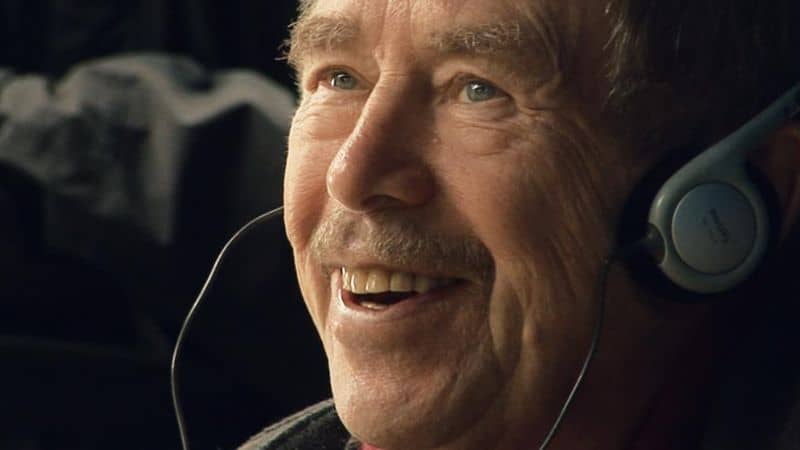
He still takes his duty as a citizen very seriously, it’s apparent, as people continue to look to him for hope or guidance for the problems of our societies, even as the appearance he looks most joyous indulging involves a journey back to his underground roots, as a guest drummer at an outdoor festival. He also pursues one of his great unrealised wishes in life, that of directing a film, adapting his own tragicomic theatre play, leaving about a politician reluctant to relinquish his hold on power. We see parts of this process, from screen tests to the US premiere. Physically frailer, he muses that confidence also declines with age, when one would assume the opposite — a poignant summation of waning influence from a man who we see in footage of his earlier days declaring in #Brussels that the EU has an opportunity to inspire the world in something more profound than its model of co-operation between nations. Havel, after all, once symbolised the triumph of grassroots democracy and solidarity over brutal imperialist oppression, at least in the eyes of those who looked away from #Russia toward the West for #idealism. It was an impossibly optimistic vision, it is obvious, as even little more than a decade after Havel’s death, Europe is breaking apart under massive polarisation, while a new breed of demagogues, US president #Donald Trump# among them, underscore the trumpeting of supposed democratic western values as the farce it probably always was. It is probably salvation for Havel that he is not alive to see the day, which is the rational conclusion this film did not dare to make.