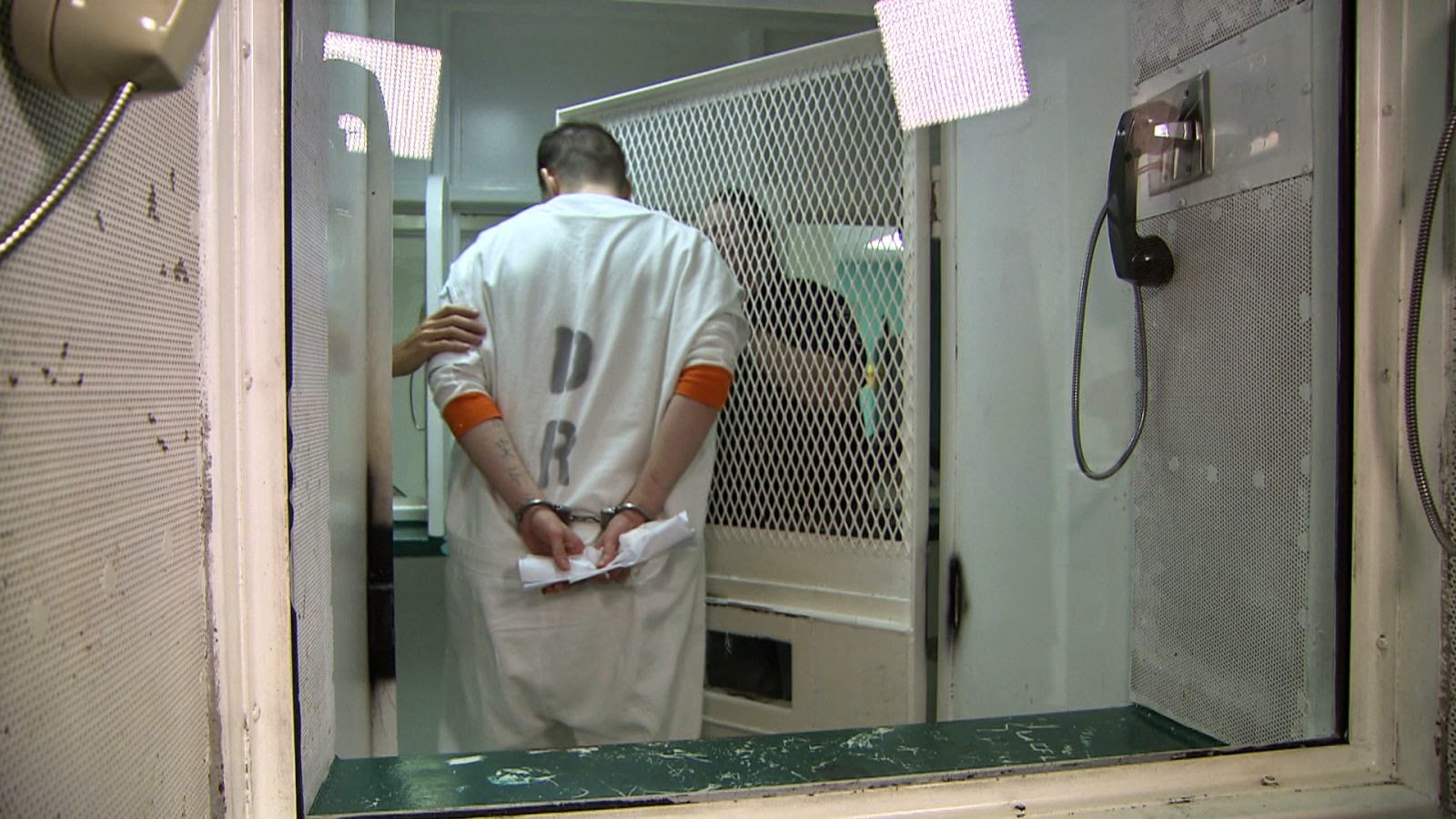
After his feature documentary Into the Abyss, about the murder of Sandra Stotler, her husband Adam, and their friend Jeremy Richardson, and the capital punishment the perpetrators were sentenced to – German filmmaker Werner Herzog presents four separate portraits of individuals sentenced to death in the United States. Contrary to other “death row docs” in which filmmakers try to elicit sympathy or understanding for inmates or take up the cause of the wrongfully convicted, Herzog reconstructs the tragic events by confronting the inmates.1
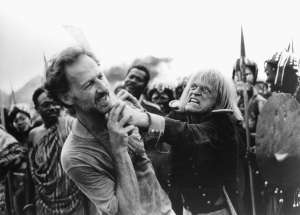
Herzog has a characteristic way of presenting himself in his films. In his 2005 Grizzly Man, Herzog, on screen, listens via headphones to the audio (the cap was still on the lens) of the videotapes that captured the Grizzly attack on Treadwell and his girlfriend Huguenard. He advises Jewel Palovak, ex partner of Treadwell, not to do the same, as it is supposedly quite gruesome. We as viewers also have to do without it. In this scene Herzog explicitly positions himself as interlocutor, mediating between the profilmic and the audience.
In Death Row, Herzog is visually as good as absent, but orally he is very present, as interlocutor, but also as prosecutor, judge, and outsider. His role as interlocutor between the story and its protagonists and the viewer, surfaces when he tells one of the interviewees, Hank Skinner, that although he disagrees with the sentence, the film will not be an instrument in proving Skinner’s innocence. Skinner’s response: “Oh I know, he already told me”, pointing to someone next to the camera. At the end of the episode, over a desolate landscape, Herzog relates to the viewer: “Inspired by Hank Skinner, we took this trip for ourselves … everything out there all of a sudden looked magnificent, as if entering the holy land. Hank Skinner’s holy land.” In the first instance, the production of the film and the information about the intentions of its maker come to light – conveyed for the viewer this time rather than for the participant. In the second, Herzog mediates – not just visually but also orally – the account of a landscape now inaccessible for Skinner but also for the viewer.

Barnes landed in prison after murdering a young woman. Herzog interrupts him: “It’s very fascinating for me because you refuse to speak about it. Apparently you had one or two, uhm, several encounters with your victim, with Patricia Miller whom you killed. You never talked about it and refuse to talk about it, but apparently you were humiliated or repudiated by her. I do now know. Uhm…” Herzog again and again displays his knowledge of the details of the cases while here claiming ignorance. The silence that follows can only be an invitation to Barnes to speak, an invocation to fill in the gaps.
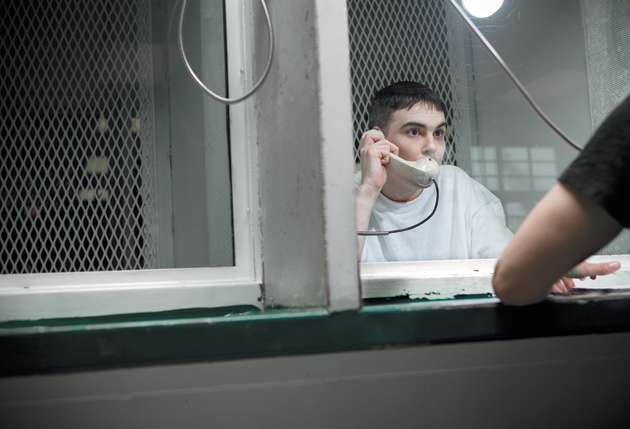
Herzog also comments as outsider, as if he were a chorus in his own play. At the beginning of each episode of Death Row he introduces himself as foreigner who, as a guest in the USA, “respectfully disagrees” with capital punishment. He asks Skinner, who came close to execution but received respite: “Do the guards shout out ‘Dead Man Walking’?” The response is: “No they don’t, that’s in movies”. On how Skinner’s execution will affect the locals in his town, Herzog says: “…but they would welcome it, they would probably celebrate and feel good about it…”
Death Row is as much about the convicted men as it is about confronting them. Herzog alternates between the roles of interlocutor, prosecutor, judge, and outsider. His position in the film is therefore ambiguous to say the least. Even though he disagrees with their fate, he in no way takes pity on the men he portrays. Is this what happens when you meet such men face to face, men who have been condemned for horrible crimes and await the ultimate sentence? When you know all the details of their cases? When there is apparently no doubt about their culpability? When the safe distance of time, space, and ignorance disappears?