Although the furniture giant #IKEA claims that «taking care of the #climate is a key part of IKEA’s corporate responsibility,» one must not forget that as a corporation, nothing surpasses its commitment to global expansion. Since the ’70s, IKEA has become the world’s biggest company in furniture production, and it continues to expand from Latin America to North Africa, the Middle East, and Asia. Such expansion has a high price, as revealed in Ikea – The Tree Hunter. The documentary questions IKEA’s deceptive claims about environmental merits and its impossible promise of sustainability.
Affordable design for the masses
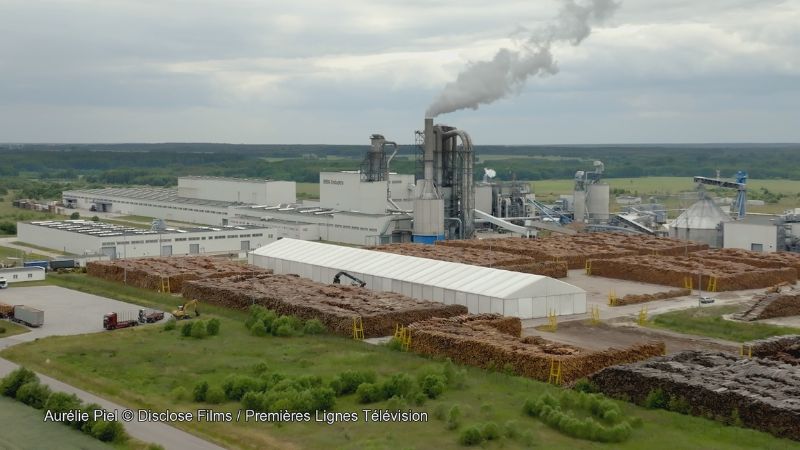
Most of us have experienced shopping at an IKEA store. We have felt trapped in its maze of showrooms, and we leave buying a little more than initially planned because there is always something new to discover at IKEA. No other seems to be able to deliver such practical, modern, ready-made interior designs for such an affordable price. By making modern design available to the masses, they have, in fact, «democratised design,» as they call it. There is no doubt that IKEA has introduced mass #consumption to the world of interior design, and they continue to create a hunger for more, as if the planet has unlimited resources.
There is no doubt that IKEA has introduced mass consumption to the world of interior design
IKEA’s growing hunger for wood
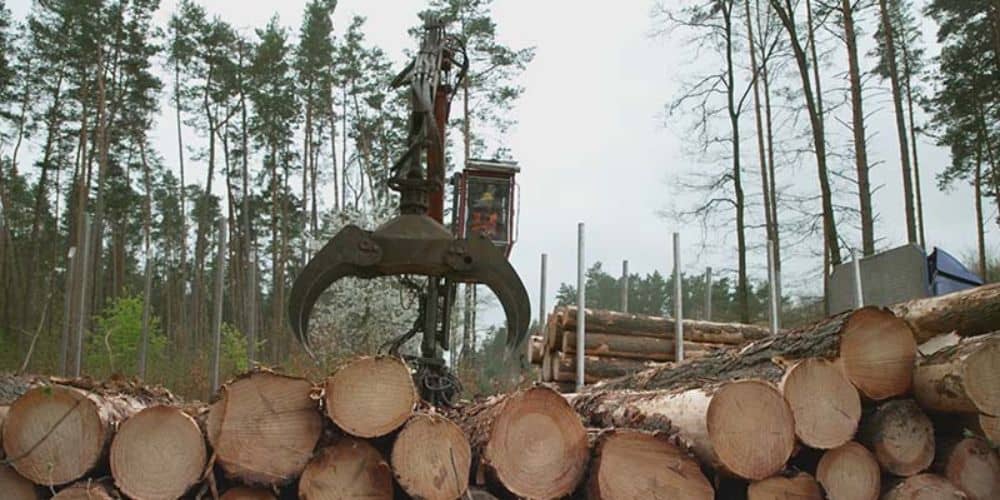
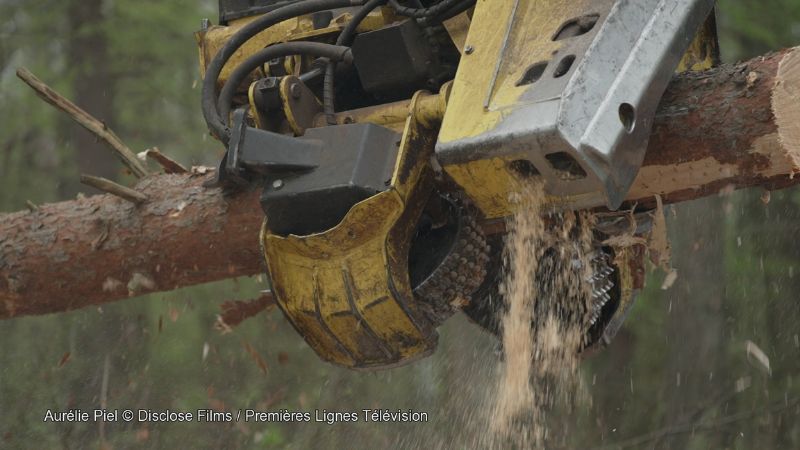
As the world’s largest #wood consumer, IKEA significantly impacts the world’s forest industry. Almost 60% of the products manufactured by IKEA are made of wood. According to Earthsight, the organisation that monitors the environmental impact of businesses, IKEA uses 21 million cubic meters of logs every year. That means that one tree is logged every second for an IKEA product.
Nonetheless, IKEA claims to be committed to no #deforestation by 2026 and has worked out a sustainable strategy to become «forest-positive.» By becoming one of the largest private landowners of forests worldwide, they want «to improve forest management worldwide by 2030.» Others call this IKEA strategy #forest colonisation#, as IKEA is applying the much-criticised Swedish logging policy worldwide.
Fast furniture at a high cost
Back in 1944, when #Ingvar Kamprad# started his business, furniture was built to last generations and passed down within the family. Already in 1969, Kamprad said in a television interview, «I want to change our mindset. Before, we bought a suit that was going to last 20 years; now, we buy a suit perhaps twice a year, and the same will happen with furniture.» Kamprad was inspired by the fashion industry and made a revolutionary move when he focused on trendsetting rather than long-lasting quality. IKEA creates over 2000 new designs yearly, and since IKEA furniture is not built to last more than about 15 years, the quick turnover has been labelled as «fast furniture.»
IKEA likes to promote itself with the fact that it keeps on pushing its prices down. If one picks up an IKEA catalogue from the ’80s, one will soon see that the classical IKEA designs are still being sold today but at a much lower price than four decades ago. One reason why IKEA can set such low prices is that it has outsourced its production to cheaper nations.
During the #Cold War#, Kamprad made lucrative deals with the #communist regimes that guaranteed him very cheap wood by exploiting the virgin forests of #Russia and #Poland. During the last eight years, IKEA has been logging in the #Carpathian Forest#, one of Europe’s last virgin forests, which stretches across eight nations and is considered Europe’s oxygen tank. It is home to wildlife such as wolves, lynxes, and 40% of the European bear population.
There has been a growing protest by locals and environmentalists against exploiting these virgin forests. Recently, IKEA got into a direct dispute with the Lithuanian government over its aggressive logging practices. These conflicts led IKEA to create a new strategy to serve its hunger for wood. By becoming the largest private owner of forest land worldwide, IKEA plans to significantly influence how the politics of logging forests will develop in the future.
Although IKEA claims to only use wood harvested in a renewable way, according to a retired personal assistant of Ingvar Kamrad, this is not true. «We were very much aware of the fact that we were utilizing illegal timber from then-communist countries such as Poland and #China. It is not possible to meet the demand when the products we offer are as cheap as they are.
Now, IKEA is going after one of Europe’s largest remaining old-growth forests, which lies in #Romania. Illegal logging is rampant in Romania, where the mafia still holds significant control over forestry, which means it is easy to exploit woods in an area where it is difficult to monitor timber trafficking. Environmentalists, forest rangers, and journalists have been killed in their attempts to document illegal timber trafficking. The result is that Romania has lost over half of its virgin forest since 2007, even though IKEA is the largest private owner of forests in Romania.
By becoming the largest private owner of forest land worldwide, IKEA plans to significantly influence how the politics of logging forests will develop in the future.
«Sustainable forestry» versus biodiverse forest
Ever since the 1980s, when everything associated with Scandinavia became a trend on a global scale, IKEA has been using «national branding» for all it is worth. Outside Sweden, most people associate it with #welfare, #equality, and #ecology, which are also qualities IKEA promotes on its website. The question remains if doing things the Swedish way will be of any help for the future of our forests.
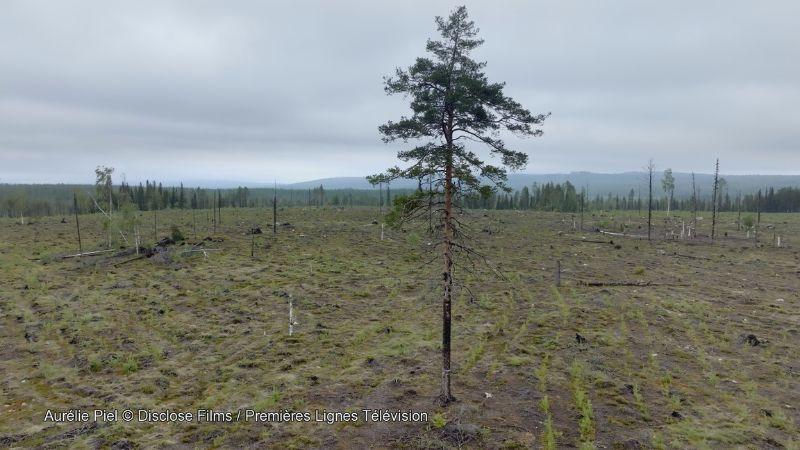
Despite Scandinavia’s image of being ecologically minded, it practices the most aggressive logging practices in Europe. The character of Swedish forests has changed drastically over the last couple of decades. The old trees are gone, and almost everything has been replaced by young trees. What the Swedish government calls «sustainable forestry” is forestry that has lost its eco-diversity.
As a Swedish forest ranger explains in Ikea – The Tree Hunter, «A forest does not only consist of trees, it is the home of hundreds of species, and they are gone for good. It takes 200 years for these species to settle back if they ever do. When trees are cut every 50 – 60 years, it is impossible to achieve the state of a tall-grown forest.”
Sweden is the region in Europe that is losing its primary forests at the fastest rate. Almost one-fourth of the remaining unprotected old-growth forests were logged between 2003 and 2019. If logging continues at this rate, all of these unique and ecologically valuable forests will be gone in about 50 years.
«Sustainable forestry» on a global scale
IKEA plans to open stores in #Brazil and #New Zealand# by 2025. As a part of their preparation, they bought vast forests in these countries where they applied their «sustainable forest management.» The strategy was to replace valuable virgin forests with fast-growing pine trees, which would be ready to log in 50 years. The locals call it a form of forest colonisation, as it has become apparent that this strategy poses a direct threat to the ecosystem of native forests, causing environmental disasters.
In Brazil, IKEA is being taken to court for bringing ecological damage to that country’s forest. As one of the lawyers put it, «We are on a highway to ecological hell.» Until now, IKEA has been hiding behind contractors, but it is IKEA at the end of the economic chain that sustains and supports the ecologic degradation of the native forest. Like with everything that is fast, fashion, food, or furniture, «when the price is very low, you always can be sure that someone is paying that price.» In this case, it is our #biodiversity that is paying the price. We must ask ourselves whether we want to support a company that may be deceiving us with greenwashing.
We must ask ourselves whether we want to support a company that may be deceiving us with greenwashing.
We should not view primary forests as national property
Ikea – The Tree Hunter unveils the truth about how IKEA manages to lower its production costs by exploiting pristine forests worldwide. However, it does not provide us with solutions to halt this devastation. We can not lay this responsibility on the individual consumer alone.
At the European Parliament, Sweden, Poland, and Romania have positioned themselves as pro-timber nations, while the rest of Europe recognizes the importance of preserving Europe’s remaining wild forests. The problem is that forest policy falls under national politics and economic management, creating a need for a united European Forest Policy to prevent further degradation. If IKEA is strategically aiming for a significant impact on global forest management, it is essential to establish a global forest policy that protects primary forests worldwide.
Ikea – The Tree Hunter was a #FIPADOC World Premiere and broadcasts on Arte on 27 February 2024