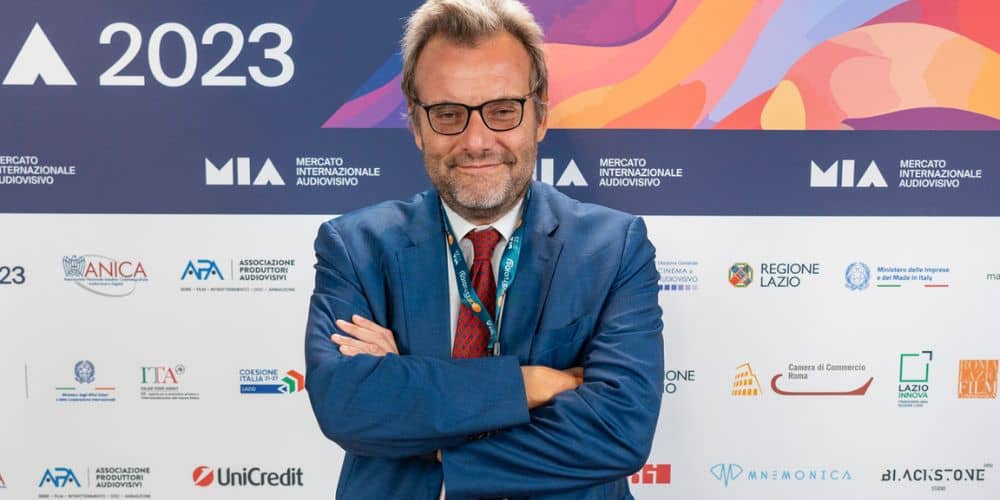
As the Head of the Doc & Factual division of MIA | Mercato Internazionale Audiovisivo, #Marco Spagnoli# plays a pivotal role in shaping the platform that has grown into one of Europe’s most dynamic spaces for documentary and factual content. Promoted by ANICA (Italian Association of Film, Audiovisual and Digital Industries), chaired by Francesco Rutelli, and APA (Italian Audiovisual Producers Association), chaired by Chiara Sbarigia, MIA has become a vital marketplace under the leadership of Gaia Tridente, now in her third year as director. Over the past decade, MIA has cemented itself as a significant player in the international audiovisual market, facilitating global collaboration and elevating Italian productions. With over 600 projects submitted this year alone, the market reflects a rising interest in diverse and innovative storytelling.
In this interview, Spagnoli offers insights into MIA’s unique positioning within the European market, the evolving landscape of Italian documentary filmmaking, and how MIA fosters international collaboration while staying committed to artistic and commercial success.
How does MIA situate itself within the broader European and International film market landscape?
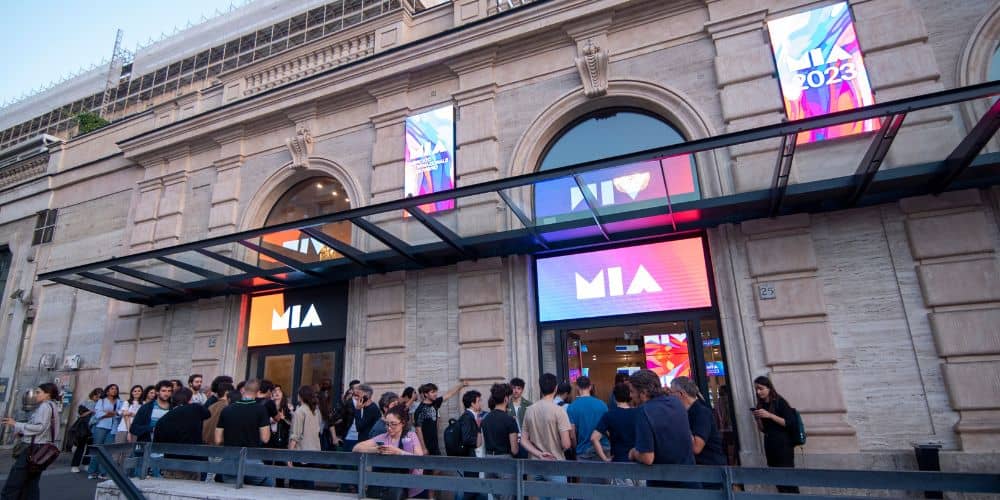
On a very peculiar standpoint, structurally, geographically, and editorially. First of all, MIA is a fully balanced audiovisual market: we have four divisions so far, and we are basically four different markets tightly knitted in one event. So MIA is a fully ‘Audiovisual’ market set in the heart of Europe, where you can easily arrive. All roads lead to Rome, but also airports. It’s less than two hours from any major European city and you have direct flights. There are no connections, a fast train from the airport to the heart of the city (taxis exist too…).
So it’s a perfect place to do business in the best way possible. I am not even bragging about the food, the sights and the weather. They call it the eternal city and there’s a reason for that. That said, there’s also a democratic issue. We are on an underground stop so you can find your accommodation anywhere in Rome (even Naples and Florence with fast bullet trains) and be there. Anyone can get to MIA without taxating themselves for crappy accommodation as it happens in other markets. We don’t ask people to fly around…just come to Rome, and we appreciate your business (and your time, too…).
it’s a perfect place to do business in the best way possible.
Specifically, to Italy, what sets the Italian documentary scene apart from other international markets, and how is this reflected at MIA?
MIA is an international market that showcases Italian products that usually don’t get as far as they deserve. We play at home, but it’s not that different from the good things you can do internationally elsewhere. We propose Italian products because we think they are good and they can make money. Go and take a look. If you don’t want to, it’s up to you. We assume there are a lot of opportunities: new voices and new production companies that are worth talking to. Italians are producing all types of documentaries, and things have changed a lot from the bleak, sad, depressing, black-and-white, post-neorealist production of the last few years. We are producing all kinds of genres, and we are quite sure many co-productions can come out of Italian artistic, entertainment, lifestyle, and socio-political IPs.

How do you approach curating the selection of documentaries for the market? What criteria are most important?
We are not a festival so our approach can be original, interesting, effective and can find an audience. Our editorial line is ecumenical: high production values, quality in the materials, direction, visual approach, and – oh- we really want to make money. So, as long as we can find a niche or big audience, it doesn’t matter. We want to showcase what we believe can resonate with different audiences regardless of the subject and size. We love independent films too! As long as they are done for audiences, they are not self-belly watchers and can spark interest.
We want to showcase what we believe can resonate with different audiences regardless of the subject and size.
What challenges do Italian documentary filmmakers face today, and how does MIA help address them? How does MIA Market help foster international collaboration?
Challenges are the same everywhere: in the immortal words of Tolstoj, happy markets are all happy in the same way, while depressed markets each have their peculiar reasons. Streamers’ indecisions, the financial uncertainties of cable and satellite services, shy reluctance from exhibitors and the impossibility of Rai to make up for everything are big problems that can be solved only by working on building better projects and presenting them to international markets as we do with our pitching forum and showcase. As a veteran journalist and filmmaker myself, I strongly believe in the quality of Italian projects and production companies, so we needed to create an ecosystem where you can find relevant international projects and have a wide range of local stuff. But we accompany them: on stage, on 1-1s, on introductions. We believe that the lack of communication has been a kiss of death for a long time and you are not supposed to throw things in the face of the professionals only because there are paying institutions. We call, we choose, we select, we offer, we support, we explain, we introduce people. We treasure the institutional support from the government and producers’ association. We value it with a curated selection of products and connect with everybody as if we were at a festival. But guess what? – we are not. So we must make a good business and possibly a lot of money for everyone. As long as it’s good and can find an audience, MIA Doc & Factual, in particular, and MIA Market, in general, is the right place for you. We are passionate about what we do. There’s no other way to make it.
How do you see the trend of documentary and non-fiction within the broader MIA programme? How has it grown? Where do you see it going?
Documentary Is the audiovisual genre that benefitted the most from the pandemic. Before Covid 19, most people thought documentaries were only ‘the life of deers on the Alps’ or ‘Cats in love in southern Italy’. We love animals too, but documentaries are much more, so if you can find the right budget to tell stories, we will soon enter a golden age of endless stories that might appeal to everyone, not only in Italy. It’s a process that must take into account the dusty approach of some companies, the greediness of some rights owners, and the untidiness of a chaotic market that could benefit more from order than from confusion. P&A is almost non-existent, sometimes people settle for what can be done easily, while we have big budgets we can try to work out stuff that’s relevant all over the world. We are storytellers, but we must also set the right tone for everyone to understand us everywhere. We foster new talents and voices that need to be discovered in order to feed new contents all over the world.
We are storytellers, but we must also set the right tone for everyone to understand us everywhere.
What are some of your favourite Italian documentaries or documentary filmmakers?
I love stories and documentaries. I think that the definition of a documentarian is old and obsolete. It’s the story that now calls the form: it can be anything from an article to a drama series, from a film to a documentary. I love documentaries of people who call themselves directors: Giuseppe Tornatore, Bernardo Bertolucci, Gianni Amelio, Luca Guadagnino, Mario Martone, Riccardo Milani, Marco Bellocchio and many others all made and make documentaries. I’m expecting Gianfranco Rosi to make a feature as well as Pietro Marcello to make a drama…who knows? As a filmmaker myself, I don’t expect to choose the form but the story. So that’s why I wasn’t surprised when I was asked to direct the MIA Doc & Factual division with my close collaborator and good friend Ben Pace: it’s another storytelling with a lot of communication, but it’s still a story. As the MIA motto states, these have been 10 years (7 with my supervision) of your stories. And that’s where fame and money come from: stories. Come to MIA and look for them.