There’s a scene in Life After where director Reid Davenport turns the camera on to himself, filling in an online form for Canada’s voluntary #euthanasia program called MAID (Medical Assistance in Dying). His face cannot conceal his bewilderment when confronted with the results of his eligibility. Davenport is disabled with #cerebral palsy#. But he is also a prolific documentary filmmaker with a decade worth of shorts, and now, on to his second feature, he is carving out a niche for himself in a highly competitive field.
Wide support
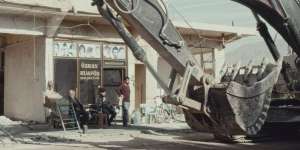
Life After, which premiered at #Sundance in 2025, is the follow-up to his award-winning debut feature I Didn’t See You (2022). An immersive and incredibly visceral viewing experience, where a camera attached to his wheelchair records his daily strife as he traverses through the unaccommodating terrain of his neighbourhood in Oakland. The documentary is a reminder that the world isn’t built for people like him. The scope of Life After broadens to include perspectives from other disabled individuals. Still retaining some of the POV style filming to include his own narration, the focus is on the prominent topic of assisted dying in relation to the disabled body.
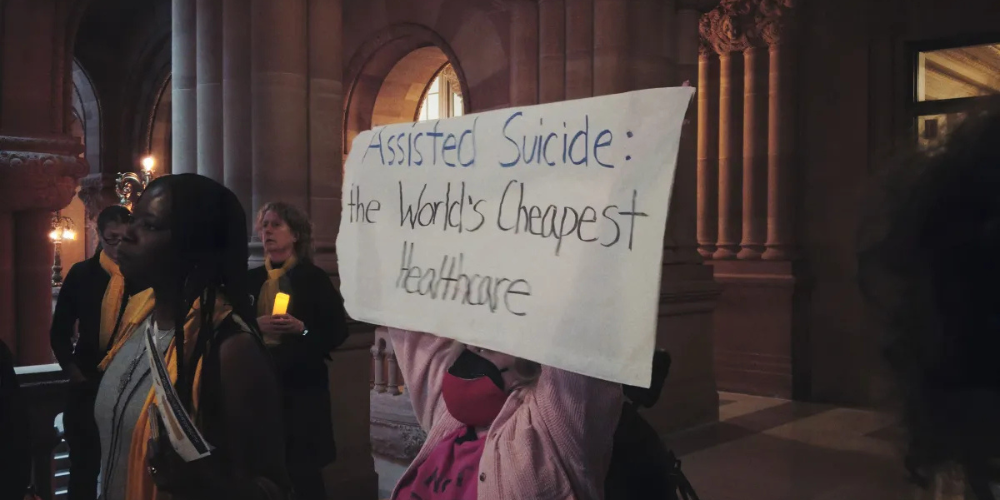
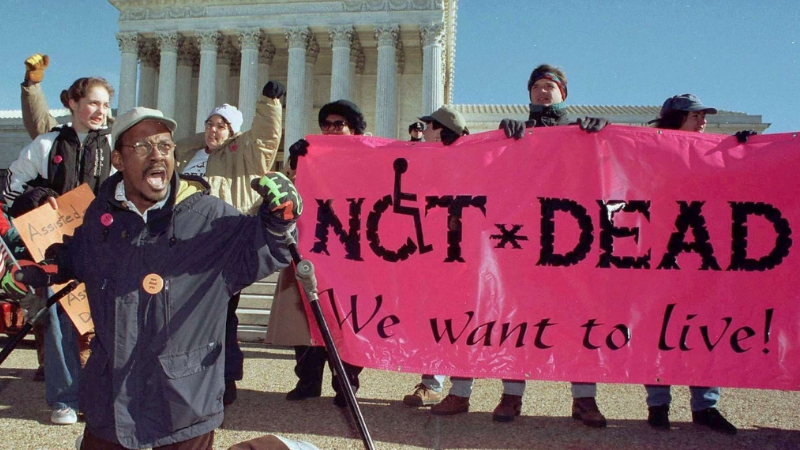
Originally a fringe concept, proposed by humanists dating back to the 1800s, assisted dying now sees 72-75% public approval in most Western countries, and from across the political spectrum. Its wide support presumes, however, that the decision is taken autonomously, a dignified solution to incurable suffering. Finding majority support also amongst disabled people, and yet such programs, as Davenport seeks to point out, adversely emphasise their vulnerability.
The documentary is a reminder that the world isn’t built for people like him.
Elizabeth Bouvia
The documentary centres on the widely documented case of Elizabeth Bouvia. Paralysed by cerebral palsy and living with unremitting chronic pain caused by severe degenerative arthritis, in 1983 at the age of 26, she aadmitted herself to a psychiatric ward in California, demanding to be starved to death. Her request was, as expected, rejected, forcing her to take matters to court. It thrust her into public attention and made her an inadvertent figurehead of the right-to-die movement.
Finding himself reflected in Bouvia’, Davenport makes it his mission to uncover what happened to her—tracking down her two sisters and convincing them to be interviewed. Appearing reluctant at first to recall painful memories, they slowly manage to sketch a holistic picture of Elizabeth’s life, one with more agency than the media narratives assigned to her. Her desire to die was brought on by insufficient support and directly tied to specific life events (divorce, miscarriage, and lack of career prospects). Further revelations of growing up poor, her adolescence spent in institutions and a series of extreme and painful surgeries which sought to «normalise», may have been contributing factors.
Bouvia’s arc is interjected by other more recent cases of differing situations and outcomes, at a time when assisted dying is legal in some countries. Wheelchair bound Michal Kaliszan from Ontario, Canada, contemplates MAID when his mother, his primary caregiver, passed away, and home care support has disappeared. Even in full-time, well-paid employment, he would still be unable to cover his homecare costs. Or the case of Melissa Hickson, whose husband (Michael) was left paralysed after a heart attack but is still conscious and able to communicate. Melissa is shunned, ignored by doctors hellbent on cutting Michael’s life support, deeming his quality of life too poor. Financial constraints and «quality of life» are recurring themes.
As is the case with 14 -year-old Jerika Bolen, who in 2016 chose to stop treatment for Spinal Muscular Atrophy, which left her immobile and in chronic pain. Uncomfortable scenes of Bolen’s prom-style send-off surrounded by loved ones praising her bravery. But as Davenport retorts, «surrounded by people who thought she would be better off dead». Disability advocates at the time claimed Bolen’s condition would not have resulted in death for decades, and her poor pain management was the fault of her healthcare provider.
Ableism
Davenport’s investigations indicate a level of mistrust toward such programs and toward the ableist organisations that administer them. As well as such life decisions made under duress by financial constraints, a lack of support, and an uncompromisingly ableist society. In last year’s BBC TV documentary Better off Dead? Actress Liz Carr similarly sought to highlight that such life decisions are underlined by prejudice. In a society that has directly and indirectly told her throughout her life that she is better off dead, the prospect of it becoming a widespread reality is scary.
Access to home videos of Elizabeth in later life shows her at a happier time. In her own apartment with live-in care, her pain is managed, and she is pursuing her interests in studying. We see a revived sense of living and persevering. She shares Davenport’s determination and spiritedness, characteristics that are omnipresent throughout the documentary. His stance is unabashedly subjective yet never comes across as didactic. It feels genuine and urgent, rooted in his own fears about his life. In his own words, «disabled people aren’t threatened by their bodies, other people’s bodies threaten them».