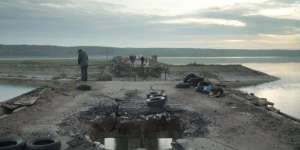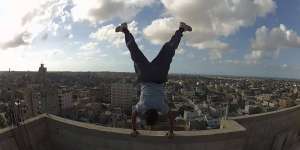
Just Because I’m a Street Kid is a short documentary directed by Faith Riyano and produced by Zenith Seed Films. The film follows a young homeless woman named Shorty who has published two collections of poetry. In this deeply moving film, the camera captures the daily life of a young poetess struggling to survive from one day to the next. Every day is a struggle. We see the precarious environment of the young woman who sleeps on the pavement. This atmosphere of social crisis is conveyed through Shorty’s voice as she recites her poems. Early on, Shorty’s life was marked by hardship and violence following the loss of her mother when she was just 11 years old. She found herself on the streets and had to face her harsh reality. The film’s central theme shows us how, despite the precariousness of her life, Shorty manages to regain control of her life and destiny through her poems. It is a way for her to challenge society’s perception of her and of street children in general. We also see in the film that Shorty expresses great anger due to the abuse she has suffered. In her approach, she goes out to meet the people of Melville to tell them her side of the story. This film echoes the one by Mario Laaistock and Kurt Orderson titled Amigo the Griot.

Amigo the Griot is also a short documentary film that follows the journey of Mario «Amigo,» a blind hip-hop artist living in a suburban neighbourhood in Cape Town. Amigo has been dubbed «The Modern Griot.» In this independently produced film by its creators, Amigo uses his music to weave together memories and recount his life story. Like Amigo, Shorty uses art as a shield and a form of therapy. Shorty uses poetry, while Amigo uses music and oral storytelling—much like a griot—as his primary means of expression. As a result, artistic creation is no longer mere entertainment. It becomes a form of therapy to overcome the hardships and traumas they have endured. Domestic violence and the precariousness of life on the streets for Shorty, and the loss of sight for Amigo. In both cinematic realities, art is the means by which the protagonists regain control of their own lives. They are no longer the girl from the streets or the blind man, but well-known and respected people whom we can admire. The protagonists are so deeply attached to their origins. Shorty is tied to her neighbourhood of Melville, and Amigo is attached to Eerste River in Cape Town. Just as in the autobiographical documentary My Jebba Story by Nigerian director Kagho Idhebor, who also shows his attachment to his neighbourhood of Jabba Street in Lagos.

My Jebba Story chronicles the director’s years living on Jebba Street, in a working-class neighbourhood in Lagos, after he finished his film studies. In his film, he highlights the hospitality of the street’s residents, who welcomed him when he first arrived in this urban setting. Through archival photographs and videos, he illustrates the neighborhood’s transformations and the evolution of its residents. At the start of his life on Jebba Street, the director had no control over his new surroundings. He was a newcomer who had to gradually integrate into a bustling, densely populated neighbourhood. His only control was purely artistic: the ability to capture and preserve images over many years and arrange them into a film. Unlike the other two films, where the conflict is violent, My Jebba Story, produced by Kagho Idhebor Crowther, centres on integration. A working-class neighbourhood with constant noise throughout the day. The hesitations of a newcomer to the neighbourhood and the fear of being accepted by others were at the heart of the challenge. We realise that the film resolves this dilemma through acceptance of others and social solidarity. In particular, the neighborhood’s young people eventually became his crew during filming. Ultimately, the street is no longer a barrier but an ally that helped him understand values such as hospitality, social solidarity, and friendship. Just as in Melville’s street, Jebba Street is immortalised through art, and the filmmakers are deeply connected to their communities in working-class neighbourhoods. These two works refuse to focus on the misery or poverty in these environments; instead, they highlight human relationships and solidarity among African communities. The protagonists are never portrayed as wretched or as victims. The characters are masters of their own destiny because they take charge of their lives. The three documentaries explore urban reality in Africa. The urban space is not merely a backdrop but becomes a central character within which the protagonist is situated. Jebba Street is the filmmaker’s focal point; Melville is a refuge for Shorty, the young poetess; and Eerte River is a source of memories and musical inspiration for Amigo.
This review is part of the Talent Press program, an initiative of Talents Durban in collaboration with the Durban FilmMart Institute and FIPRESCI. The opinions expressed in this article are those of the author, Harouna Neya, and should not be taken to reflect the official position of the organizers.