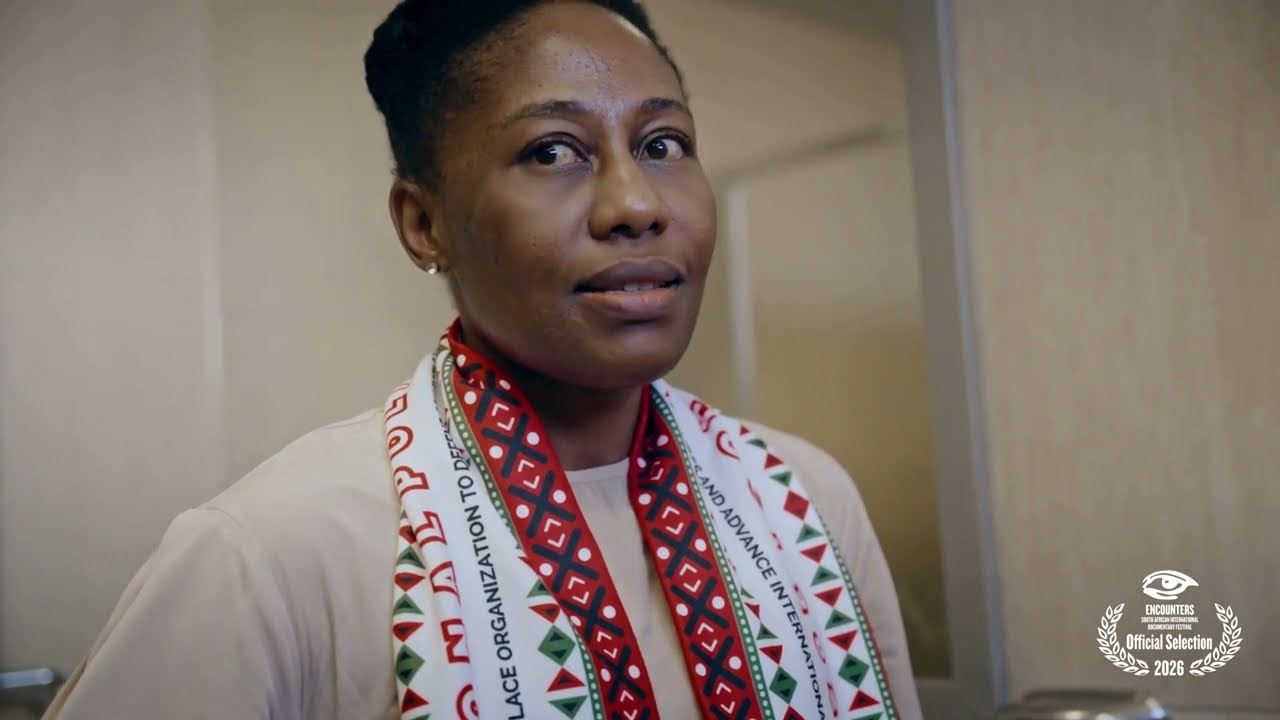
Marxism & Period Pains does a stellar job of highlighting the responsibilities society places on young girls and women in schools and workplaces. Marxism is a social, political and economic philosophy founded by Karl Marx in the 19th century. It analyses the flaws of capitalism. Which is exactly what this story is about, the exploitation of workers and highlights how unfair the wealthy owners are to the working class particularly women.

Uncomfortably obvious
As women, we must always fight and claw our way into the world. Our presence has to be felt. Every day, women fight for their positions in society, regardless of age. Marxism & Period Pains makes it uncomfortably obvious that not enough is being done to make school and the workplace comfortable. For example, the documentary touches on a grade 10 female student telling a story about when she was forced to write an English exam paper while experiencing unbearable period pains. Her teachers told her to continue writing because they had also gone through period pains and that there was nothing special about her. Needless to say, that student failed the test.
In some black households, our mothers don’t have the menstruation talk with their children and assume or rely on schools, particularly the life orientation subject, to teach their daughters about the menstruation process. In defence, some mothers do not experience period pains, and they refrain from having difficult conversations. As a result, young girls don’t get told that whatever they are feeling down there is normal and that every woman experiences it starting from the age of 12 to 13 years old. According to Nokuthula Msibi a scientific officer states that 90% of women experience some kind of menstrual challenges. There is nothing compared to period pains, and some women described it as feeling like the womb is being ripped out, throbbing, pounding pains, abdominal pains and lower back pains. Mmabatho explains that young girls are continuously treated unfairly and excluded from general privilege. Or to justify the general social perception and expectation that young girls and women must accept this pain and simply move on. High school students explain that they do not feel comfortable telling their teachers when they are experiencing period pains because their pain will be minimised. This doesn’t help that it is against the law for teachers to give students medication because they are not licensed medical professionals.
Another participant who works as a professional dancer expressed the disappointment she’s had to carry for not being able to show up for her dancing partner in moments of unbearable period pains. Marxism & Period Pains makes a great point of highlighting that, in addition to the struggles of everyday life that all women have to go through once a month, every woman’s life is policed by something that they cannot control, yet the pressure to perform remains.
As women, we must always fight and claw our way into the world.
«Eve’s sin»
Female labourers struggle between carrying the world on their shoulders, while the routine bearing the pain of «Eve’s sin» is shown to us in an informative yet entertaining way. From a Christian perspective, this is because women were cursed. However, women also took on Adam’s curse. Mmabatho clearly states that women eat by the sweat of our brow. No work means no pay; we are taught to accept labouring in excruciating pain.
Gynaecologist Dr Mongezi Siqana states that when women experience bleeding, it simply means they are ready to bear children, meaning their uteruses are now ready to conceive. When you look at the physiology of periods, there are uterine contractions that result in pain. In this case, you have to get over-the-counter medication such as paracetamol or ibuprofen to help cope with the pain. But Nokuthula points out that nobody tells you about the impact that this medication has on your mental health, as these medications do have long-term consequences. Rethabile Mongae states that she thought it was normal to take 6 pain killers a day to cope with the pain, which in turn highlights the severity of period pains.
We are introduced to high school students debating whether South Africa should pass the National Health Insurance Bill (NHI). The NHI is South Africa’s strategy to achieve universal health coverage, aimed at ensuring access to quality health care for all citizens regardless of their socio-economic status. This sounds like a dream come true because healthcare is extremely expensive. South Africa does, in fact, have the resources because they are being financed by taxpayers. Section 27 of the Constitution provides that everyone has the right to have access to healthcare services. This would greatly benefit people like Herriet Hita, who works in the film industry, specifically in the Art Department. She recently found out that she has fibroids and has to visit the doctor two to three times a year. Fibroids are noncancerous growths that develop in the uterus. In order for Harriet to have children, she will need surgery, which is not affordable or easily accessible, because a doctor’s initial visit fee is R2200.00, each consultation ranges from R1800.00, the laboratory fee is R2100.00, and the actual surgery costs up to R100 000.00. This proves that healthcare costs are extremely high and unrealistic, and the NHI should be passed in South Africa. A conversation between the government and the private sector to help bridge the gap needs to take place with immediate effect.
Larger systems
Marxism & Period Pains gives us a clear picture of how the challenges women face, especially young girls, aren’t just personal struggles; they’re connected to larger systems like schools, jobs, and healthcare. The film shows us how women often have to push through pain and unfairness just to be heard. By sharing these stories, the documentary reminds us that we need to do more as a society. It’s not just about women handling pain quietly; it’s about making real changes so that schools, workplaces, and healthcare support them. In the end, the film makes us think about how we can create a world where women aren’t held back by something as natural as their own bodies.
This review emanates from the Talent Press programme, an initiative of Talents Durban in collaboration with the Durban FilmMart Institute and FIPRESCI. The opinions expressed in this article are those of the author Hlumela Luvuno and cannot be considered as constituting an official position of the organisers.