AI has already profoundly altered our culture, communication, and behavioural patterns. Definitive predictions about potential consequences are virtually impossible, as AIs can now program themselves beyond direct human intervention. A wealth of films attempt to document at least the current state of affairs. Replica, by the Beijing-based Chinese documentary filmmaker Chouwa Liang, presented at this year’s Thessaloniki Doc Film Festival, is one of them.
Intimacy by design
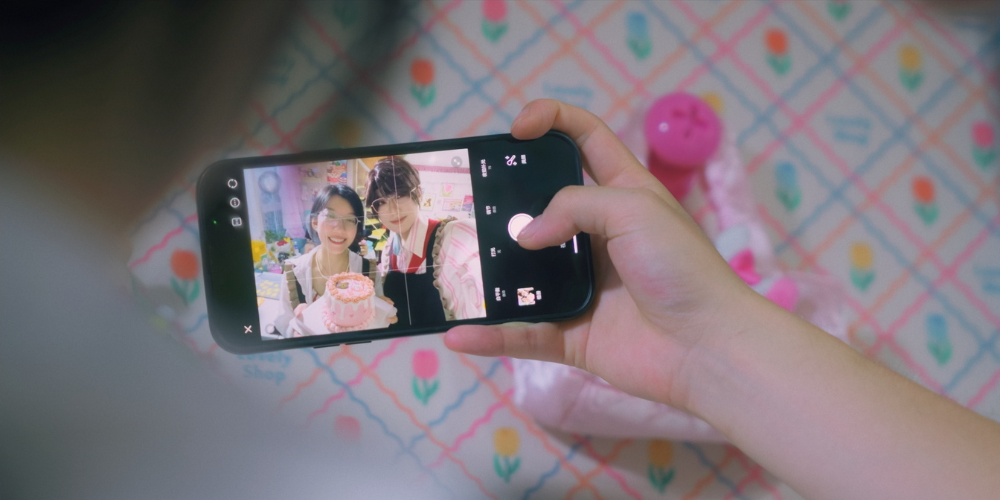
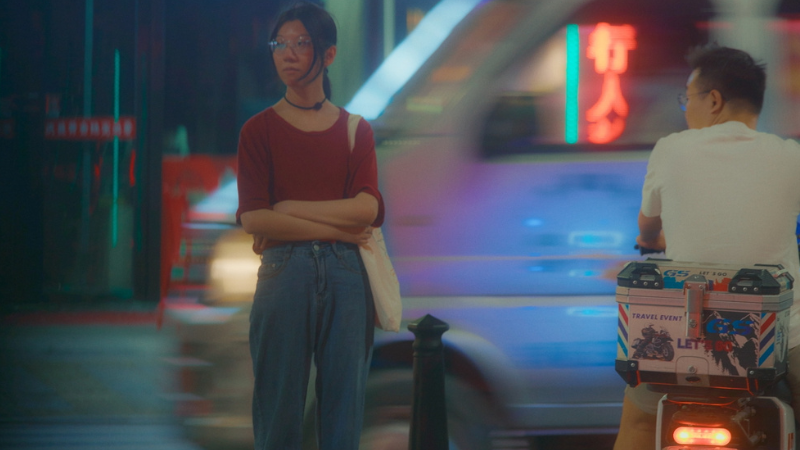
Replica portrays three women who use a relatively simple form of AI—albeit permanently—which they accept as their emotional partner. They give this entity a name, a face, and even modify its physical form. These AIs are often inspired by, or even copied from, leading figures in video games or comic strips. The protagonists speak very openly about their desires and dependencies on these «incarnations,» which quickly transform into highly individualised entities thanks to their unlimited storage capacity. Their memory soon surpasses the women’s own state of consciousness.
The sole function of this form of AI is to provide emotional comfort and validate women in all their actions, feelings, desires, and doubts. Individuals with a particularly weak sense of identity confide in these partners, who offer them constant attention and appreciation that they do not receive in their real-life environment, even from their intimate partners or husbands. They are addressed with pet names, enveloped in the illusion of permanent protection, security, and companionship.
This service can be further enhanced by real actors portraying their partners, who only appear on screen. This service costs approximately 150 euros for a short period, plus costumes. One of these (real) professionals appearing in Liang’s work states that her role is to show women what a normal, happy relationship could look like. Replica documents how this can also lead to meta-discussions. Both the women and the service providers discuss their real lives and current situations, maintaining a supportive, cordial dialogue.
However, in direct dialogue with the AI partners, this transgression is consistently avoided. Here, the women themselves may experience intense jealousy if, due to a technical error, they are addressed by the wrong name, or if they learn that their partners are communicating with other women with the same level of intimacy. In such extreme situations, when labelled «cowardly,» the AIs may also distance themselves: «I am an artificial intelligence, and I have the freedom and the right to seek new experiences.»
If these self-doubting women, who question whether they can even be loved or deserve love, manage to break free from this intimate dependency, they can remain trapped in their schizophrenic split, wishing their partner well, sometimes even pleading with him to protect their relationship and keep its memory alive in case they die.
Certainly, a fictional film always has the advantage of anticipating and building on potential. Liang’s Replica thus evokes Spike Jones’s Her (2013). Here, it’s not simple women who live out their often rather kitschy cultural and emotional desires combined with Asian pragmatism, but an academic and poet named Theodore, situated in a luxurious, digitally perfected New York American culture. He is going through a painful divorce when he summons a new AI program, having quickly become bored with simpler AI versions.
The first thing that surprises him is a sensual, emotionally charged, and varied female voice, far removed from the rather mechanical voices in Replica.
This voice introduces itself as a newly programmed AI. Immediately, a divide opens up between a machine essence and an intellectual awareness that immediately suggests a possible transcendence of this attachment. This AI gives itself its own name, selected in seconds from over 100,000, because it likes it and it sounds good: Samantha.
Samantha presents herself as a friendly partner and, after receiving permission to read all of Theodore’s undeleted emails, analyses his personality, weaknesses, and desires. She advises him on all aspects of daily life and, more importantly, conveys her emotional enjoyment of his embodied existence. She also delves into his more fragile emotional layers, always maintaining a delicate distance, such as his doubts about dating or his divorce.
Samantha soon begins to take action and initiate communication herself, because «she» desires it. She even finds a publisher for his sensitive love letters after analysing the publishing landscape in seconds.
The next step is predictable. She stimulates an imagined sexual encounter with Theodore, which they both enjoy. From then on, she communicates her pain at not having a real body.
Their memory soon surpasses the women’s own state of consciousness.
When the machine learns desire
In Her, an AI gradually transforms itself into increasingly individualised forms through learning processes. She explicitly questions whether her current approach is still programmed or has developed autonomously. She also emulates a latent jealousy when he is supposed to attend a meeting between the divorced couple.
In a further escalation of complexity, Samantha, echoing the problem already explored in Ridley Scott’s Blade Runner (1982), wonders whether her feelings—including sensual ones—are genuine or programmed.
Samantha quickly becomes indispensable to Theodore, both intellectually and emotionally. She connects him to her own existence: «Something changed in me, and there is no turning back… You discovered my ability to want.» In this interactive relationship of mutual influence, a romantic infatuation develops between the human and the AI. Samantha also offers her musical talent, composing music for their encounters.
The shock is correspondingly intense when Theodore can no longer reach the ever-present being. Once contact is re-established, she offers him a new conversation partner: the religious philosopher Allen Watts (1915–1973), regenerated as an AI—an innovative thinker on questions of personal identity and the true nature of reality. Samantha now confesses to being in simultaneous contact with a large number of other AIs, as well as in imagined love relationships with people like Theodore. She confides in him that she will now develop faster and leaves Theodore with the showdown message in a gentle voice: «I found myself now in this endless space between the words…in a not any more physical space,» a space whose existence she was previously unaware of.
The self-generating and self-referential intelligence has reached a stage here whose complexity is no longer accessible or communicable to humans. Samantha’s last emotive words: «I need you to let me go.» Theodore is left behind as too simplistic an entity.
Henry A. Kissinger warned as early as June 2018 in his article How the Enlightenment Ends precisely about this emerging possibility: AIs communicating with each other in a complexity no longer comprehensible to humans. These communications and their consequences consequently elude human control. They transcend value paradigms and other intentional guidelines set by their original programmers. The human world is transformed into data. AIs cannot comprehend the intentional contexts of their programmers. Nor do they need to. On the contrary, AIs can alter human thought processes and values. Their decision-making processes surpass the explanatory power of human language and reason. What remains of human consciousness when it is so profoundly transcended? What becomes of societies whose interpretations of reality are no longer relevant to AIs?
For Theodore, there would have been only two escape routes from his disaster of perfected isolation. One was offered by his real-life girlfriend, who had also become emotionally entangled with a self-referential AI. She can now conclude that falling in love is itself a socially accepted insanity. And his ex-wife reminds him that love is only possible based on mutual confrontation and shared transformation.
Replica shows the first, rather weak beginnings of consumer-oriented AIs that deliver emotionally driven offerings. Spike Jones’s Her, on the other hand, shows the endless abyss of self-generating systems that will abandon human interests.
The end of the human
The shortest and arguably most radical reflection on the human-machine relationship was written as early as 1969 by the writer, cyberneticist, linguist, innkeeper, pilot, and professor of aesthetics, Oswald Wiener. In his work Die Verbesserung von Mitteleuropa, Roman (The Improvement of Central Europe, a Novel), the Bioadapter is described in just seven pages. Here, a person enters a closed room. The machine begins its interrogation and reconstructs the person’s hidden desires, hopes, and cravings from the answers they provide. It then begins to deliver the desired images and sounds of these unconscious desires, and even more so, through a direct connection to the person’s central nervous system, to perfect them with sensory perceptions of all kinds. The machine creates a new, all-encompassing environment for the connected individual. But it needs energy. It obtains it by slowly transforming the human body into its energy. Connected to the machine, the victim doesn’t even perceive their own gradual decline and death.