Professedly old motives of mining and its social significance gain a new, contemporary light in an aesthetically striking and deeply humanistic debut documentary, Silver premiering at the #Krakow Film Festival#. A poignant group picture of the mining community in one of the world’s oldest and still-active silver mines—the #Potosi Mines# in #Bolivia, which have been officially operating since 1545—becomes an animated and thoughtful demonstration of the revolving colonial underbelly of the world economy in its various manifestations throughout the centuries. Today, the Potosi Mines again rise in importance as a source of silver for #AI and the advanced technologies that will supposedly build the «new» world of the future.
Cerro Rico
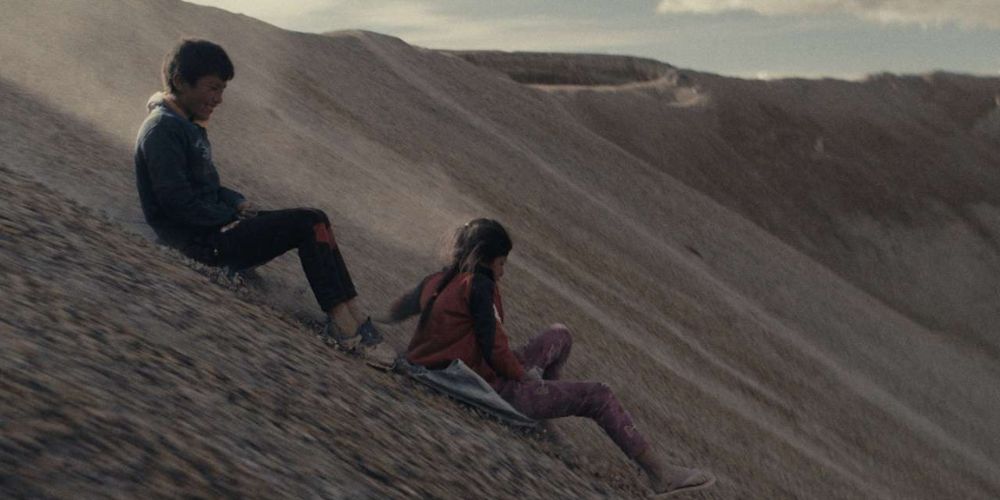
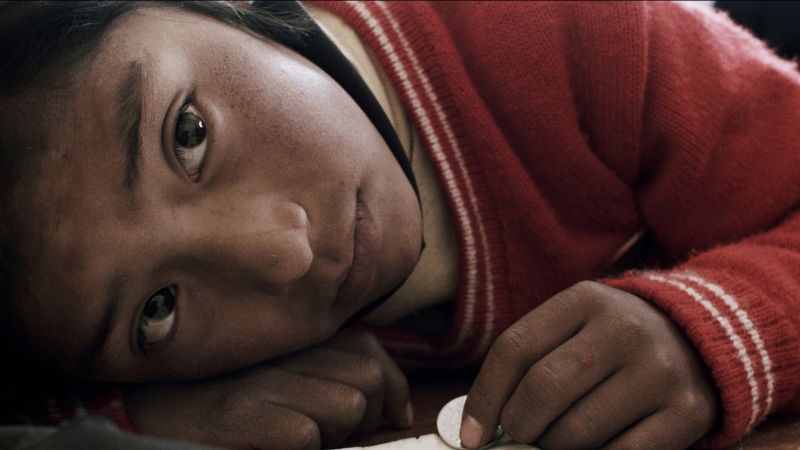
Silver weaves together a breathtaking Bolivian mountainous landscape of #Cerro Rico#, featuring images of the mines’ interiors and their surrounding areas, along with the personal histories of the miners and their families. It paints a picture of the natural and social microcosm of forces that have shaped people’s lives for centuries, from generation to generation, from birth to the very last days. The film follows miners working in the depths of the mountain, children playing on piles of silver tailings, school classes where they learn how to help their fathers and avoid robbers, and the everyday activities of their mothers. It slowly creates a portrayal of life filled with physical labour in harsh conditions, encircled by dangers. Children often go into the mines as young as five or six years old, either while playing with their friends and looking for colourful quartz to sell later at a local market or with their fathers, who start showing them the details of the craft. The boys start working in the mines, usually as eight or nine-year-olds, gradually learning the more difficult tasks.
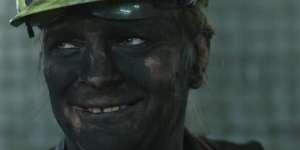
Extraordinary cinematography, reminiscent of Juliano Ribeiro Salgado’s and Wim Wenders’ The Salt of the Earth, interlaces the first-person shots in claustrophobic mine corridors and close-ups of silver veins with wide, visually stunning panoramas of the outside world. The camera ventures deep into the mountain, navigating tight paths and shafts as it follows the miners as they work. They constantly dig deeper into the rock, set dynamite, blow up the walls, and look for new silver veins to extract carefully by hand later. They breathe in silver dust, which often covers their entire bodies with a thick layer, making them shine with ore. Their labour and methods are almost the same as those of centuries ago, as the miners still have to work with their hands, risking the collapse of the wall. On average, they live into their forties, as Cerro Rico eventually takes their breath away.
On average, they live into their forties, as Cerro Rico eventually takes their breath away.
They see their world as determined by the mountain and its silver riches. Although some of them leave to try their luck somewhere else, many stay, accepting the fate that comes with it. Through the centuries of exploration, the Cerro Rico itself has gained a mythical dimension. Officially discovered by the #Spanish Empire# in 1545, it was a central point of the oldest maps of the region and a source of silver for local people long before the Spanish arrival. In colonial times, the miners worked inside the mountain for months without going out; often, they were leaving its interior only after passing. There were countless deaths (an estimated 8 million since the colonial period)—they say that they can build a bridge from Potosi to Spain with the bones of the dead in Cerro Rico. The local cemetery is still filled with fresh graves of the miners.
One constant
The determinism of the place of birth is striking in the case of numerous generations that have lived near and thanks to the Potosi Mines. Their existence is closely tied to silver, which has been a constant presence throughout the outside world’s history, remaining one of the few constants amidst changing epochs, monarchies, and shifting power relations. Although external circumstances have differed throughout the centuries, the situation of people working in the mines appears to have varied only slightly. They still start working as children and live their lives in small huts nested on the slopes of the mountain. They hear about death and dangers from their early days and know what lies ahead. Subconsciously, they treat their lives as a price, a sacrificial offering to the hungry and vindictive spirit of the mountain, enraged by humans crossing a taboo and relentlessly reaching deeper into its body in pursuit of riches. In a way, this situation illustrates René Girard’s view of the repetitive scapegoat mechanism that lays the foundation of culture and civilisation, in which a community sacrifices some of its members in order to regain social cohesion and satisfy its desires. In light of Cerro Rico’s continued relevance for meeting the world’s needs for ore, the Silver presents a picture of today’s reality rooted in historical developments that one can only hope to escape—are there ways to change that? The future will show.