Iranian-born Swedish director Nima Sarvestani, who has been creating documentaries for decades, was fueled by the Iranian state’s execution of his brother Rostam in the 1980s to begin his own pursuit of justice. In Surviving the Death Committee, he documents this journey from its fledgling stages in the early 2000s to its bitter end in 2024. The film is playing now at the One World Film Festival in Prague in the Right to Know section.
From Iran, 1988, to Sweden, 2019
As a documentary work, the film emerges as a highly relevant non-fiction companion to the violence of bureaucrats in Seed of the Sacred Fig and the revenge-seeking of It Was Just an Accident. Surviving the Death Committee draws its origins to the mass executions of political prisoners in Iran in 1988, largely under-investigated by the international community and not known about by ordinary people beyond Iran’s borders. A group of officials, known as the titular «death committee» or «death commission», organised and hid the massacre of political prisoners around the country.
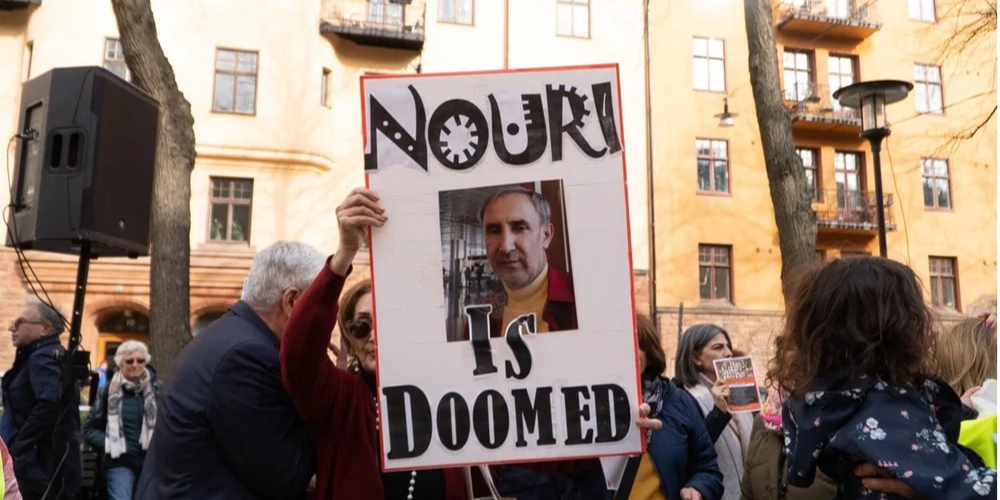
In 2005, Sarvestani met Iraj Mesdaghi, who survived for 10 years as a political prisoner under the death committee, thus kicking off their collective pursuit to find and intercept members of the group. In 2019, their search eventually led them to identify Hamid Noury through his goddaughter’s ex-husband, who successfully tricked him into coming to Sweden, where he was arrested upon arrival. Although narratively disorganised at times, the film jumps through key points in this journey almost like a political thriller, where the events orchestrated by ordinary people feel larger-than-life. Sarvestani’s directorial success lies in capturing some of this almost unbelievable footage firsthand.
https://mubi.com/en/films/surviving-the-death-commitee/trailer
The trial of Hamid Noury
While the first half of the film is dedicated to the political context and mechanics of the trap, the second half is wholly dedicated to the trial of Hamid Noury, raw and unfiltered. Although viewers are introduced in the former part of the film to the extent to which Noury is deeply comfortable with issuing threats of violence, the latter part offers even more ominous behaviour. His courtroom testimony can only be described as deeply uncomfortable and, at times, even grotesquely comical in how he characterised his role as assistant prosecutor.
While now-aged survivors offer harrowing, emotional accounts of their time in prison as young men, including torture committed by Noury and witnessing the executions of those around them, Noury exuberantly describes his job as one rooted in care and compassion for prisoners, gently leading them from room to room. This he does, all while smoothing down his already thinning hair out of habit, repeatedly, as if the worst offence he could ever have committed is a bad hair day. The framing is to-the-point, capturing all these speeches with simple, wide shots, leaving the film to rely on the shock of Noury’s words, juxtaposed with the survivors’ traumatic stories.
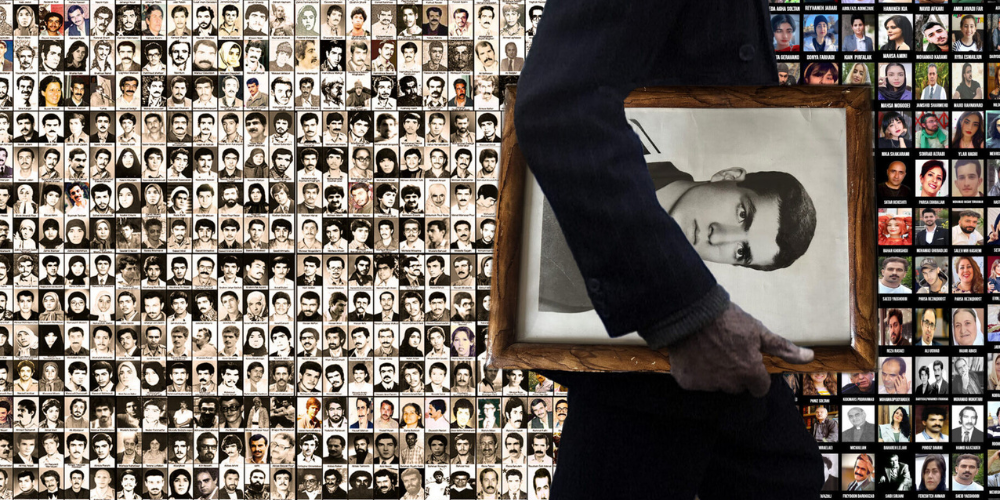
Surviving the Death Committee closes with a win, and then a defeat. Although Noury was sentenced to life in prison, resulting in widespread celebrations by the Iranian diaspora, he was very soon traded in a prisoner swap; Noury returned triumphantly to Iran and was welcomed home like a winning athlete. Even when a so-called impartial system offers an opportunity for justice, something can snatch it away—just like that. Nevertheless, through the credits, Sarvestani leaves us with the names and photos of countless Iranians killed by the regime, telling us to keep remembering their ongoing struggle.