Born to fight
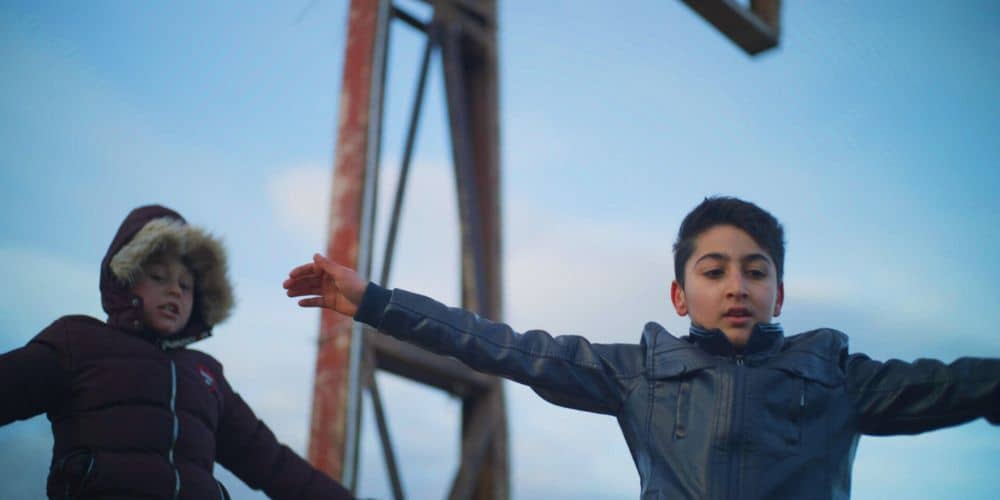
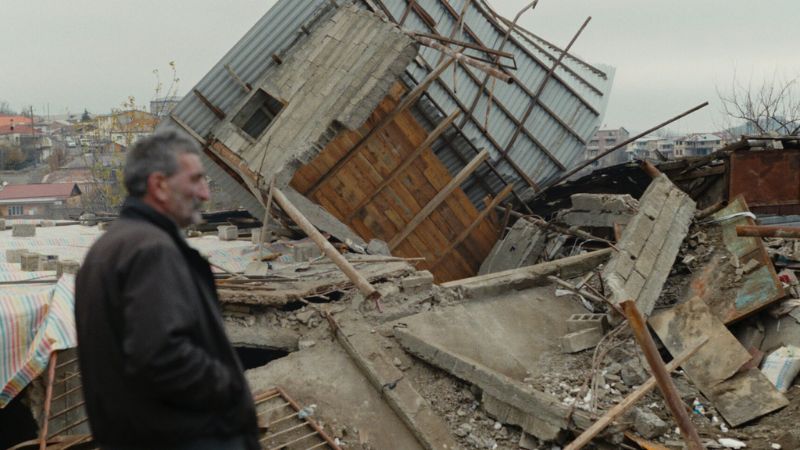
Two kids are running in a winter landscape, eventually reaching a cross on the top of a hill. They enter the ruins of what was once their classroom. There are shell holes in the walls and no ceiling. Hundreds of notebooks cover the floor. They pick them up and laugh when they realise their classmates’ grades. This is the opening scene of director Alexis Pazoumian’s film The Black Garden.
War history
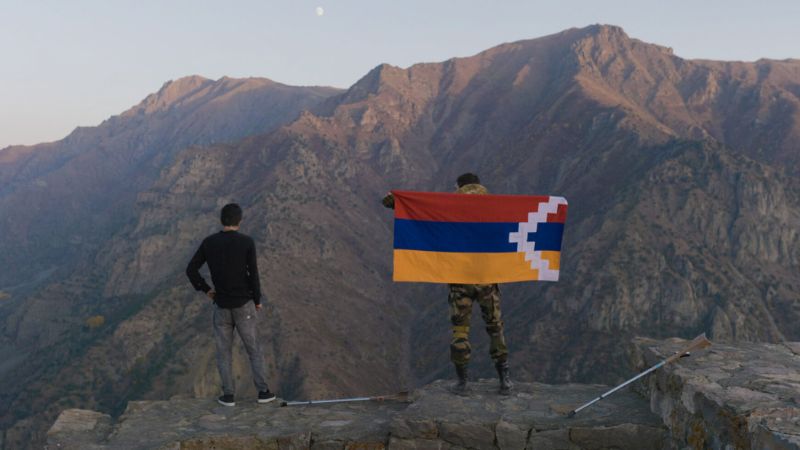
The film deals with the long #war history rooted in the Russian and #Ottoman empires between #Azerbaijan and the small enclave of Armenians in #Nagorno-Karabakh, a region not recognised by the international community.
For three years, the director follows a small-scale group of Armenians fighting and longing to live in their village, Talish, but also preparing for the tragedy that so many family members and friends have experienced already. «We fled three times», one says, «but we always came back”. Following two young boys around 12 years old and two young men, who are eager to protect the land that so many men have died for since 1992.
The children are taught how to use a gun in school the same way they learn how to spell. As an audience, you feel how the hate is inevitable when the young men are preparing to go to war. In between, we experience a glimpse of daily life, gatherings with food and music and a bicycle trip that gives us hope. But suddenly, one of the young men appears in a hospital bed. His leg was hit by a shell, and his lungs and ribs were wounded as well. He looks at his mobile phone, doing push-ups; in the following image, he is lying in the trench. It is incredible what mobile phones and small cameras have done to capture authenticity and document stories never told before.
The leg is amputated, and he cannot sleep because of the pain. Soon, he is training in a swimming pool, doing push-ups again; it is beautiful in all its horror and tragedy. He gets a prosthesis, exercises, and prepares to go to the combat field again. «Have you missed the gunfire?» his friend asks. «YES!»
Also, young women are taught to fight. In glimpses, I feel hope with the inhabitants when they are gathered outside, eating and drinking. An older man shares his story about losing family members in the war. He has been a hunter almost all his life and is ready to defend his homeland. The young women start singing, holding their weapons. Singing is important for a person’s self-understanding.
They enter the ruins of what was once their classroom.
Prioritising pride
Everything is captured in a beautiful artistic visual style by photographer Fabien Faure and the director himself. It shows that even in a conflict zone, artistic pride is prioritised.
The film goes on: In December 2022, Azerbaijan organised a blockade of the only route entering Nagorno-Karabakh from #Armenia, depriving the enclave of 100,000 inhabitants of gas, electricity, and food. This reminds me of the blockade in #West Berlin# in 1948-1949 during the #Cold War#. The blockade was a Soviet attempt to force West Berlin to become part of the Eastern Soviet occupation zone.
But we have a newer example. On the 21st of November 2024, the International Criminal Court issued warrants of arrest of the prime minister of Israel, #Benjamin Netanyahu#. Accusing him, among others, of #war crimes#: Using hunger as a weapon of war and crimes against humanity in the form of murder, persecution and other inhumane acts.
A conflict almost forgotten
During the film, a text explains the long conflict: In 2020, the inhabitants are hit by a large surprise attack carried out by the Azerbaijan army supported by Turkey. I enjoy it when filmmakers have confidence in the audience, but I needed some preconceptions to navigate the narrative of the conflict. The Azerbaijanis are Turkish and Muslims, and they profess Islam. In Armenia, 97 percent of the population are Christians and Armenian Apostolic Church members. Founded in the 1st century AD and in 301 AD, it became the first branch of Christianity to become a state religion.
Families have been forced to move; schools are closed, there is no heating, and people are separated from friends and families. And roads are blocked. The two young men are in #Yerevan, the capital of Armenia. Both are wearing new white duvet jackets as a symbol of peace. Next, they are on a «sightseeing tour» to the front line. A long trench is made by a tractor. «The war will go on», they state. «You are dying every second fully aware that you are alive». Thank you for sharing a film about a conflict almost forgotten.
Looking at the conflicts and war zones in the world today, it is sad to say that conflicts described not only in Pazoumian’s film have long prospects for a solution.