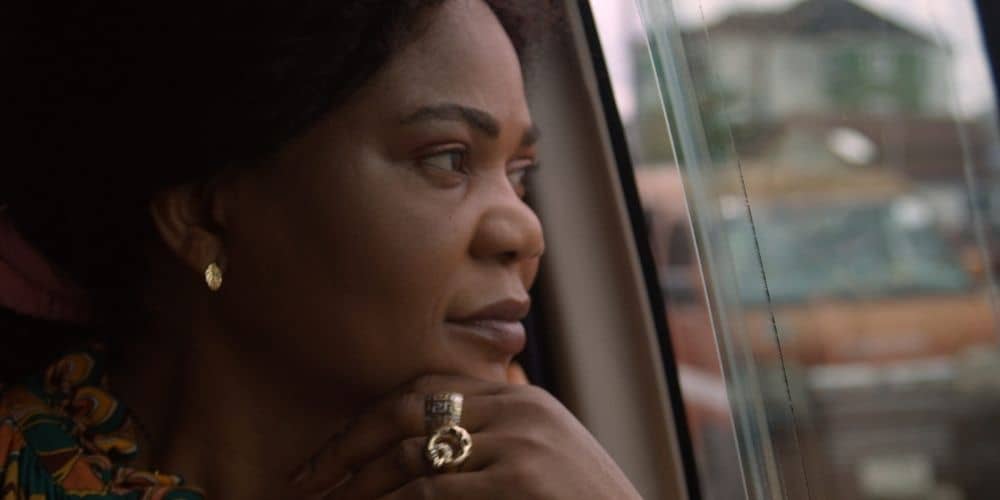
Enforced #prostitution would not exist without an abundant appetite and a lucrative market. Italian filmmaker Chiara Sambuchi reminds us of this with her documentary The Deal, which has its world premiere at the Copenhagen International Documentary Festival. It reveals how Nigerian #organised crime# groups operate human trafficking rackets internationally to lure women to #Europe and argues that the blame is not solely theirs.
«For the cold place I stand on the sidewalk, I have to pay one hundred euros a month»
Europe’s responsibility
Europeans in countries such as #Italy, #France, and Germany, where many of these women end up working in the #sex trade#, have a responsibility to reflect upon the kind of society they live in that readily creates the demand and conditions for this exploitation, channeling money into keeping it alive. Princess Inyang Okokon was trafficked from #Nigeria to Italy in 1999 and managed to make it out of the life she was trapped in to become a social worker, helping other women who have endured a similar plight. We follow her as she acts to raise awareness and reduce young people’s susceptibility to being tricked into having their dreams ruined. Poor living conditions and a lack of career opportunities in Nigeria mean that it is easy for traffickers to deceive their targets with an illusion that a much better life awaits them in Europe with a job in housekeeping or hairdressing once they repay their flights. This promise is only revealed as fake after arrival when the women are forced to work the streets as prostitutes and kept bonded to the debt they can never extricate themselves from with their earnings. Criminal gangs utilise an additional psychological pressure in Nigeria, as they make women take a «juju» oath in a ceremony with animals and idols — swearing to obey their madams, under threat of certain death should they break the oath invoke the curse. «Juju» oaths and the huge impression they make over trafficked women make it very hard for them to break free of their situations, despite the mistreatment they suffer. As well as the fear of a curse, violent retribution by gangs is another deterrent to escape, as the women’s relatives in Nigeria can be targeted for murder.
«For the cold place I stand on the sidewalk, I have to pay one hundred euros a month», says one trafficked prostitute, of the many spurious fees the criminal gangs apply to keep them in debt bondage. Police units and non-governmental organisations work to investigate these crimes through wire-tapping (surveilled conversations are re-voiced by actors for the film) and other methods, gleaning intelligence of exactly how they are carried out by gangs with solid, hierarchical systems akin to the #mafia in place and ample resources, also gained from the #drug trade#, their spheres of influence negotiated with rival groups in violent turf wars. Trafficked women are routinely thrown into a European nightmare, their possessions confiscated on arrival and replaced with clothes for prostitution. They are worked around the clock seven days per week like machines and forced to pay for their lodging rooms in the brothel that they are not permitted to leave, as well as paying their madam a fee. Many are underage minors when they are trafficked. The #coronavirus pandemic has meant far fewer women now working the streets, but this has only pushed the problem underground and made them harder to identify and rescue as they meet customers secretly behind closed doors, flouting public health restrictions.
Trafficked women are routinely thrown into a European nightmare
Liberated Women
Victory, who was sixteen when she was brought to Europe, and who we meet at eighteen, attempts to get out of prostitution. She fears payback from her madam, who is currently in prison. Still, she is receiving support from Princess Okokon, living at a safe house that offers courses in skills such as cooking and kickboxing, Italian language tuition, and assistance with job searching, not to mention legal matters. Princess Okokon runs the non-governmental organisation Liberated Women, aimed not only at rescuing trafficked women after the fact but working at the root of the cause back in Nigeria to educate young women about the dangers and empower them in other ways through meetings to forge solidarity, to make them less vulnerable to traffickers. She asks hard questions, too, of «juju» practitioners, confronting them with the impact of the rituals in keeping women enslaved in Europe. Beyond the mispurposing of traditions, #colonialism and its legacy is interrogated. Europeans have been so present in Africa that locals are adept at knowing what they want — and supplying the demand accordingly. Seeing a long line of brothels stretching along a nighttime street in Duisburg, in Germany, it is impossible to argue with this. All their customers, after all, have to come from somewhere and be willing to prioritise their compulsions and desires over the suffering they create.