The Impossibility is a highly revealing exposé on the nature of the #poverty business flourishing in the heart of Europe. This masterful documentary by Czech filmmaker Tomáš Hlaváček uses an engaged observation approach, demonstrating how poverty becomes easy prey in the hands of the upper classes and is a structural problem with no hope of solution.
Poverty Business
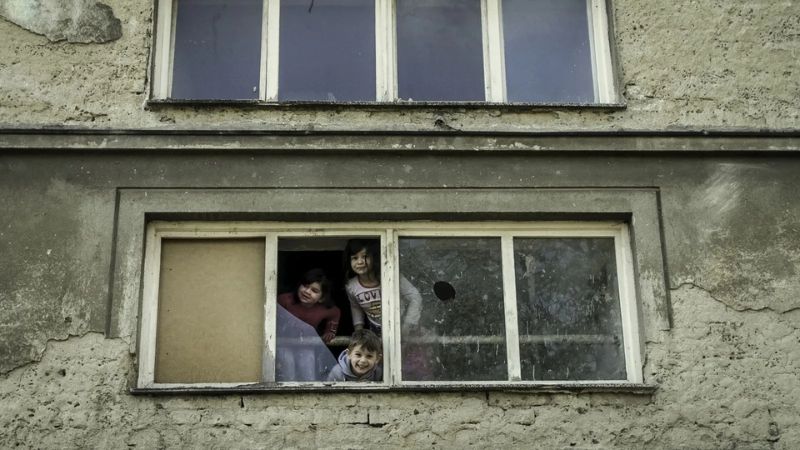
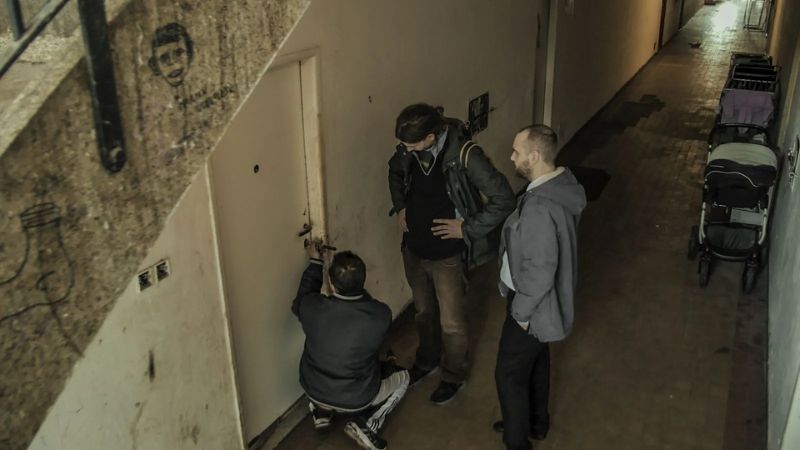
The original Czech title of the film Dům bez východu can be literally translated as «A house with no way out.» It tells the story of a social tragedy that unfolds in the Kuncovka hostel in a district of #Brno, the second largest city in the Czech Republic. It is a concrete block near the highway with dozens of flats inhabited by lower-class people. As the film informs us, more than 100,000 people in the Czech Republic live in conditions formed by a phenomenon called «poverty business,» and the hostel director immerses himself in shows all the horrors of social housing establishments of this kind. The tenants, who pay far more than the average monthly rent on the market, are living in critical conditions, where the bare minimum they have is an environment dangerous to their health. And if anyone dares to complain, repression comes from above in the form of systematic cut-offs of water and electricity, extortion of money, and all sorts of abuses that never cease to shock with their ingenuity of cruelty. Above all, there is the blatant #racism suffered by a significant number of #Roma people living in the hostel.
Responsible for this system are the openly gloating landlords, Mr Hrdina and his wife, who look like caricature villains from a fiction film – with a Mercedes, an angry dog, and white suits. The point of departure for this long and detailed documentation began in the middle of the last decade when desperate volunteers from the citizens’ initiative «Chceme Bydlet» (We Want to Live) became involved in the problem of Kuncovka following outrageous cases of death and child separation. Gradually, volunteers and Hlavacek himself approach the routine of those people, collectively researching this grim system.
more than 100,000 people in the Czech Republic live in conditions formed by a phenomenon called «poverty business»
Engaged observation
A separate bitterness is added to the story by the existence of a huge, nasty poster on Kuncovka’s wall, advertising a door company with a happy family promoted by the phrase «The doors behind which you are at home.» The director’s camera takes advantage of this level of wicked irony, constantly returning to this establishing long shot, placing it between shocking visual evidence of #human rights# violations that prove the radical opposite of this advertisement. The film’s primary approach, however, is not limited to non-interventionist observation. Hlavacek uses the ‘engaged observation’ method, allowing him to delve deeper into the problem and even fulfil the role of a social activist.
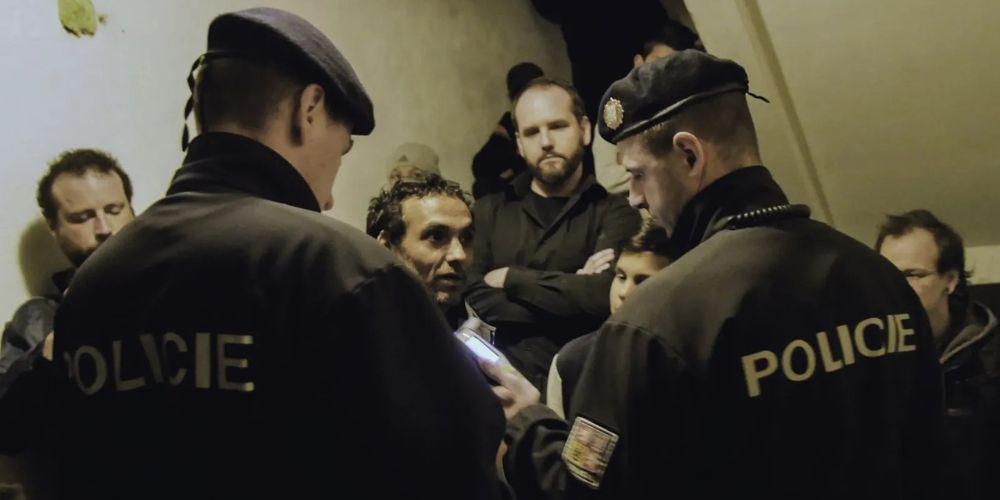
The director spent an incredible amount of time in the hostel, filming every corner of it and interviewing everyone who had a vital need to speak up. His proximity to the characters forces him to take an active part in the recurring disputes when the residents are once again forced to beg their landlords and the police to turn on the electricity and water. Hlavacek’s involvement certainly creates the necessary mutual trust with his characters that balances the ethical dilemma of documenting such extreme vulnerability. At some point, his heroes begin to draw motivation from the process of filming as a fact of attention to their problem that someone eventually dared to express, while, as we can see, the state could not care less. At the same time, the director’s involvement allows him to influence the course of events. He often argues with the police from behind the camera, defending the residents’ rights, and with Mr.Hrdina, they have their own dynamic of escalating relationships. It’s hard to be a ‘fly on the wall’ when your main antagonist reacts to the camera with fueling aggression, and the people he becomes so close to need an immediate defence.
The director’s activist nature can also be read in the montage, which tries to show the whole tangled scheme, recognising at every step that there is no human logic in it. All the visual evidence is one big multimedia hypertext composed of a multitude of talking-head testimonies and observations from the side, hidden GoPro footage, recorded audio conversations and close-ups on documents – and is a conscious decision to be highly transparent and over-explanatory. The film is overflowing with evidence of the flourishing poverty business, which the director reinforces with a Kafkaesque montage of constant repetitions of situations that justify the film’s length with deliberate exhaustion.
Recalling Pierre Bourdieu
Looking at this hopelessness, it is hard not to recall the canonical ideas of #Pierre Bourdieu#, as the documented in The Impossibility fully reflect the philosopher’s central theses. The inhabitants of Kuncovka live under the conviction that they are simply unworthy of basic human rights, and the whole constructed system does not allow them to feel otherwise. The abundance of recurring events of their righteous fight metaphorically conveys the hopeless cycle of the system of exploitation and the worldview of the exploited, which constantly reinforce each other. Counting the sums of money people are gradually handing over to Mr Hrina, one could rent a nice flat in central Prague. But people hardly acknowledge it, even when a patient social worker explains that half-working electricity cannot cost more than rent. Mr Hrina, of course, uses all his power and influence, and his unpunished actions serve as a telling example of how vulnerability in the face of poverty becomes even greater prey in the hands of the dominant evil class.
In Bourdieu’s terms, their ‘habitus’ – internalised ways of thinking – is shaped by the social crisis fabricated against the Kuncovka tenants. They internalise their negative perceptions of themselves and absorb the coercive persuasion that they don’t deserve fundamental human rights, which is only reinforced by the systematic abuse and indifference of the state. Even though such a complete setup leaves no chance of social advancement, many of these heroes find the strength to fight, at one point even asking on camera: «Why do I have to pay for something I don’t get?» Nevertheless, the final answers documented are extremely depressing. If the villains of fictional cinema, similar to Mr.Hrdina, are usually punished, the reality in The Impossibility is relentlessly reversed.