Diego Gutierrez’s recent work, The Shipwrecked, constructs a vivid existential journey woven from microhistories of several Mexican characters as they carve their way out of life’s darkest places. Philosophical and meditative, the film focuses on the regenerative power of nature and the repetitive, small tasks that can help achieve greater goals, which can protect a human from the cruel, violent reality outside. The director’s individual search for meaning frames a process of reflexive construction of a renewed view of the world of his childhood after years of #emigration; the world which evades easy categorisations and rooted stereotypes, exhibiting various shades and layers of reality, myth, and cultural history.

Gradual tension
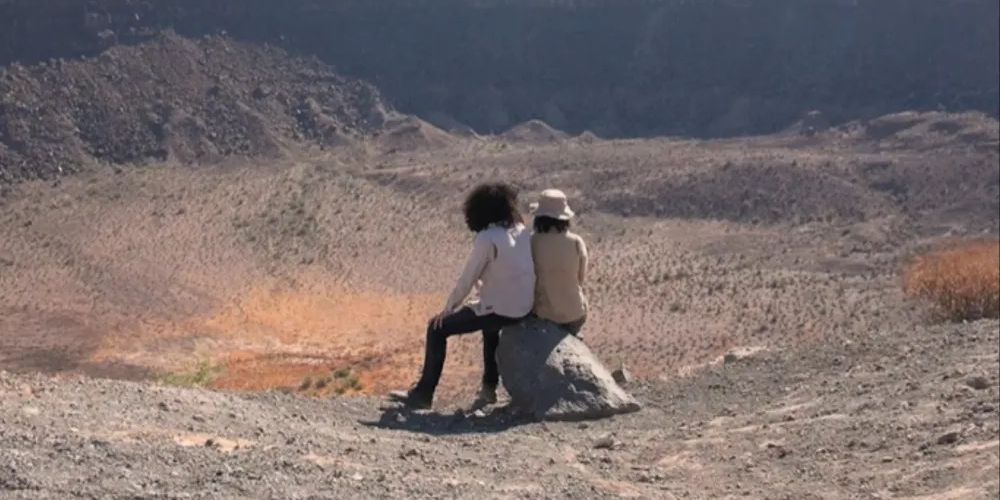
There is a gradual tension building on the contrast between the harmonic pictures and the stories people tell, which are full of fear and distress. It paints the layers of the world observed through steady frames and occasional moments of awe at nature’s beauty, the wisdom, and the depth of people’s reflections. Born into a privileged family, a young man who has just returned from studies in Holland grows plants in the garden of his modernist villa to reconnect with reality. The art restorer of old churches and religious figures brings a perspective of a disillusioned #humanist, confronted through her work with faith, #religion, and the social power of both, shaping the behaviours of those around her. A couple of young biologists in love, who have spent years researching bats to protect them from #climate change#, show the dangers and high stakes of conservation work. An older farmer, struggling to survive on a tiny farm with his family, is filled with a sense of happiness and pride for his land. Their personal stories, encompassed by a mythical tale of a Presidente attempting to sell a golden eagle made out of the blood and suffering of multiple past generations of his people to ease their misery, resonate with the #Aztec legend of the origin of Tenochtitlan (today’s Mexico City) and the Mexican national flag.
The ways of coping particular characters invent in their search for a meaningful life, and a means of escape from a reality full of lurking dangers, present various options that human beings have at their disposal.
The complexities of existence
Throughout the film, we see deeply moving, human observations of the complexities of existence in a country tormented by multiple disappearances, deaths, and everyday violence. The ways of coping particular characters invent in their search for a meaningful life, and a means of escape from a reality full of lurking dangers, present various options that human beings have at their disposal. «We’re very different in the way we survive. Why? Because you know how to survive your way, and me, my way.» – observes the farmer; «There is this impassable thing in our understanding. Our only reference is the human experience that we ourselves experience.» – reflects the biologist; «There are many kinds of #memory and many ways of reading the world even if you don’t remember certain things.» – ponders the art restorer. The painful memories are barely kept under the tranquil peace of the exterior, and easily come outside in tears or numbness, indicating PTSD.
The slow observation of particular stories punctuated by wide, drone shots of vast expanses of Mexican differentiated landscapes sketches an image of a late industrial, post-traditional reality, in which, as described by Anthony Giddens in his Modernity and Self-Identity: «lifestyle choice is increasingly important in the constitution of self-identity and daily activity. Reflexively organised life-planning, which normally presumes consideration of risks as filtered through contact with expert knowledge, becomes a central feature of the structuring of self-identity.»
What remains to be seen
The Shipwrecked reconstructs the director’s psychological process of self-identity formation, composed of examples of life choices made by other people and the major existential problems of our times. Although, as Giddens also notices, the late modernity suppresses moral dimensions in a day-to-day life, «the repression of existential questions is by no means complete and in high modernity […] many forms of counter-reaction appear. It becomes more and more apparent that lifestyle choices, within the settings of local-global interrelations, raise moral issues which cannot simply be pushed to one side.» Each character, regardless of age or social standing, finds an individual way to cope with a prevailing sense of insecurity and risk by choosing a specific way of life. For Diego Guiterrez, it is the film itself that becomes «the reflexive project of the self,» which «generates programmes of actualisation and mastery,» as Giddens puts it. The Shipwrecked, grappling with philosophical themes and motives, leaves no single, precise answers but searches for meaning in the mundane and in nature. Against all dangers and risks, it puts its hope in people who, as the art restorer reminds, have proven able to reorganise their actions in a moment of need over the centuries. In a high-risk world on the verge of disaster from multiple, simultaneous crises, the existential questions cannot be easily suppressed, as they surface in the daily choices of all. What the people’s decisions will be is left to be seen.