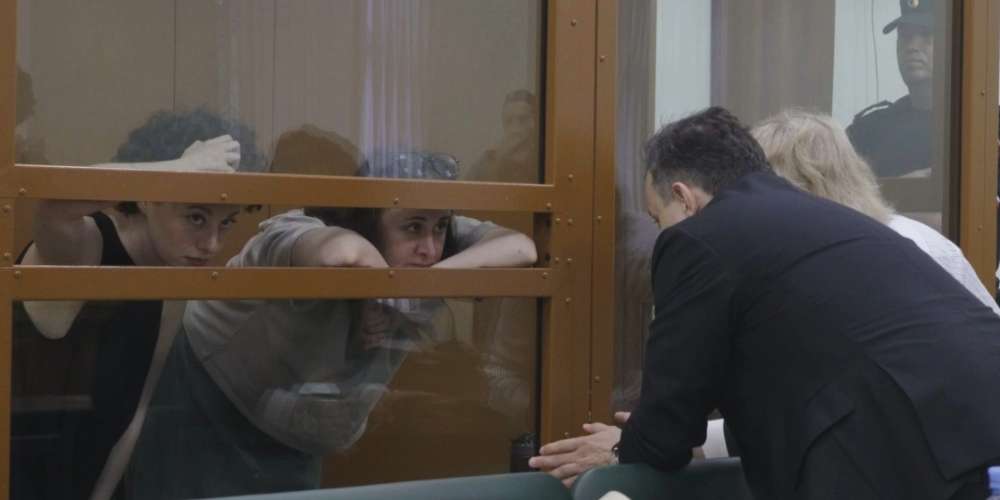
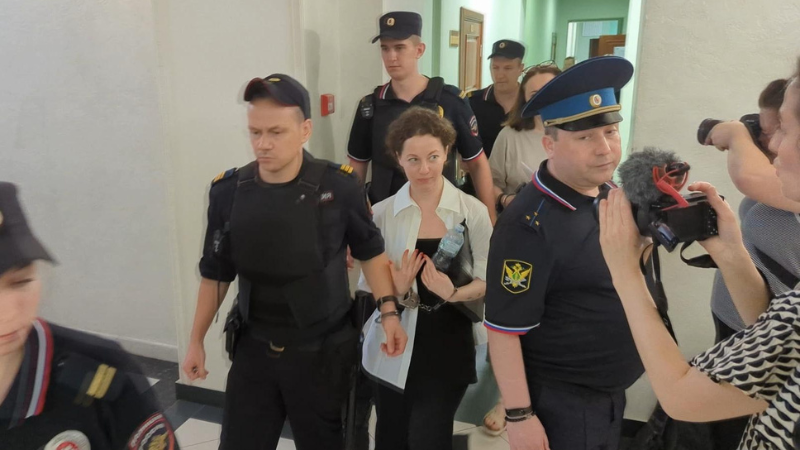
The Voices That Defy the Kremlin is a documentary that breathes with urgency, sorrow, and bravery. Manon Loizeau and Ekaterina Mamontova have created a film they call «unlawful,» simply because it speaks the truth about the conditions inside Russia today. We witness the slow suffocation of people living under an authoritarian regime, a society where more and more citizens disappear behind bars for the smallest gesture of disagreement with Vladimir Putin and his war in Ukraine. According to the directors, more than 20,000 people have been arrested for peaceful protest, regardless of age or background, and many of them vanish into a system that offers no explanations and no hope. A new word, politzek, is circulating among ordinary Russians and means political prisoner. The existence of this word reflects how normal oppression has become. Punishments are becoming increasingly harsh; sentences of ten to twenty years no longer shock the public.
The lives left behind
The filmmakers structure the documentary around individual cases. Through video fragments gathered from social media, courtroom footage, and interviews with parents and partners, they recreate the emotional landscapes left behind when the state seizes someone: the empty chair at the family table, the untouched desk, the quiet room waiting for a return that may never come. These remnants of everyday life become haunting relics, keeping those affected in constant uncertainty. Will their loved ones ever return, and if so, who will they be after years of isolation and torture?
These remnants of everyday life become haunting relics, keeping those affected in constant uncertainty.
Arseny, fourteen years old
The arrested include journalists, lawyers, human rights workers, artists, anti-war activists, and many ordinary citizens. But the film also shows us something even more disturbing. Children are also persecuted.
A Moscow Times report from February 2025 confirms that at least twelve minors in Russia are imprisoned on fabricated extremism charges. In the film, Arseny appears not as a statistic but as a real boy. He made anti-war videos on YouTube. He spoke openly in class discussions, claiming that Russia was not a free country as long as Putin was in power. That was enough. He was arrested at dawn and sentenced to five years in prison for «participating in the activities of a terrorist organisation.» His history teacher testified against him.
The letters Arseny is allowed to send to his mother reveal horrors. He has been systematically beaten and raped. On the day he is supposed to receive a visit from his mother, he is made unavailable because he is briefly hospitalised due to severe beatings. He is transferred to northern penal colonies, 2,000 km from Moscow, almost unreachable, to ensure his full isolation. His letters warn her not to hope for his return. Will he survive his five-year sentence? What is certain is that he will never be the same, most likely beyond repair.
A system built to break people
Former prison inspector Anna, now in exile, shows footage she secretly saved from her time inside the system. We see prisoners who are pale and exhausted, many of them tortured or denied medical care. She explains that political prisoners die at a much higher rate than others in a system that, according to Anna, hasn’t seen any significant reform since the Gulag era. Thousands of Ukrainian civilians have been detained and placed far away in remote colonies where almost no information escapes. The cruelty is systematic, not accidental.
The mortality rate in Russian prisons is twice as high as in Western prisons, but for political prisoners, the mortality rate is even higher. Up to ten percent of political prisoners die while serving their sentences. The guards have more or less free rein in how they treat and torture political prisoners. Starvation and sleep deprivation are common practices; political prisoners are often placed in cells with dangerous, mentally ill inmates. Guards sometimes place a fragile prisoner together with brutal, aggressive prisoners from the Wagner military unit. Torture leaves its marks. We are reminded of the images of Alexei Navalny and Pavel Kushnir as they gradually withered away.
Up to ten percent of political prisoners die while serving their sentences.
Moments of Resistance
And yet, the film does not leave us only with despair. It shows small, trembling moments of resistance. Young people gather at Alexei Navalny’s grave, singing soft protest songs. Their voices are quiet, almost whispering. Police officers surround them. When the officers demand identification, one girl, probably fourteen, refuses. She is taken away. Perhaps because she is the youngest, perhaps to frighten the others. The moment is small, yet enormous.
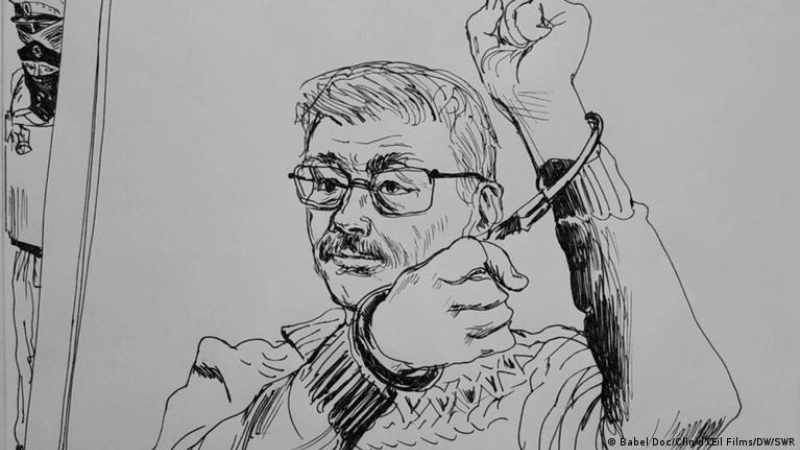
Loizeau and Mamontova avoid every temptation to sensationalise. The violins that accompany the film feel, at first, almost too sentimental, but soon one understands that the truth itself is heartbreaking. When cameras cannot capture the injustice, the filmmakers turn to effective animation, allowing us to witness trials so grotesquely theatrical that they resemble a parody of justice, though the sentences that follow are brutally real.
The Voices That Defy the Kremlin confronts us with a reality in which political prisoners multiply, where children are punished for thinking freely, and where silence becomes complicity. The film gives these voices back their dignity. It also asks us to remember the political prisoners behind bars in Russia. We must not forget them. Any letter and any mention of them is necessary to keep their hopes up.
Because if these voices disappear, if repression swallows them entirely, the question remains: who will speak for them then, and what will be left of the truth?