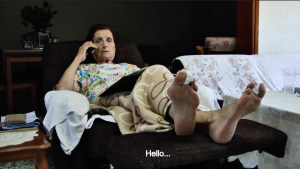
In 1976, bodies began mysteriously washing up on Uruguayan shores in a larger quantity than the tragic few that typically drowned in ocean waters every summer. Many were bruised and battered, with autopsy reports stating that the injuries sustained were in line with having fallen from a great height. At the same time, people mysteriously disappeared from Argentina, never to be seen again. In his Argentinian-Uruguayan documentary, Traslados (meaning «transfers»), Nicolás Gil Lavedra simultaneously pieces together and unspools for viewers the mystery behind the repressive extrajudicial killings under the Argentinian military #junta, which lasted until 1983. With a screenplay by Gustavo Gersberg, the film played as a Special Screening at the 2024 San Sebastián International Film Festival.

Argentina’s death flights
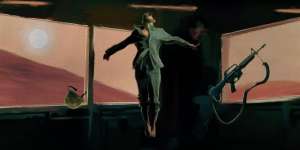
The film never formally puts a name to the era known today as the Argentine «Dirty War» between 1976 and 1983. During this period, the military junta targeted, kidnapped, and disappeared anyone suspected of being associated with #left-wing movements backed by Western powers. Death flights, or vuelos de la muerte, were a method of extrajudicial killings used by the Argentine dictatorship to disappear people — namely, by pushing drugged victims to their deaths from naval planes. This method of killing and widespread political repression was part of #Operation Condor#, which aimed to plant and reinforce right-wing dictatorships across South America (most prominently, Argentina, Bolivia, Brazil, Chile, Paraguay, and Uruguay) while brutally ending any socialist or communist activity.
During this period, the military junta targeted, kidnapped, and disappeared anyone suspected of being associated with left-wing movements backed by Western powers
Traslados shares that the first to publicly admit to participating in the death flights was Officer Adolfo Scilingo, which led to countless others coming forward. Thousands were clandestinely kidnapped and taken to detention centres around the country, where they were kept and tortured, with the most notable location being the Naval School of Mechanics (ESMA). Many believed the euphemistic «transfers» would bring them to places with better conditions, only to be injected with the rapid-onset anaesthetic Pentathol and dropped to their demise.

Confronting the past, uncovering trauma
Traslados, at first, feels slightly decontextualised — but then everything later clicks into place. Only at approximately the film’s halfway point does the full pictures start to make sense, with viewers kept in the shadows just as those at the time were — a little more disorienting than perhaps is necessary, but effective in its technique. The film unpacks the jigsaw puzzle through detailed interviews with investigators, former inmates, and those in the military at the time. By the end of the film, the case of the extrajudicial killings becomes abundantly clear, but a clearer and earlier reveal of just what the transfers really meant would make for a stronger film.
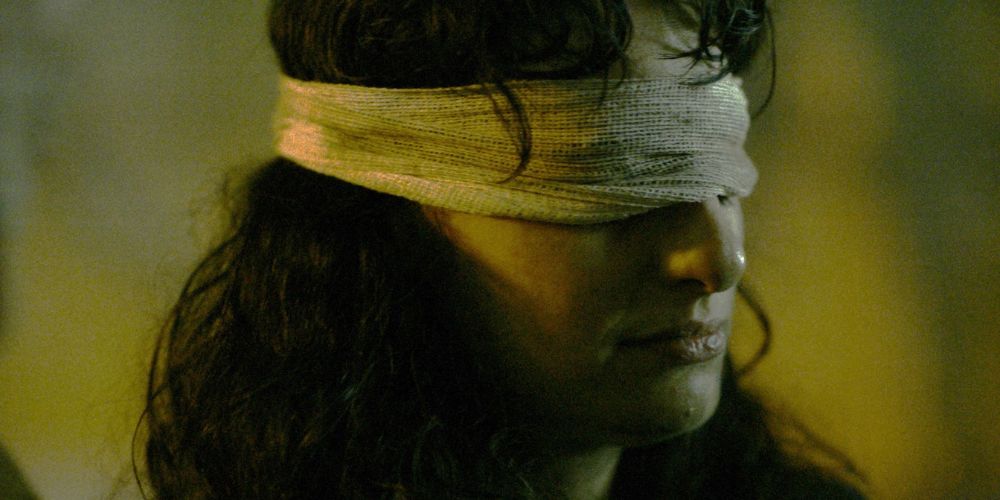
Lavedra also uses a series of often slow-mo colour reenactments (with cinematography by Paul Aenlle) to fill in the blanks between archival footage, newspaper clippings, and images edited together through layered transitions. At times, this feels too slick for the subject matter, which begs to be learned about in all its dark, historical entirety. Most emotionally striking is how the director hones in on a tragic subplot of activists and the mothers of disappeared young men who were, too, later kidnapped and killed in the same manner. This brings the tale of thousands down to a synecdoche of a few, who we see — through pictures and writing — their desperate pleas.
The film reveals that many thought there originally to be around 10 secret centres, while 700 have already been uncovered. Human rights organisations now estimate that tens of thousands of extrajudicial killings via Argentinian death flights occurred during the Dirty War, with the bodies of many victims never recovered — or are still being identified today. While gimmicky at times, Traslados has accomplished enough in its goal of informing people about a grave, globally lesser-known period in a compelling way. It’s clear that the effects of this national intergenerational trauma only a half-century in the past are still yet to be confronted in their entirety.