This year’s #IDFA winner of the Best Film and #FIPRESCI awards is a miraculous achievement from an industry viewpoint. A small, low-budget, and genuinely independent film from a country with a modest presence on the contemporary film scene comes out on top of the world’s largest documentary film festival without passing through tens of workshops, labs, networking events, and other promotional gatherings now considered a must for newcomers seeking success.
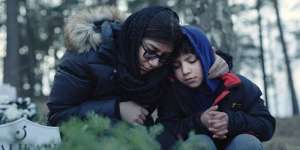
What we see on screen is deeply personal and painful, so it leads us to assume that the Armenian debutant and, in fact, a professional piano player, Shoghakat Vardanyan, wasn’t necessarily after success. On the contrary – when, back in 2021, the project received the Armenian Prime Minister’s Award at the GAIFF Pro industry platform of Yerevan’s Golden Apricot Film Festival, she rejected it as she believed the film should not have any political connections. The film is not a political statement either, as it does not contain declarations «pro» or «contra,» although it was clearly made by an Armenian who is suffering because of the Azerbaijani military intervention in Artsakh. However, instead of focusing on the #conflict, Vardanyan delves into the human experience of a striking tragedy for her family and premonitions of its inevitability. Most certainly of all, 1489 is an auteur work down to the very essence of the word: written, directed, filmed, and produced by Vardanyan herself under Marina Razbezhkina’s consultation as a creative producer, it is a one-(wo)man-film coming straight from the bottom of the heart – sadly enough, a severely broken heart.
To reconstruct a loved one’s presence
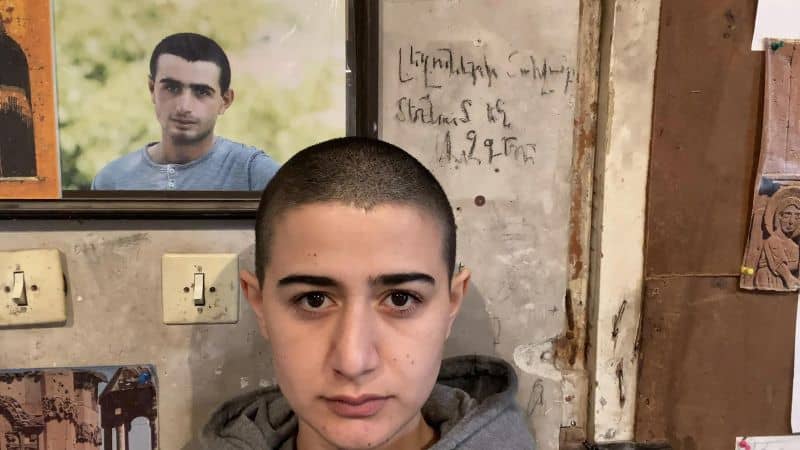
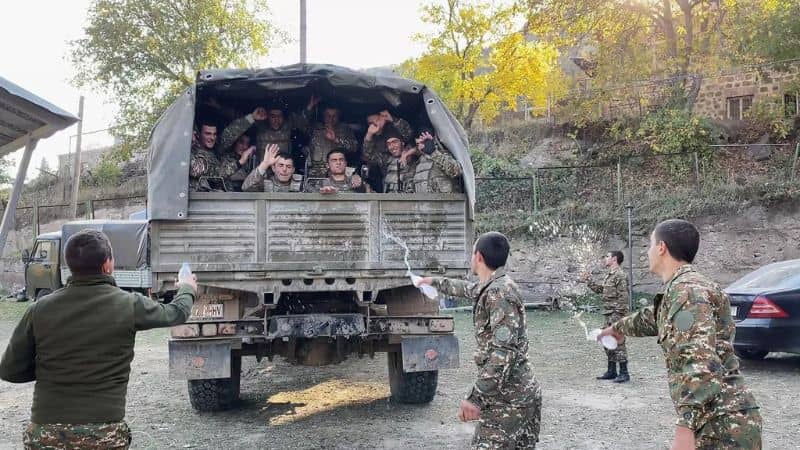
The film follows Vardanyan’s own trajectory throughout two long years of a frenetic search and tiresome wait for a sign from her younger brother Soghomon, who went missing on the seventh day of the 44-day war in #Nagorno-Karabakh# which suddenly started in September 2020. 1489 was the individual number assigned to him as a person «missing in action» so that his relatives could «track» his traces, similarly to how we track packages pending delivery. The cynicism behind such an automated approach applied by the military machine for administrative convenience lurks as an underlying constant throughout the entire search process; however, Vardanyan simply registers the fact without emphasizing it. Мany films on similar topics aim to deconstruct war’s absurdity, but her goal appears to be (re)creation, as if in defiance of the ubiquitous destruction she was suddenly forced to face. Driven by the instinct to preserve her brother’s personality as completely as possible and along with documenting domestic anxieties, she assembles his portrait through conversations and recollections, through archival video footage, and through her tears for him, and in this way, she eventually manages to recreate his presence at home.
1489 is an auteur work down to the very essence of the word
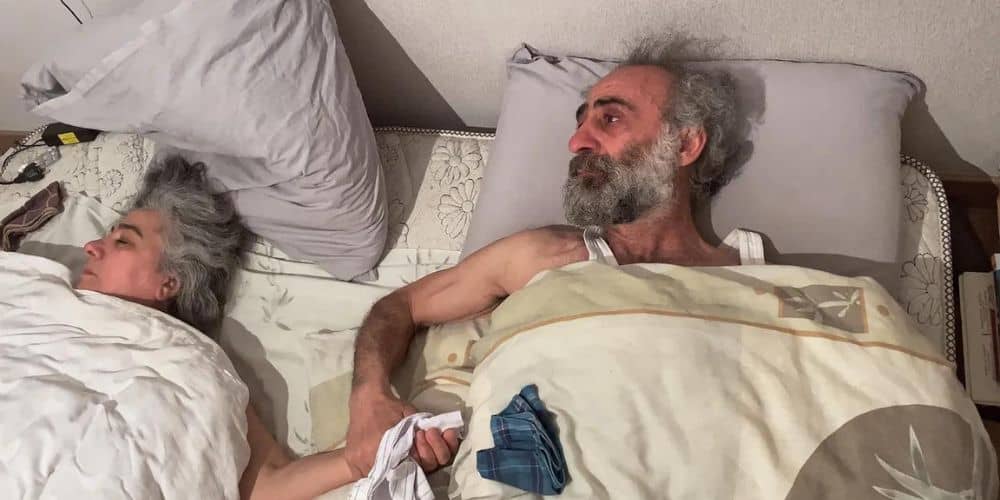
With a background in music just like his sister, Soghomon was about to complete his military service and dedicate himself to his vocation when the conflict sucked him in and left his family weightless. Precisely, this sorrowful solitude, which gradually acquires the power of revelation, is what we, the viewers, are invited to witness and eventually relive. Such a premise, of course, is not conceptually designed but is rather an expression of the author’s urge to share her grief before her heart breaks into pieces and leaves her numb. Documenting the process and communicating her emotions seems to keep Vardanyan sane and probably prevents her parents from losing their minds.
Imagery that celebrates life and humanises death
Regardless of the stressful circumstances, Vardanyan doesn’t give up on capturing the beauty around. Yellow autumn leaves in their family garden surround her father, a sculptor, as he walks among his artworks in the yard. They frame him with a golden aura. His creative inspiration has dried up before the incomprehensible act of sacrificing a young man’s life is considered heroism. In his view, what is meaningful is to live and dedicate one’s life to a motherland rather than one’s death.
But Vardanyan doesn’t spare us from the merciless imagery of bodily death either. The closing scene with the Soghomon’s remains – discovered and identified via #DNA test – together with the preparations for the funeral is blood-curdling and heart-wrenching. While watching this episode, one keeps silent. After this devastating ending, the whole film feels like 76 minutes of deafening silence in commemorating all war martyrs whose coffins were wrapped in national flags and whose names but faces, ordinary deeds, everyday dreams, and hopes deserve to be remembered beyond the solemn heroes’ lists. Further than that, 1489 is also a bow to the disrespected and uncounted victims of every war, namely the blackened relatives who will hardly ever find peace after losing a loved one in such a senseless way.