A relatively new medium drawing inspiration from the traditional airwaves of #radio, #podcasting has seen something of a popularity surge, and profits, over the last half-decade. In fact, its more than a surge. In the U.S. alone, some 90 million people subscribe to podcasts, and their popularity has grown 120% between 2015 – 2019.
With such an increase in #consumption, podcasting becoming a vital aspect of a brand’s success is inevitable. Long-form, accessible, and direct, podcasts offer media personalities, #journalists, and #filmmakers a relatively new and easy way to reach audiences, expand narratives, and take them further into realms where the camera, and its image, cannot go.
With that, is podcasting the wave of the future for documentary storytellers? Well, with the sheer volume of non-fiction content available in the podcasting world, perhaps it is. Whether it is true crime (like Serial), educational (TED Radio Hour) or #investigative work (S-Town), there seems to be a host of formats and opportunities in this, the newest platform for content creation. But, despite its undersaturation (relative in terms of #Youtube channels or blogs, for example), one doesn’t just turn the recorder on, upload, and acquire a successful podcasting career.
Here are a few points for those interested in starting a documentary podcast to consider prior to taking the dive:
Develop an interesting idea
Just like in any documentary content, podcasters, like filmmakers, must ask themselves if the topic they are presenting is of inherent interest to audiences. Of course, these audiences do not have to be vast swathes of the international population, but is there a segment, niche, or ideology that you can appeal to with your content. Why are you starting this podcast? What is it about? How is it interesting? How is it different? These seem straightforward questions to ask yourself, especially if you are a creator – but, still having definitive answers to such simple questions tend to come less often than one may think.
Name (and describe) it correctly
For any modern blogger or online content creator, abiding by the parameters of digital optimization, and being privileged in a crowded field via correct metadata presentation is vital. Think about the blogging world of online written content – you can have the best, most original content in the world, but if no one can find it, does it really matter? With blog posts, you optimize for search engines and with podcasts, you optimize with data points. Take podcasts hosted on #Apple. In their vast landscape of such content, how do you get your podcast to the top of the results page? #Apple Podcasts# privileges clear yet comprehensive title, author, and description fields in their search bar. In terms of title, don’t overstuff it with keywords but do make it «searchable».
In terms of the podcast hosting landscape, Apple holds the market share, followed by #Spotify and #Google Podcast#. These three make up some 95% of the podcast market, however, there are other podcast directories like #Stitcher, #IHeartRadio, #Alexa, #Overcast, #PlayerFM, and more. Each one of these acts like a search engine and requires its own respective protocols for inclusion. Consider a podcast hosting service like BuzzSprout or PodBean to aid in this process.
Pick your format, and stick with it
What is the format of your podcast? Is it single host? Will it feature guests? Do you include advertisements? How long will it be? What are your segments, and how are they broken down? How often will your podcast be adding new episodes? What is the ratio of scripted vs unscripted?
These are all questions to ask yourself when deciding and finalizing a specific format when starting a documentary podcast. Though no absolute answers to any, with podcasts, just like everything else in the world of content creation, consistency is key. Make sure that you are publishing your podcast on a regular, consistent schedule. This builds up a rapport and trust with your audience and, eventually, your podcast will become part of your audience’s day-to-day. Likewise, keep your format and presentation consistent. Even if things start slow, let your listeners get used to what you are saying, and how you are saying it.
Artwork
Some may say that #artwork should come after you have recorded your first podcast, but #visual identity# is also vital to branding and, thus, to the immediate success of your podcast. It is my view that the visual identity of your podcast is thought of in the same breath as your overall format. Your artwork is the first thing that listeners, and ultimately subscribers, will see when they search in Apple or Spotify. Just like your title and description, the artwork too must convey the point and feel of your podcast, and must also adhere to certain technical specifications. Apple, for example, requires 3000px square images of at least 72 dpi. Do remember that your podcast’s visuals will probably be used across social platforms in some way, shape, or form, so make sure you do create all kinds of relevant sizes.
podcasts offer media personalities, journalists, and filmmakers a relatively new and easy way to reach audiences, expand narratives, and take them further into realms where the camera, and its image, cannot go.
Use the right equipment
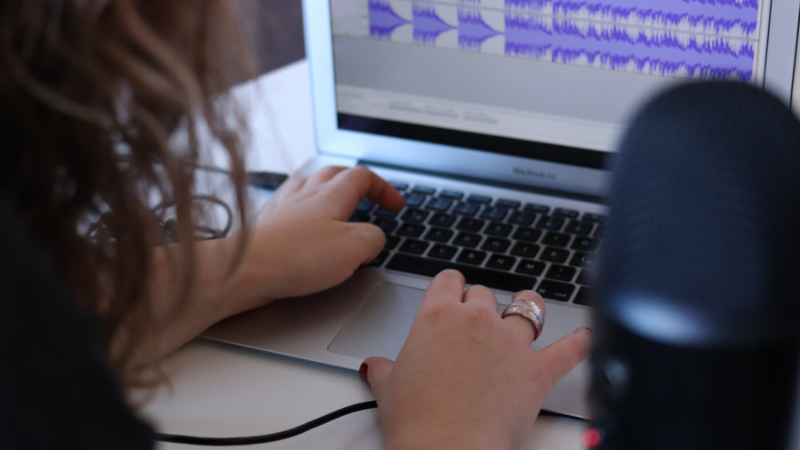
Now that your idea and process are laid out, the technological reality of starting a documentary podcast comes into play. Good thing is, just like the other aspects of the medium, there is no set status quo when it comes to equipment and tools when making a podcast. Of course, as it is an audio-based medium, sound quality is key. So don’t go cheap on the sound quality, or else you will alienate your listeners with an air of unprofessionalism.
Equipment basics here are a microphone (or audio recorder), preamp, headphones, and pop filter. Once you have these basics, you will need to move onto audio editing software. There are basic editing capabilities available on most iOS and Android phones, natively, however, there is also third party software like Audacity, Hindenburg, Alitu, and Descript. Or on laptop software like Adobe Audition, Reaper or Apple Logic Pro.
One caveat to consider here is software that aids in multi-person podcasts when those involved are not in the same room. Surely you have heard the compromised audio when a skype interview is played on air? To avoid this, try software like Squadcast or Zoom.
Now that you have considered these steps to starting a documentary podcast, don’t forget to market it and keep that consistent too.