The 30th edition of Baltic Sea Docs closed in Riga on 13 September, marking three decades since the co-production forum’s founding. The anniversary edition ran across several days of pitching sessions and industry meetings, framed by public screenings and commemorative programming.
The pitching forum brought 26 documentary projects before an international audience of producers and sales agents, with broadcasters and festival representatives also in attendance.
Baltic Sea Docs was established in 1997 on the Danish island of Bornholm. It has been based in Riga since 2005, and organised by the National Film Centre of Latvia since 2006.
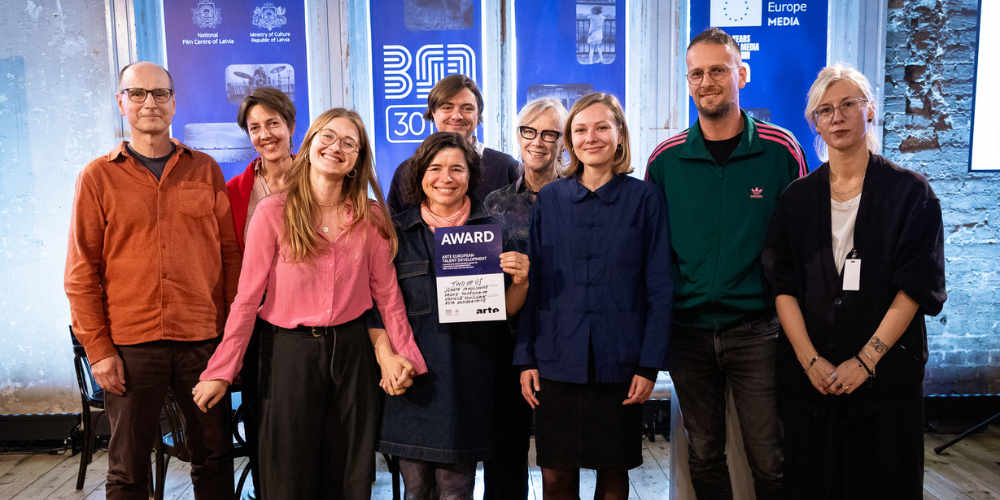
Eight partner awards were presented following pitching sessions held on 10 and 11 September. The ARTE European Talent Development Award, a 10,000 euro grant paired with a first-look deal, went to Two of Us, directed by Jūratė Samulionytė and produced by Dagnė Vildžiūnaitė and Danielė Kunčinaitė of Just a Moment in Lithuania. The same project also received the Movies That Matter Award. The Baltic Sea Docs Award, a consultancy session with an industry expert, went to The Shepherd’s Son, from director Nurlan Hasanli and producer Turkan Huseyn of Ultra Production in Azerbaijan. BBposthouse offered 3,000 euros in post-production services to Going Underground, directed by Armands Začs for Mistrus Media in Latvia. East Doc Platform accreditation went to 35 Letters, from director Zuzanna Solakiewicz and producer Maria Krauss of Plesnar & Krauss Films in Poland. The IDFA and Baltic Sea Docs Collaboration Award supported Borderline, an Estonian-Finnish production directed by Ville Seppänen and Johan Huimerind through Dokfilm. Sheffield DocFest accreditation went to Lunatics, from director Saila Kivelä and producer Ida Karoskoski of Wacky Tie Films in Finland. TV3 Group backed I See No Death, directed by Yevhen Titarenko and produced through Braha Production Company in Ukraine and Ego Media in Latvia.
This year’s selection comprised 23 new projects from filmmakers across fifteen countries. Three further titles returned in a dedicated section for projects nearing completion.
The anniversary programme looked back across three decades of the forum through a public discussion on 9 September at the National Film School of the Latvian Academy of Culture, moderated by Cecilia Lidin and split between a retrospective panel featuring early organiser Tue Steen Müller and a forward-looking session with producer Sudeep Sharma. An artists’ talk followed on 10 September, in which director Roman Bondarchuk and producer Darya Averchenko discussed the making of Bondarchuk’s 2015 film Ukrainian Sheriffs. The film’s connection to the present carried into an exhibition at Art Station Dubulti in Jūrmala, running from 11 September to 2 October, and a closing Jūrmala screening on 12 September organised with the Avantis association.
A parallel public programme brought 12 documentaries to audiences in Riga and regional Latvia between 8 and 13 September, opening with Yuliia Hontaruk’s To Die to Live, a twelve-year portrait of three Ukrainian men shaped by Russia’s war against Ukraine. The selection ranged from Amazomania to Knife: The Attempted Murder of Salman Rushdie, with Little Sinner also among the titles screened. Part of the programme was streamed across Latvia on the National Film Centre’s filmas.lv platform.
Baltic Sea Docs is organised by the National Film Centre of Latvia, supported by Latvia’s Ministry of Culture and the Creative Europe MEDIA programme.