That history is written by the winners is an often-approved fact. However, if the losers lose even a recognisable existence and are deprecated from basic human rights – cultural sovereignty, freedom of speech and reunion – the question of dominance turns into one of crime. This factual situation of Tamils in today’s Sri Lanka is the political and social frame of Agnieszka Zwiefka’s documentary Scars.
A portrait
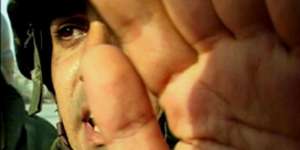
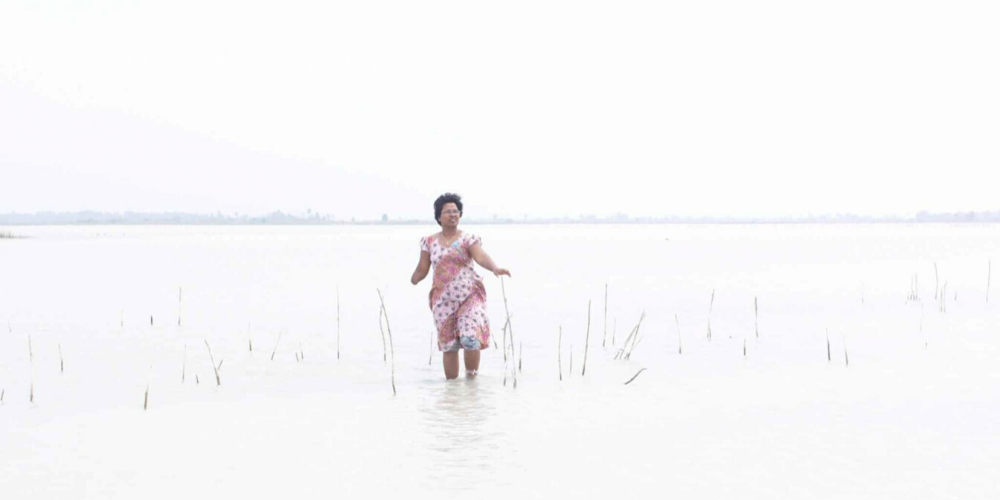
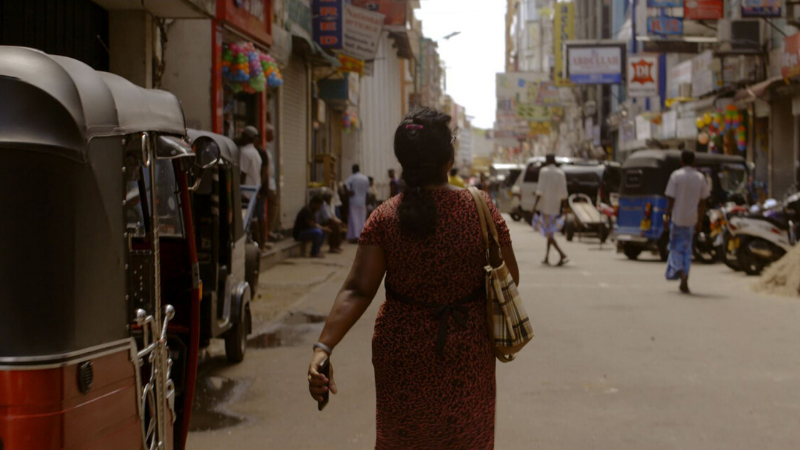
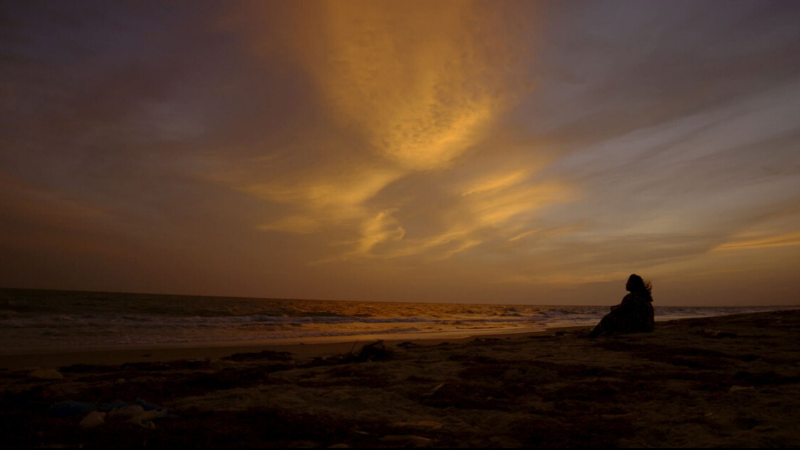
Conceptually she chooses the form of a portrait. Vetrichelvi is a middle-aged who was with the #Tamil Tigers#, the group who fought a restless war for a sovereign #Tamil state after years of discrimination by the Sinhalese majority. The narrow personal perspective – only sometimes interrupted by metaphorical images, like women walking in the night – allow Zwiefka an intimate view on what the Tamils suffer and support today. Vetrichelvi lost her hand and one eye in the battles, but she never doubted that her fight has been just. Half of the other combatants have also been women, very young when they entered the war. Vetrichelvi sought these women out to find out what happened to them and what they think today.
This is no an easy task, because the 25 years long #civil war#, – having just ended in 2009 – claimed around 100,000 victims. Thousands have also disappeared. The women Vetrichelvi finally does find are mostly corporally affected with missing limbs. The worst of her encounters is a woman who lost half of her face and now prefers isolated living. But even she does not regret being active in this ultimately lost battle. Here, the tasteful camera work of Kacper Czubak has to be pointed out. acting on the fragile border between not hiding the most shocking physical damages and still not allowing a voyeuristic view on these women, keeping their dignity as intact as possible.
That history is written by the winners is an often-approved fact
These painful meetings lead Vetrichelvi to the founding of an organisation for disabled women, who now mostly live isolated and abandoned. They need a place for togetherness, for communication, a place which even – Zwiefka captures these precious moments – allows them to laugh and dance from time. What is even more needed, is a place to take care of each other as the women age.
A risky act
In a political context, where the existence of the Tamils is disowned and even their cemetery had been destroyed, the creation of a public space such as this is a rather risky act. Already for her readings in public spaces, Vetrichelvi has been confronted with threats. She, however, has decided to break with the hiding and silencing, which most others have chosen as their current survival model. As a public person, Vetrichelvi is under permanent #surveillance. For her to keep up the memory of their political quest fight, however, is essential. Those who lost their lives should not be forgotten and, therefore, condemned to die a second time.
What aggravates the situation is the fact that war can suddenly break out again. Recently, the former president of Sri Lanka, Malinda Rajapaksa, won the local election and returned to power. During the war, he had directed a military offensive that massacred tens of thousands of Tamils. He is accused of war crimes by international observers. After his election riots in the streets of Sri Lanka started again. With them, the Tamils will be confronted again with a harder phase of suppression after just a short relief. Engaged persons like Vetrichelvi risk imprisonment.
Internal struggles
With her mother, Vetrichelvi discussed the option of emigration, as many Tamils had already chosen, but her attachment to her homeland, family, and environment is too strong. Even more decisive is the argument that leaving the country would mean running away from the people who truly believed that there is a life after war and sense in their pain and loss.
«The only thing that doesn’t change in this country is racism»
But clear-sighted she notes: «The only thing that doesn’t change in this country is racism». This leads us to be reminded of the fact, which was pointed out more clearly in Jude Ratmans panoramic documentary Demons in Paradise, that the Tamil resistance breaks apart and members of its16 different groups tortured and killed each other on a large scale. Estimations find nearly 30,000 victims of this violent internal struggle.
Despite all the threats from the Sinhalese majority, however, Vetrichelvi continues to write and work for her community and Agnieszka Zwiefka has let us understand why perfectly.
‘Scars’ will screen at 2020 #One World# Prague