I need to come clean: I’m not at all familiar with the work of Avi Mograbi. So I don’t know if it’s true, but somehow I imagine him to be an ex-TV cameraman who has become so frustrated with the banality of Israeli TV news that he grabbed his DV camera and decided to start making his own films. At least there seems to be a freshness and a festering frustration behind his filmmaking that is both convention-defying and utterly compelling.
From the opening shots of Avenge But One of My Two Eyes, we know that this is not the current affairs version of Israel with which we are all so weary. Instead, we find ourselves in the company of adolescent Jewish tourists as they visit the archaeological site of Masada. As we listen and watch the psychobabble of the Israeli guide, we struggle to make sense of the world into which Mograbi has launched us.
Although posing as factual information, we soon realise that in the contemporary Israeli retelling of ancient history there is a worrying celebration of ‘Jewish self-sacrifice’ and martyrdom. And whilst Mograbi never makes the point explicitly, we cannot help but compare such a celebration with the vilification and disgust with which contemporary Palestinian ‘self-sacrifice operations’ are held. Implicitly though, the film bristles with the intelligence and critical insight of a man who can no longer bear to witness such processes of cultural indoctrination and double standards at work.
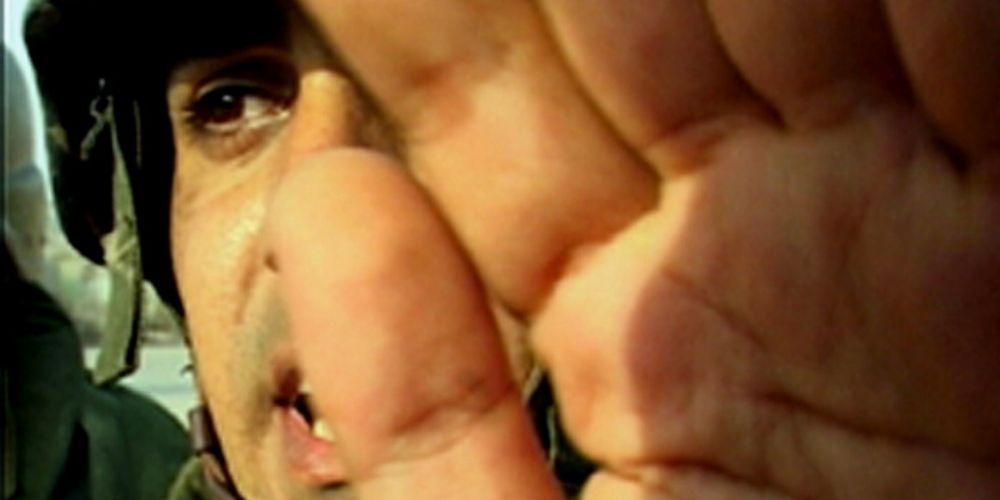
Mograbi seems trapped inside Israel. Nowhere is this sense of internal exile more obvious than when he conducts phone conversations with a faceless Palestinian. Punctuating the film, these conversations give a strange kind of insight into what it is like for a dissident Israeli to try and build bridges across such heavily politicised borders, and it is Mograbi’s own filming at the green line that deepens this insight. Whilst we are familiar with the daily humiliations heaped upon Palestinians, Mograbi shows us that feelings of powerlessness are not restricted to one side alone. At one point, when faced with the petty intimidation of young Israeli soldiers trying to prevent him from filming, his frustration boils over and he shouts, What do you represent? It is a good question and one that, thanks to Mograbi, we are now better equipped to answer.