There is a haunting beauty to Alexandra Westmeier’s lyrical study of a group of odd-ball characters drawn to the liminal world of an abandoned #nuclear reactor in a small town nestled on the shore of #Crimea’s Sea of Azov.
Abandoned all-but complete in 1989, just before it was due to be commissioned – only three years after the atomic meltdown at #Chernobyl – the eponymous lost reactor today looks as if its ruins have stood there for centuries. Stripped of equipment and anything of value – heavy steel doors, copper wiring, anything moveable and saleable – its bare concrete walls and massive gutted interior has been reclaimed by nature, providing nesting cliffs for hundreds of pigeons and grazing for horses and other animals.
Westmeier chooses her heroes carefully, opening the film with a study of the first of a series of eccentrics whose lives revolve around the lost reactor.
Silent Emptiness
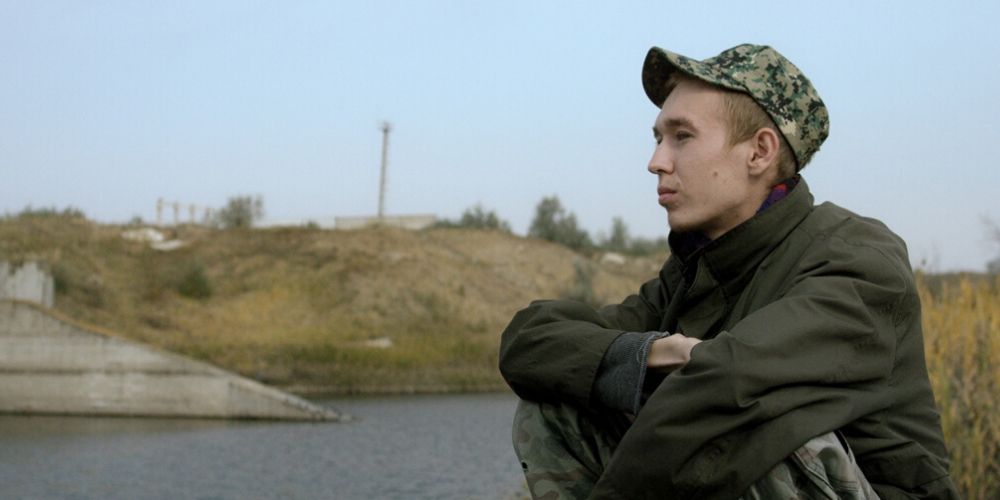
«Alien» – the name the young man goes by – loves anything old, decaying and crumbling. Ever since he played in a rusting truck parked outside a ruined block of flats he has been fascinated by the ghosts that occupy abandoned places. Living alone with his widowed father in a small Soviet-era apartment in Shchelkino (a town of 35,000 souls, originally built to accommodate the workers anticipated for the nuclear power plant) Alien sneaks out, sometimes at night, to enjoy the silent emptiness of a place where he feels at home.
With his military-style duds and knapsack packed with gloves, a torch, a hunting knife, and other useful bits and pieces, Alien sets out for the lost reactor. We join him as he explores the dusty, empty, echoing space and wonder what strange artefacts he may stumble across.
Post-apocalyptic social landscape
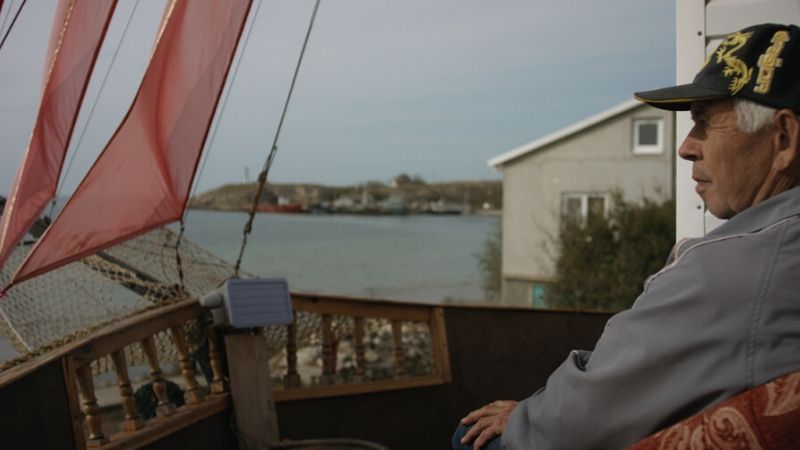
Just as we feel we are being drawn into a weird and wonderful twilight world, Westmeier Vitaly Gavriloch, a retired nuclear plant safety officer and former sailor who lives in a wonderfully eccentric wooden cottage topped by a full-scale replica of the hindquarters of an 18th or 19th-century square-rigger.
As Vitaly introduces us to his daily rituals – ringing the ship’s bell with his faithful cat alongside him; gazing out across the Sea of Azov; brewing up a pot of tea – it dawns on us that the film is not so much about a #post-apocalyptic# nuclear landscape, but a post-apocalyptic social landscape.
Vitaly, like his fellow pensioner friend, Nikolai Petrovich, and Olga, the single mum who lives in an abandoned concrete building on the reactor site alongside a dozen horses and ponies, as well as scores of chickens and pigs, are all part of the human collateral damage from the collapse of the #Soviet Union#.
Their marginalisation began at the same time the lost reactor was taken offline. Vitaly – who once worked at the reactor – ended his career taking care of the ongoing monitoring of Chernobyl, an area that remains largely secluded.
Westmeier chooses her heroes carefully
Olga’s backstory is never really told, only hinted at: she was given a building that her uncle owned on the site of the lost reactor (the plant being divided up between private owners after it was shut down). In a shed that had once been intended to act as a cleaning area for spent nuclear fuel, she now raises chickens. Her young son has the freedom to roam across the vast, wild territory of the reactor. He enjoys visits from his father – a taciturn character who wooed Olga after arriving as part of the army of salvage looters in the late 1990s, before eventually leaving her to live separately – but we never get much further into her story than that.
Nikolai Petrovich, who lives in a comfortably scruffy little dacha (a wooden shed on a small vegetable plot), muses on the past as, feeding a makeshift stove heater, he tears pages out of Soviet-era copies of Foreign Literature, in those days a prestigious monthly literary and political magazine.
«These are rare books, but my wife says she has read them all cover to cover, so now I use them to kindle the fire,» he says.
Bonfire of vanities
The bonfire of vanities is all that is left of the Soviet Union, even if the country’s main successor, #Russia, has since returned to Crimea and many ethnic Ukrainians have fled.
Thus, as the lean stories of survivors living in a hardscrabble town, creating their own fantasies to keep reality at bay, unfolds, we begin to see Lost Reactor for the allegory it is.
Barely weeks ago, one may have watched such a documentary and felt a small glow of distance – that this is all far away and unlikely ever to touch our comfortable western, #European Union#, lives….
But now that a global pandemic has changed everything and we are all confronted with the fragility of our existence, Lost Reactor is suddenly a story for our times, reflecting back at us what the future may hold for all unless we use the opportunity presented by the coronavirus to change our ways for good.
Lost Reactor is suddenly a story for our times
Lost Reactor most recently screened in competition at the 6th Yakutsk International Film Festival in Yakutia, Russia, mid-March, where despite its cancellation due to rising fears over coronavirus, juries are watching and convening online.