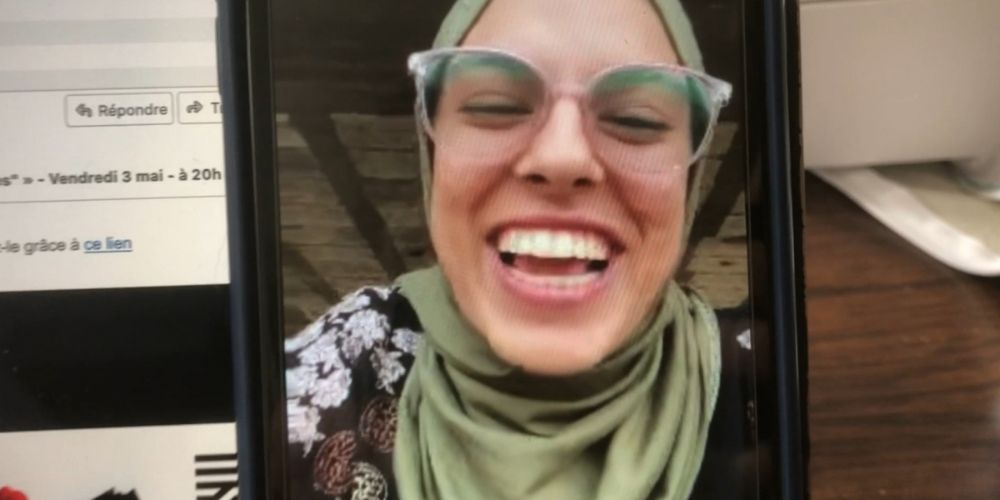
Even before this year’s #Cannes Film Festival began, a major media frenzy erupted over a documentary on a current event. Since the start of the Israeli military offensive following the #Hamas attack, more than 55,000 people have died in Palestine, including 211 journalists. The 25-year-old photojournalist #Fatma Hassona# is one of them. Her last months, condensed into a portrait, Put Your Soul on Your Hand and Walk, has now come to Cannes.
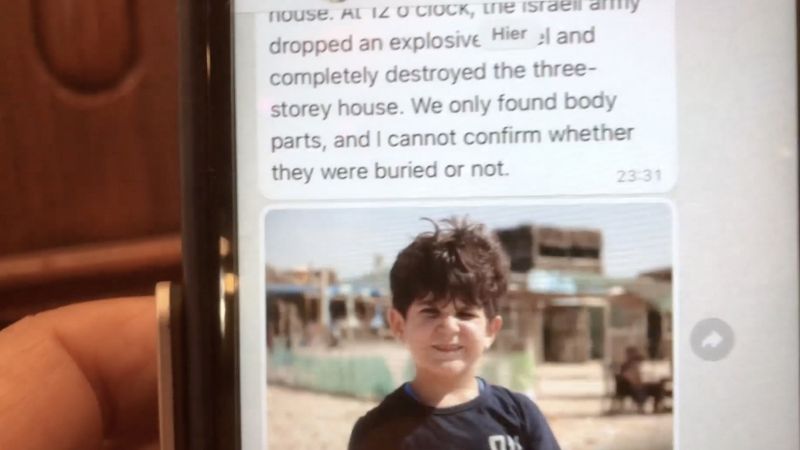
Over 200 days
For over 200 days, Fatma had been the constant interlocutor of the exiled Iranian filmmaker Sepideh Farsi via smartphone. The result was a cinematic, almost intimate portrait of this woman in the death zone, for whom Farsi was her only contact with the outside world. More than that, a nearly mother-daughter relationship developed between the two women, each with different fates yet deeply marked by experiences of violence.
One day after Farsi was able to inform the young woman, who had never left Gaza in her life, that her filmed portrait would be shown in Cannes’ parallel section, the «Association du cinéma indépendant pour sa diffusion (ACID),» Fatma Hassona was killed along with seven family members in an Israeli bombing raid. Farsi had – perhaps somewhat naively – offered her the prospect of being able to come to Cannes. Fatma reacted with great doubt as to whether this would be possible.
The recorded smartphone conversations between the two women also contain the insistent sounds of exploding bombs and military helicopters.
Smartphone gaze
Indeed, what is fascinating in this filmic portrait, which is largely limited to the gaze of a smartphone used for communication, is the incredible energy—one might almost say joie de vivre—of this young woman, who throws herself with enthusiastic energy into every aspect of life that distances herself from the victims of the war of annihilation. The interviewee talks about her everyday life, her family, her cat, her dreams for the future, her desire to be able to travel and discover a world other than the one marked by the constant threat of death.
Farsi seems to deliberately avoid directly addressing her traumatic experiences of the recent past. It would also be hypocritical and inappropriate to question a photojournalist about her journalistic experiences and research in this context of total destruction. Instead, we meet a woman who, even under the most painful circumstances, never loses her laughter, her energy of positive, empathetic concern, her desire to believe in something beyond and after the destruction. Yet we also see that this energy weakens over the 200 days, and Fatma seems to surround herself with a mental protective space. The viewer also learns that stages of actual hunger have already begun.
Already in her 2022 work Daughters of Iran, Farsi used cell phone videos circulating online to document the Iranian protests following the violent death of #Mansa Mini#. In her current work, the interruptions and delays caused by poor internet quality also complicate communication. In stark contrast to this is the insertion of Hassona’s own photographs, images that depict death and survival yet repeatedly reveal the power of a human face amidst the destruction.
The recorded smartphone conversations between the two women also contain the insistent sounds of exploding bombs and military helicopters. At one point, Hassona turns the camera toward a window view of the neighbouring house, which had been razed seconds earlier. But we also see conversation sequences during which Hassona recites her own poems and interprets her songs. These creations seem like flamethrowers over the abyss.
The world losing itself
It was only after her death that Sepideh Farsi quoted much more serious lines from the young woman in a TV interview on the channel «France 24 Perspective,» which foreshadowed her own death: «I want the whole world to know that the death of Palestinians now means that an extended vengeance will grow and burn its killers, his brother, who was silent about his killing and the knife to cut his neck. And I want the whole world to know that my death means that the world is losing itself in front of me, in front of us, in front of itself. What kills me was not a bullet, not a shrapnel, not even a missile, what killed me every day… is the oppression from all those who remained silent when they should have been screaming.»