For a war correspondent, watching movies about war correspondents has never been easy. But now it makes no sense.
After Gaza.
Nothing is the same.
For readers, for viewers, friends, neighbours, everyone, we are heroes. With our unusual life, every day is filled with a thousand days. A life of adventure, courage, and noble-mindedness: ready to risk it all to cover the story. To give voice, right?, to the voiceless. But deep inside, each of us knows the truth very well. We are nothing but vultures.
And it is not impostor syndrome.
No. We are nothing but vultures. Or worse, pawns in the global Risk.
A weapon. And one of the most powerful.
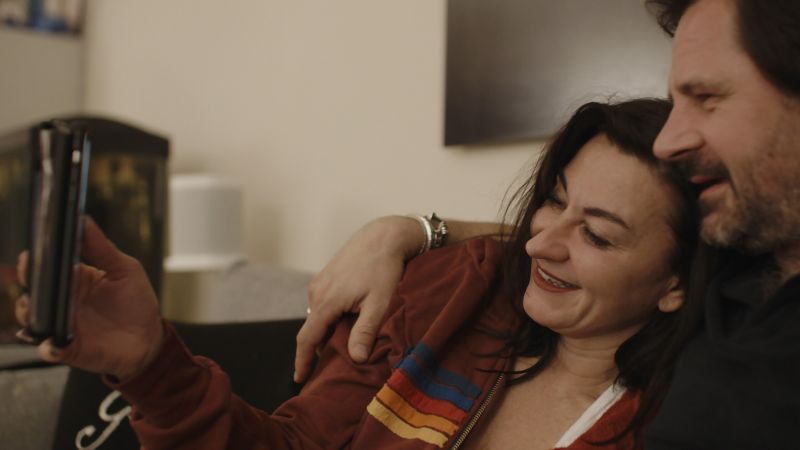
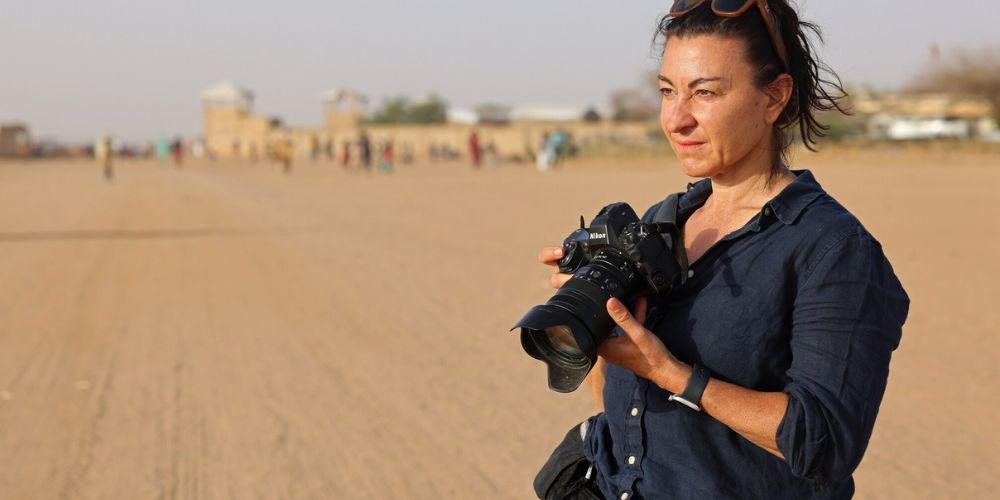
And that’s what the key character of this documentary, New York Times photographer #Lynsey Addario#, knows too. At some point, referring to the ever-unstable balance between her life on the road and everything else, and her son at home, a withdrawn, untalkative child, wounded inside as much as the wounded on the outside, she tells herself, «I am failing both» – as if to say: But all this, for what? Even though this documentary is an attempt to convince her, and us, that it is not so. Because after all, she is one of the best. Just look at her pictures from Ukraine—the opening scenes. Already on February 24, 2022, at the outset of the invasion, Lynsey Addario takes a photo that will remain among the most iconic of the war, foreseeing its evolution: a man bent over a blood-stained sheet, over a corpse, in a #Kyiv that, all around, goes on as usual. And then the teachers with rifles, learning to shoot, a bombed-out and blackened building with a man barely visible between the windows, a mere speck in the immensity of the war, and above all, the famous #Irpin Bridge#, which fleeing Ukrainians cross hand in hand: and also in Irpin, do you remember?, the mother with her two children and the trolley, killed by mortar fire just a few steps away from Lynsey Addario. That photo, on the front page of the New York Times, will be reprinted all over the world. And it will be the first unquestionable evidence of Putin’s crimes. Of the intentional, indiscriminate attacks against civilians. Who, now, will be able to say they did not know?
But deep inside, each of us knows the truth very well. We are nothing but vultures.
This has always been the goal of Lynsey Addario, a restless Italian-American born in Westport, Connecticut, from the very beginning: to have an impact. Because you start with curiosity, of course, and quite often, by chance, with no idea whatsoever what war is, but then, little by little, it not only becomes your life, the only life you are capable of living, and the only life you want to live, it becomes more than a profession: it becomes a responsibility. And not just in war. In addition to her pictures from Iraq, from Libya, from Sudan, Lynsey Addario is known for her photos from the front lines of life: among the Afghan women who set themselves on fire out of desperation, or at the bedside of Mama Sessay, the 18-year-old from Sierra Leone who died in childbirth. One of her most outstanding works. Her heart-wrenching shot will spur $500 million in health care investments, changing the lives of many.
And to make an impact, Lynsey Addario is ready for anything.
She had countless close calls.
But now, after Gaza?
Like many, Lynsey Addario has been in #Ukraine since day one. But like everyone else, she is out of Gaza. Why Ukraine, yes, and Gaza, no? Syria no? Yemen no? Darfur no? Does the United States, which since October 7 has bankrolled the Gaza war with $21.7 billion, really have no leverage to force #Israel to open the border to the New York Times? The Washington Post? CNN? Or perhaps the problem is that in Syria, we were on Assad’s side? That in Yemen, Saudi Arabia, our ally, is involved? In Darfur, the Emirates? It all depends on the interests of our governments. Of which we are instruments, more or less consciously, more or less willingly, through our publishers and owners. You do your best, of course. You try to be different. But what about the others, in the meantime? Another masterpiece of Lynsey Addario is Restrepo, the American outpost in Afghanistan’s Korengal Valley, where her portraits of the #Marines say everything about that war, without needing a word, a comment, or an explicit condemnation: it is all clear. Lynsey Addario simply says: «If you decide to invade a country, you must understand the consequences» – and she says more than the #UN has. But right now, her New York Times, dubbed New York Crimes by Palestinians, keeps describing Gaza with verbs without subjects, verbs in the passive form: actions without an author. And certainly not since October 7. Shireen Abu Akleh, an al-Jazeera star, killed by the #IDF in Jenin in 2022, «dies at age 51» as if she had died of an asthma attack.
In the entire documentary, Gaza is never mentioned. Never.
Each of us says over and over again: I am different. I try my best. Better than nothing.
It would be even worse without me.
But after Gaza, is that enough?