The eccentric dreamer, who has retreated into their thoughts and tinkers away at leisure on outlandish ideas in some spot secluded away from the petty concerns and demands of the urban nine-to-five public, is a romanticised figure still deeply entrenched in our cultural consciousness. This archetype has taken on added shades of #nostalgia now that the intensely networked, information-saturated nature of our digital present under neoliberal #capitalism has lost its sheen of possibility and revealed instead a dark capacity for leveraging division and #anxiety and now that the proliferation of #artificial intelligence# threatens to compromise our reverence for the creative human spark entirely.

Ageing dissidents
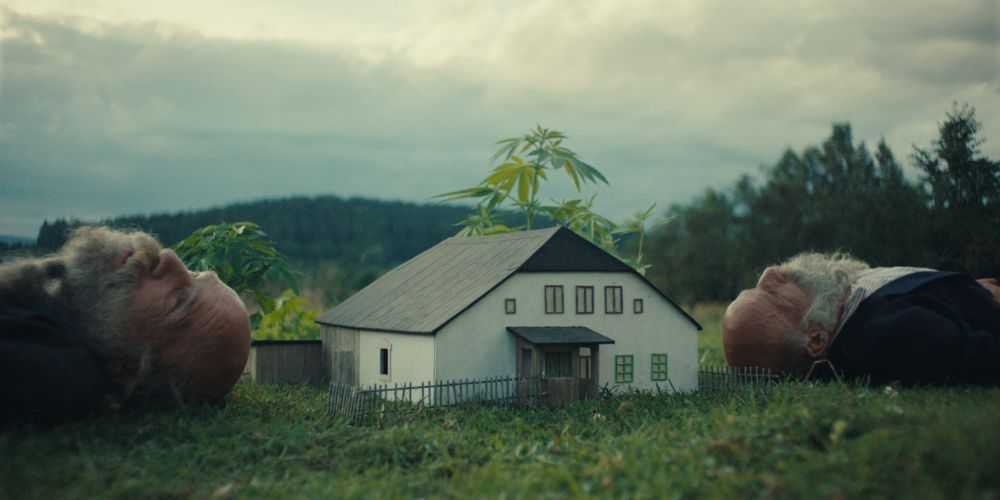
Slovak director Miro Remo’s delightful docudrama Better Go Mad in the Wild, which screened in the Crystal Globe Competition at the #Karlovy Vary# International Film Festival, is perfectly suited for indulging this yearning for an escape into simpler times. It is a clear-eyed but affectionate portrait of twins František and Ondřej Klišík, who pass the hours as if they are oblivious to this jaded and troubled online era, or rather, are resolutely unseduced by it. Now nearly sixty, they spend slow, sprawling days together in their household in Šumava, in the forested South Bohemia region of the Czech Republic, among their books and farm animals. They have been here their entire lives and have let their beards grow out. Lovers, whose live-in stints have subsided, persist there only as reminiscences.
This archetype has taken on added shades of nostalgia now that the intensely networked, information-saturated nature of our digital present under neoliberal capitalism has lost its sheen of possibility
The brothers are advanced enough in years that the spectres of physical decline and mortality hang close, even as they proclaim that death does not exist or is just another dream after this one, in keeping with their existentialist embrace of freedom. Franta, who lost his arm in a sawmill accident decades ago, is a heavier drinker than Ondřej — a source of tension between them, as Franta would prefer that their evenings of smoking and tucking into rum never ended, even if, as Ondřej makes a habit of reminding him, it curbs his life expectancy. The men are largely shut off from the frenzy of the wider world now but are far from detached from the political layer of the nation — in fact, they were once dissidents in Šumava’s underground non-violent resistance movement, contributing to the struggle to overthrow communist rule in 1989’s #Velvet Revolution# by producing and distributing anti-regime pamphlets and samizdat literature. Today, they rail against #Putin, #Hitler and other totalitarian leaders present and past, condemning the petty ambitions that drive politics and men of power that lack human feeling or imagination — the «boring c**ts» as they term them. The bureaucratic drudgery of politics has never been for them, for whom lyrical flights of fancy are as crucial as water for survival and a way of everyday life. Remo plays with the brothers’ outlook, indulging it with gentle humour and a tinge of the mystery of chance, shooting them through a picture frame hung in the yard, as if they are the subjects of a great and picaresque rural scene — and indeed, they are.
Unhurried
For the last twenty years, the intrepid visionary and slightly messy drunk Franta has been building a flying contraption, which he likes to haul onto the roof of the cottage when inebriated, much to the consternation of his brother over the very real danger of an unholy accident. There is a madcap enchantment to this endeavour that it is impossible to deny, no matter how sceptical we may be of Franta’s abilities as a da Vinci-like renaissance man. The outdoor baths, fireflies, arm-wrestling, and snatches of verse that punctuate the Klišíks’ brotherly bond are not short of beauty, and a burning snowman in winter is an image of genuine poetry; part of the surrealistic world-building of a documentary that more than lives up to its title. The two former #human rights# defenders may be past the prime of their roguish appeal in the eyes of women and the height of the civic impact of their rebellious subversion, but they have retained their sensitivity to the magic of the imagination — and Remo manages to capture how closely intertwined the impulses of creative expression and political freedom really are.
Some may regard it as a dated naivete to position the archetype of the hard-drinking, non-conformist artist as the ultimate dissident against the system, but the charm of Better Go Mad in the Wild is that it simply lets us be present with these colourful characters with a wry and unhurried lack of judgement and does not try to use them in service to any argument or ideal — which is a breath of fresh air in a climate in which choices are made to appear endless but are evermore commercially prepackaged and circumscribed.