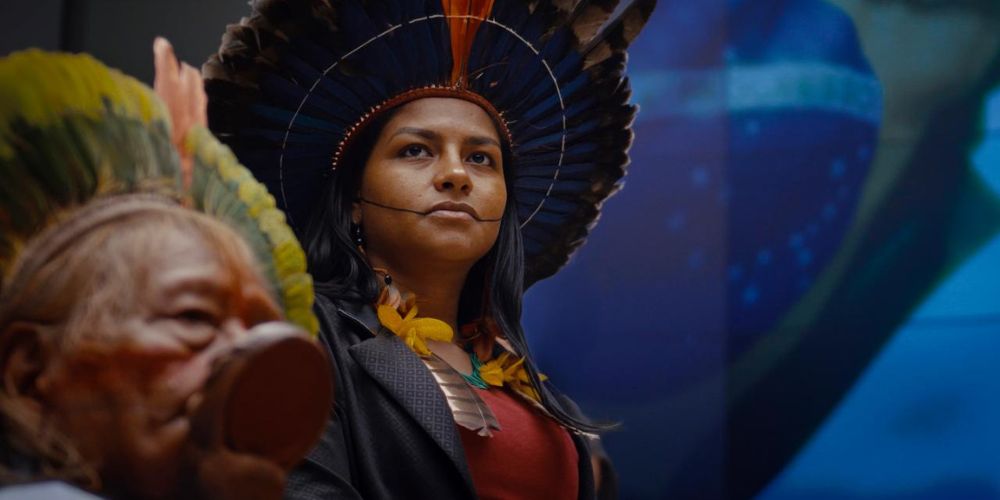
Born in a remote #Amazon village, Juma Xipaia survived six assassination attempts and rose as one of the strongest and most fearless voices for climate justice. She began her activism at just thirteen and, at twenty-four, became the first female chief of the Middle Xingu region, breaking deep-rooted gender barriers and bringing new perspectives to #Indigenous governance. Her husband, Hugo Loss – a federal agent with Brazil’s Environmental Police who combats illegal deforestation, mining, and pollution – is often away on missions. Meanwhile, Juma stands at the crossroads of threat, power, and motherhood, carrying the intimate cost of resistance and the ever-pressing question that shadows all who fight for the earth: what is the personal price of fighting?
An enchanted world
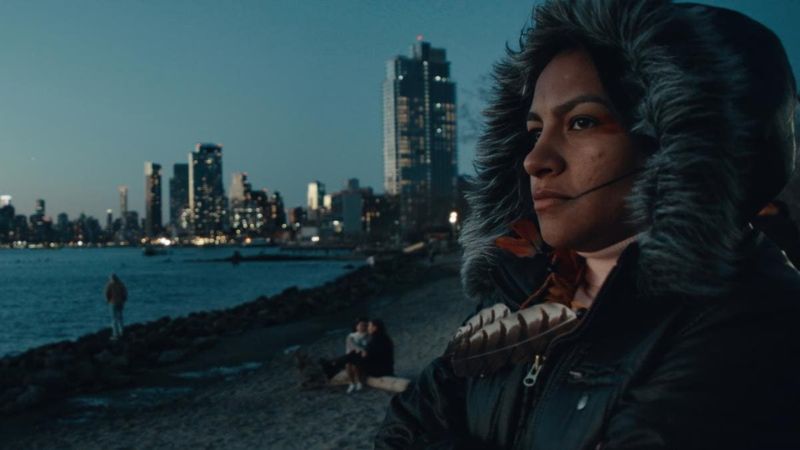
Visually, the film is a work of rare beauty. The camera flows between Juma in her #activism, quiet moments of closeness with her husband, and the Amazon itself: its dense green canopies, misted waters, the villages, and the pulse of rain. It moves from the intimate to the vast, from the personal to the elemental. Every frame of the Amazon breathes the enchanted, intertwined with Juma’s story and work – in a rhythm that carries both weight and wonder.
Juma Xipaia herself is magnetic. She has a quiet strength, an authenticity that makes every word she says ring true. Even in tears, her eyes remain steady. Even in fear, her voice holds edge. She is a monument of realness: vulnerable yet unshaken.
Watching her, one feels that she both does and doesn’t belong to the modern world. She pours herself into making that world care, confronting its indifference and wondering if it ever truly can. And yet, seeing her on screen – you want to belong to her world too. Because that world feels aligned, human, rooted, whole.
Watching her, one feels that she both does and doesn’t belong to the modern world.
Politics and love
Her story unfolds alongside the turns of Brazilian politics and the shifting approaches to the Amazon, following Juma from protest and activism to becoming Secretary of Articulation and Promotion of Indigenous Rights in the first Ministry of Indigenous People. In her speeches, she repeatedly calls on audiences to wake up: the responsibility for the Amazon lies with every government in the world, and the forest’s degradation is also a degradation of the human mind and spirit.
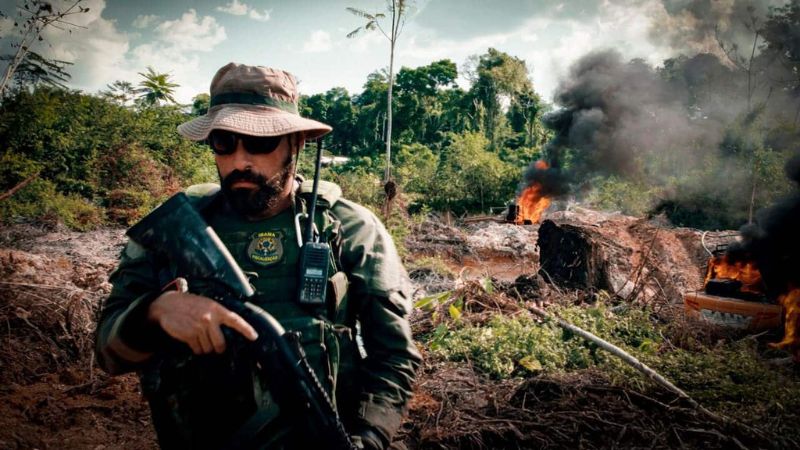
At its core, the film is a layered story about urgency and love. Juma’s fight for her people and her forest comes out of love. That in itself is urgent, as the Amazon faces continuous threat – it becomes even more urgent as she learns she’s pregnant. The core part of the film is also her connection with her husband, Hugo, which is both tender and quietly romantic, a meeting of minds and hearts that complements their work in the world. The film features striking footage of Hugo on his missions: tracking illegal #mining operations, confronting environmental destruction, and setting unauthorised encroachments on fire. He and Juma inhabit a shared rhythm of courage and love, each reinforcing the other in their struggle for the forest and for each other.
The fight for the forest
The Amazon holds nearly half of the planet’s remaining tropical rainforest and produces 20% of the world’s oxygen. Yet for decades, its lands have been devoured by illegal mining, logging, and cattle ranching, all driven by global demand for gold, beef, and soy. Beneath the canopy lies not only carbon but profit, and so extraction advances, river by river, clearing by clearing.
For the Indigenous peoples – nearly a million across 400 tribes – the forest is not a resource but a relative. It is home, spirit, history. The fight against deforestation is, at its core, a fight for cultural survival and for the balance of the planet itself.
Juma’s fight for her people and her forest comes out of love.
The personal and the political
The film moves between these scales – the cosmic and the intimate, the political and the personal – revealing the toll of a life lived in resistance. Between meetings with ministers and a sense of purpose, mixed with a feeling of being unrooted and needing to go home, Juma’s story is a reminder that being strong means showing heart. Yet that can have a high price.
Juma Xipaia embodies the paradox of hope: fragile and fierce at once. Watching her, you understand that the Amazon’s survival – and perhaps our own – depends on people like her: those who love a place enough to put their heart on the line, and never stop fighting for it.