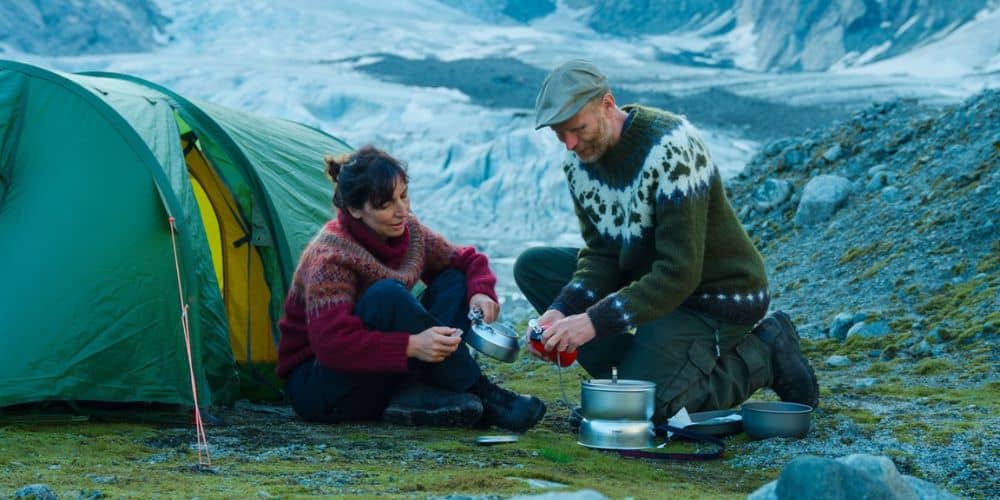
The acclaimed Norwegian still and film photographer Asgeir Helgestad has documented wildlife in Norway and #Svalbard for over 25 years. In his new documentary film, A Call from the Wild, he examines the interaction between rising temperatures and his homeland’s nature and animals from a #climate change# perspective. Looking back at his older footage, he guides the audience on a breath-taking journey into Norway’s spectacular nature.
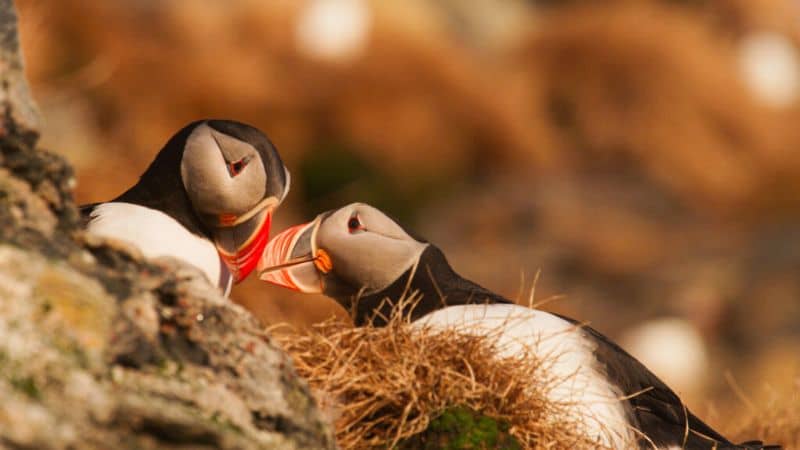
This time, Helgestad uses himself as a mouthpiece for wild nature. I dare say that most people from so-called developed countries already know that we are exploiting nature, but having it pointed out with solid documentation is a punch in my emotional stomach. Helgestad shows us a bird cliff full of puffins, gannets, and seagulls; birds have been using the cliff for thousands of years. The birds depend on the fish eating the tiny plankton in the ocean. With climate change, the water gets warmer, so food for fish, birds, and whales forces them to move north to colder waters within time.
Cries for help
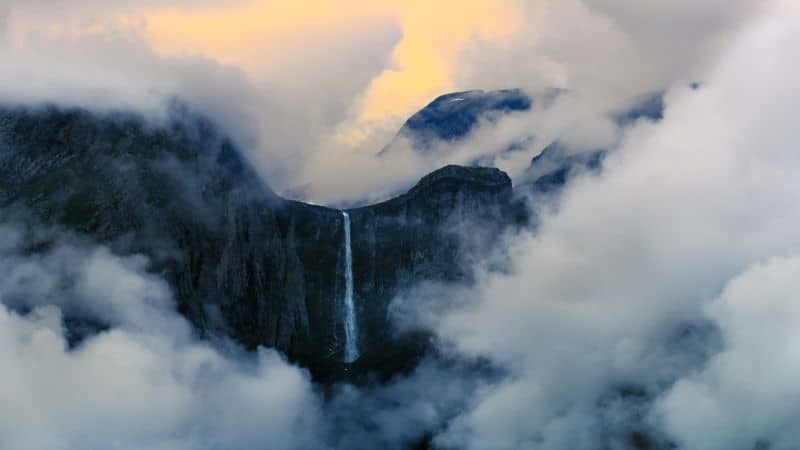
Helgestad manages to film in all kinds of weather, and he works with equipment that can get the audience into the smallest puffin hole and explore the growth of a baby puffin. Let us watch the wild reindeer fighting and mating, look at the mountain from above and explore the insects in a nectar dance with a flower. Sometimes Helgestad is in the framing, on the cliff’s edge, rescuing a puffin chick from being trapped in the nest. Knowing that a filmmaker is not supposed to change reality, he simply cannot let the bird die.
A big machine is harvesting the popular seaweed, and shortly after Helgestad points his underwater camera at the bottom, a sad sight appears: Everything is demolished, and it looks like a warzone. Also, on the cliffs, it is a sad sight. Plastic and nylon yarn in different colours trapped dead birds hanging from the fishing equipment, and the sea looked like a junkyard. It is a devasting picture, and it makes me ask myself: How come Norway, as one of the richest and smartest countries, can not find a way to deal with this challenge? How can we blame developing countries for not reusing plastic bottles and cleaning the ocean? We also blame them for felling too many trees, but Norway has reduced the native forests by 98%, resulting in a loss of biodiversity.
How can we blame developing countries for not reusing plastic bottles and cleaning the ocean?
Helgestad is more delicate. He shows a large mountain full of windmills and asks, «Climate change needs action, but how can this destruction of nature be a sustainable solution? Are we ready to lose the mountains in exchange for electrifying oil platforms and providing data centres with cheap energy?»
The film shows a cry for help. With an enormous love for nature that is captured in exemplary beautiful scenes and framing from the small insects to the big muskoxen followed for many years.
A fact
I have been inspired to observe my own garden with new eyes. The kestrels still come to the bird box every year, but we do have fewer insects, butterflies, and swallows. Ten years ago, there was a hedgehog couple every year. This year, we found a dead one. In the early morning, a heron was standing before our window—not scared but presumably ill. Climate change is a fact, and we all must react and change our lives sustainably.
It is not the first time Helgestad’s film has shown the results of climate change. In his film Queen Without Land (2012), he introduced us to the polar bear Frost and her two cubs in Svalbard. The film is not just about the giant animals and their lives; it also looks into the ecosystems and the extreme changes in the rapidly disappearing #Arctic. The film has been sold to more than 20 countries.
Recently, Helgestad and his production company Artic Lights received a grant from the Norwegian Film Institute to make a new film about the polar bear Frost at Svalbard. I have every reason to expect another extraordinary documentary film and another punch in my stomach from Helgestad.