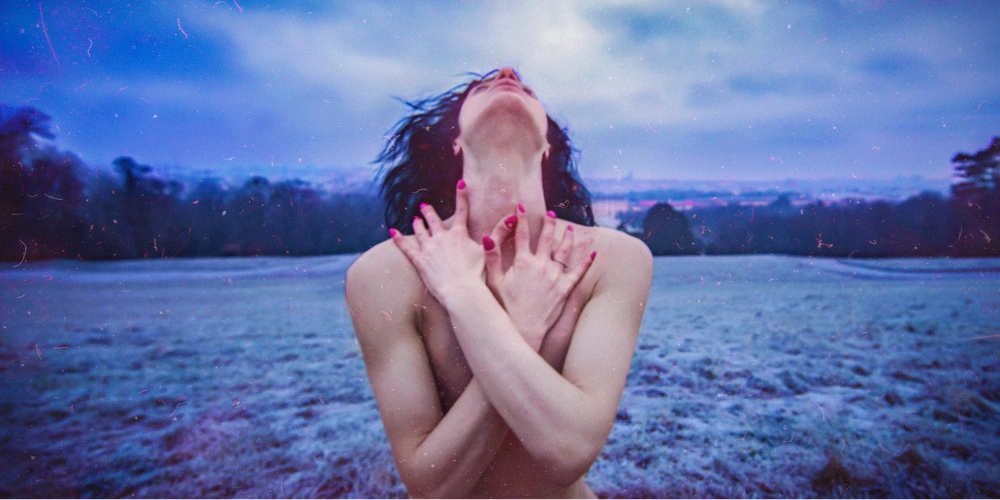
«I want to feel the breeze of freedom on my skin,» quietly whispers Adeline, the protagonist, shortly after the start of this surprising, bitter documentary from Georgia. Based on the short Prisoner of Society, which was nominated for a European Film Academy Award, the film premiered in the DOX:AWARD, the most prestigious competition section of the CPH:DOX festival. It’s hard to believe that in Europe one’s life is in danger just because one does not fit the society’s expectations. Yet this was the reason why her parents kept Adeline confined at home for the whole 11 years. They felt shame when their son started to dress and behave like a girl, but they decided to hide her also because they all risked being violently attacked («burned alive» is horrified her mother) for this. In 2017, Adeline wrote a letter to the director, claiming she needed «to speak out to feel alive.» The documentary covers her life from that moment to today, offering yet another surprising view of freedom. Does it matter at all, today, when naked human existence is threatened by scarce economic conditions, by war, and genocide?
Of women and men
Historically, the domination of heterosexuality has been enforced along with capitalism since it ensures the reproduction of the labour force. Heterosexuality is far from being here forever, and of course, during the last few decades, it has been rapidly losing its dominance. However, exactly because mostly ideological, the heterosexual love has been thoroughly promoted through popular culture and artistic contents alike, and for the majority of the people of the Global North, the situation is still very much like described by French psychoanalyst Jacques Lacan in the second half of the 20th Century: you enter human society as you enter the public toilet, through the door for men or the door for women. Georgia, a former Soviet republic lying on the eastern shores of the Black Sea, is today generally regarded as part of Europe, and officially prohibits discrimination against all LGBTQ+ people. But recently, public representation of LGBTQ+ identities has been banned by law. «No law can erase who we are,» Adeline bravely responded. But for the traditional Orthodox Christian values that rule in the country, homosexuality is a major deviation, and homosexuals are often targets of abuse and physical violence. The archival material used in the film is quite shocking, revealing that this violence is not only encouraged but also directly demanded by religious leaders.
It’s hard to believe that in Europe one’s life is in danger just because one does not fit the society’s expectations.
The visible and the invisible
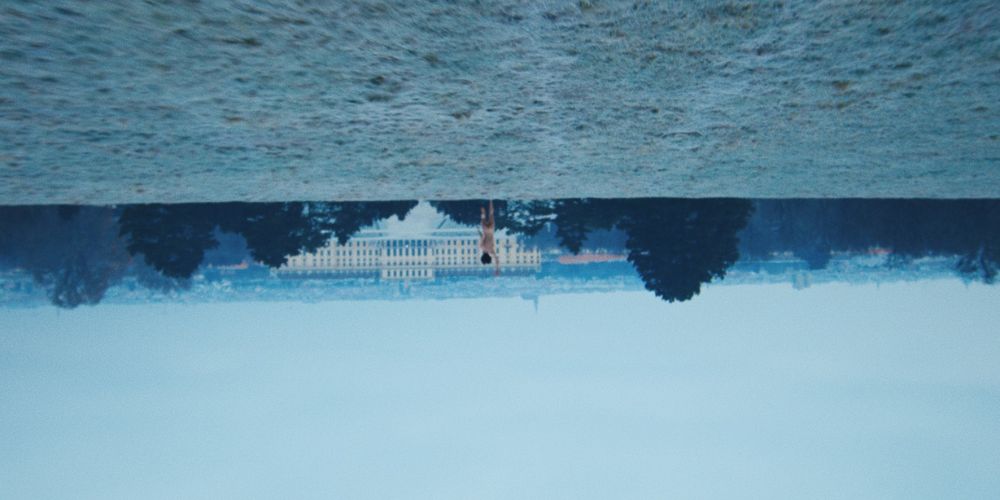
Rati Tsiteladze’s direction is very consistent, and the constant potential for violence is also evident in the film’s visual language. It is pure and minimalist, with recurring motives that evoke strong sensations, such as burning, with boiled over coffee, burning on the heated stove; cutting, with crushed fruits of pomegranates; or freezing, with frozen heads of cabbage pouring from the earth during winter, under the tiny snowflakes slowly falling from the sky. The silent presence of strong but repressed feelings is built into the structure of the film frame, almost always partly obscured by elements that disturb the view, by stage props such as walls and doors, trees, or blooming sugar cane. Even the surgical masks on Adeline’s and her friend’s faces look more like tools to hide identity than relics of a particular period of the COVID-19 pandemic. Such remarkable use of cinematic language opens up a field of multiple interpretations. The obscured view also creates a feeling that the viewers are looking at something we are not allowed to see, visually emphasising that we are following the life of a child whose parents protected them from the gaze of others for more than a decade. But the impression of hiding also extends to Adeline and to the freedom this child had longed for all along. This creates a tension that is only released in rare moments, such as when a musical motif from Tchaikovsky’s Swan Lake triggers Adeline’s vocal memories, while on-screen a street-cleaning vehicle sweeps rubbish from the suburbs of Vienna, where Adeline now lives.
The obscured view also creates a feeling that the viewers are looking at something we are not allowed to see
The social trap
The story of Adeline speaks to humanity amid war and scarcity. The sorrows of a young trans woman migrant on the outskirts of Vienna show that there exists a meaning of life beyond pure existence. It also touches on the core of recent European history and the recurring question of whether it was worth giving up social security (presumably provided by the fallen totalitarian regimes, such as the Soviet Union or Yugoslavia) in exchange for civil rights, as freedom is always subject to context. First of all, economic, but also related to visas and state borders. Freedom, very much like happiness, mostly remains an unachieved ideal. «Sometimes it feels like during those 11 years of confinement, I might have been happier than I am now,» reflects Adeline in tears. The film brings no relief. And hearing that a clichéd soundtrack of longing for romance made Adeline fantasise about what it would be like if she were a man is a heavy reminder of how very much our dreams and our intimate search for happiness are shaped by society and the collective imaginary.