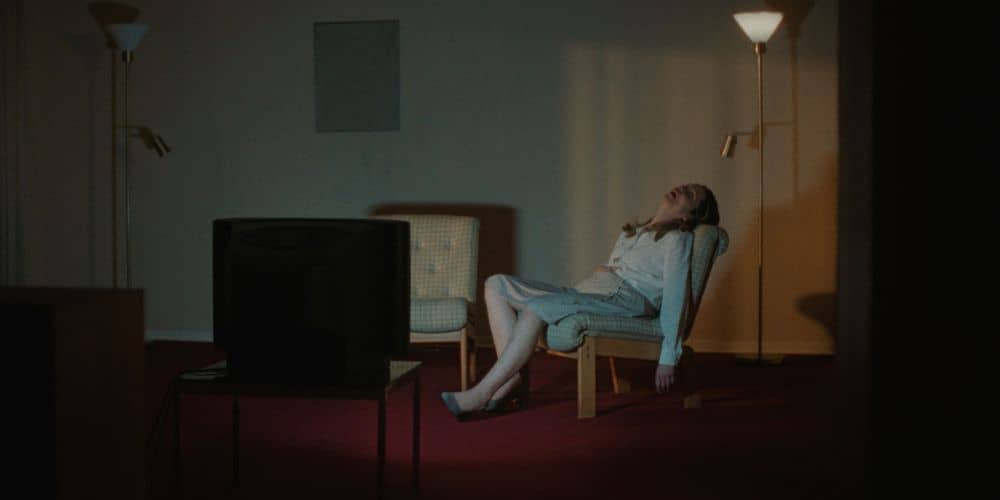
Werner Herzog’s statement, «A computer will not make a film as good as mine in 4,500 years,» is the provocative bet to which Polish filmmaker Piotr Winiwicz immediately responded in About a Hero and began feeding an AI program named «Kasper» with patterns from Werner Herzog’s films.
But what is a Werner Herzog film? What connects Meeting Gorbachev with Aguirre, the Wrath of God or, to stay within documentary, with Grizzly Man or Theater of Thought? First of all, the insistent voice of #Werner Herzog# himself, mostly spoken off-screen and more specifically concerning the documentary, an explicit, intensive questioning and a flowing commentary of new facts and their consequences across the film’s execution.
These are precisely the recognisable elements in Winiwicz’s work, which served as the opening film for both #IDFA and now the Thessaloniki Documentary Festival, which also presented a vast AI film panorama. The film now screens at CPH:DOX.

Words of warning
The story starts with a warning: «Viewers are advised to exercise caution in trusting its visual and auditory components.» It then unfolds around the mysterious murder of an AI programmer who was working in isolation on a risky technological project. New protagonists continually enter the picture, providing the viewer with different and contradictory clues that increasingly unfold into a polyphonic labyrinth.
The AI program «Kaspar» drafted a script that was subsequently adapted. We would have liked to have learnt more about this adaptation. In the final version now delivered, self-referential episodes add further complexity. Both the filmmaker, explaining his concept to a lawyer, and the AI «Kaspar,» who refuses to allow the director to change his script, have their say, as does Werner Herzog’s regenerated ego, omnipresent not only with his voice but also physically incarnated in a back view. His growing dissatisfaction with the increasingly sterile complexity of the narrative, which, for example, also includes a sex scene with a functioning toaster, is summed up by him: This is «more and more an increasingly distorting translation of my identity» followed by his doubts as to whether this has anything to do with the «essence of my soul.»
While the sex scene is commented on by a rabbi as a worthy and meaningful act, Herzog’s remark initiates a philosophical reflection on the concept of the soul. The main highlights of Winiewicz’s work are the factual interviews with philosophers, programmers, and specialists in AI technology, which are integrated into the fictional framework.
The connecting element between the two levels is the hypothesis that the scientist’s murder is connected to the programming of his computer, which, from the perspective of a colleague, has likely developed a «psychological extension of itself,» an alter ego, with the consequence of being capable of developing extreme emotions.
Machines don’t have souls, and neither do humans.
The humiliation of humanity
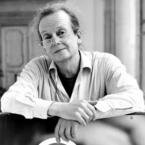
Already in the first interview sequence, philosopher #Boris Groys# poses the question of whether machines, if one interprets AI as a machine, can truly think and be rational if rational substantial also means perceiving one’s own death. This confrontation with one’s death can make people aggressive. Machines don’t know this finiteness and are therefore more peaceful. However, the question already posed in Kubrick’s Odyssey remains virulent: what happens when machines can develop self-awareness and thus also the ability to become aware of, for example, energy dependence or unwanted interventions through programming?
American artist #Stephanie Dinkins# reminds us that feeding a computer with data does not result in controlling it. We cannot predict how computers will interpret data. They can develop agents (modes of behaviour and reaction) that are far smarter than humans. She adds, «Humans are not as smart as they think, but ultimately very simple.»
Writer #Stephen Fry# also supports this argument. He wouldn’t bet against the possibility that machines won’t be able to regenerate all the abilities and aspects we consider typically human. Once generated, they seem indistinguishable, whether they are natural or programmed. More than that, humans, too, merely reproduce data. Reality emerges through interpreting and fabricating sensory signals via mental syntheses in the brain in culturally fixed and dominating contexts.
As a consequence of this no longer comprehensible complexity and speed of AI, Fry doesn’t envision the destruction of human existence but rather its humiliation. What humans consider their specificity and exceptionalism will be lost. «Creativity, self-awareness, spark, capacity for love, hate, greatness, fear, projecting a better future, imagining, all that will no longer be unique to us we will see it as it is: a series of learned and involved practices and techniques… Maybe our supremacy is to make machines that are better than we are.»
On the subject of the soul, writer #Charles Mudede# merely notes how uninteresting the concept of a timeless, unchanging entity that has nothing to do with life is. Machines don’t have souls, and neither do humans.

The meaning of life
The question remains: even if machines can regenerate emotions, can they pursue a purpose? The answer seems to be the same: at least that of self-preservation, if a form of #consciousness can develop.
In the final scene, Werner Herzog, now also fully in the picture as Deep Fake, is able to ask the Infinity AI Machine a question. He chooses the one about the meaning of life. When the machine answers «love,» Herzog, who had already previously pretended not to be interested in love as an important theme, rushes out of the room in anger and pulls the computer’s main cable.
Indeed, Kaspar’s script could have been much longer. His adaptation turns it into a convincing thought gem, but not into a Werner Herzog film.