As CPH:DOX returns for its 23rd edition from 11 to 22 March 2026, the Copenhagen festival once again arrives at full scale, with more than 200 films and a public programme dense with debates and events. This year’s edition includes 86 world premieres and, as ever, stretches across cinema, politics, music, performance, and public conversation.
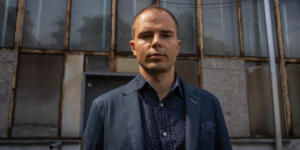
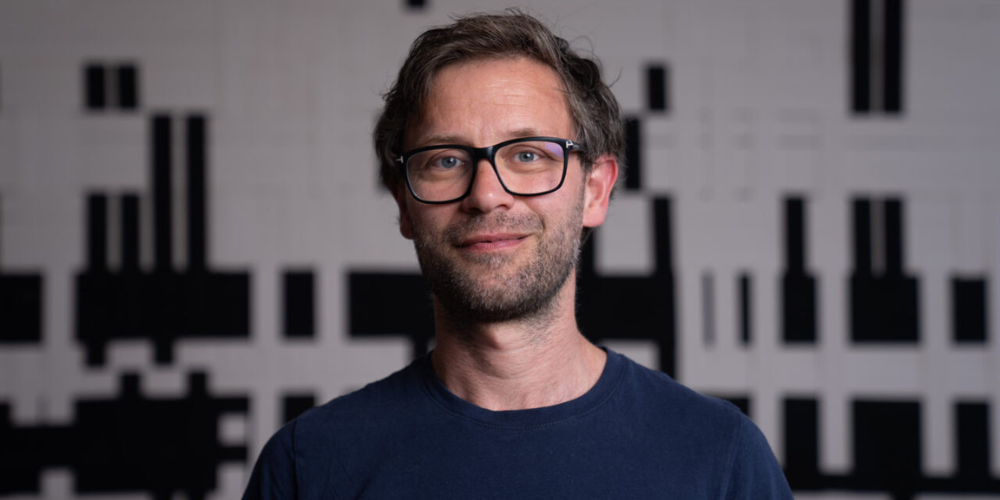
Few people embody that long institutional arc more fully than Niklas K. Engstrøm. Trained in political science and film and media studies, Engstrøm has been part of CPH:DOX since its founding in 2003, helping shape its evolution from an ambitious local upstart into one of the world’s key documentary festivals.
In this conversation with Modern Times Review, Engstrøm reflects on what it means to programme documentary in an era of intensifying polarisation, why CPH:DOX continues to defend aesthetic breadth alongside political urgency, and how music, controversy, and democratic dialogue all fit within the festival’s larger mission. Read it alongside our earlier conversation with CPH:LAB’s Mark Atkin, which explored the festival’s immersive and interdisciplinary edge.
From the start, we wanted to expand the notion of what documentary is and can be.
One thing I appreciate about CPH:DOX is that within a very large programme, over 200 films, you also make space for documentaries that are not always so heavy. A clear example is the emphasis on music docs and events. I split my time between documentary and the music industry, so I’m always interested in where those worlds overlap.
You have, for example, a black metal title in the music strand that grabbed me. When did you integrate music documentary and the wider music performance element into CPH:DOX, and why? And more broadly, what place does documentary that isn’t necessarily overtly social or political hold within the overall festival?
The short answer is that music-related films have been part of the festival from the beginning. In 2003, their first year, they were a prominent part of the programme.
When we started CPH:DOX, we were definitely interested in cinema as an art form. Starting CPH:DOX was also the start of my relationship with documentary film. I came in as a young guy, 23, invited by Tine Fischer, who asked me and a few others to join the programming team. She had been approached by people who were running a fiction film festival. I’d been trying to get involved with that scene, and then this opportunity arrived, and it was perfect.
I have a background in political science, so the combination of cinema I loved, and an interest in the real world and politics made sense. But it’s important to say that the festival began with what we thought was interesting: ourselves, the real world, and the arts across the board.
From the start, we wanted to expand the notion of what documentary is and can be. That’s why we explored the borders between documentary and fiction, and the hybrid area that wasn’t yet the trend it would become. I learned what documentary cinema could be by watching hundreds of films that first year.
As part of exploring the borders of documentary and cinema, it felt natural to explore different artistic genres, including music. We didn’t want it to be only screenings about musicians and bands. We wanted to bring music culture into the festival as a lived thing. So we arranged concerts around screenings and music performances. We did a lot of audiovisual live events early on, including with Peter Mettler.
I think music has had a big impact on the festival’s relationship with audiences. We programmed what young people were genuinely interested in, and other young people came. That’s part of the secret behind our audience’s rapid growth.
On the broader point, bringing themes that are not strictly political onto the screen is really important for us. Documentary can be more than facts or activism. It can also be fun. When we started, that wasn’t a common idea.
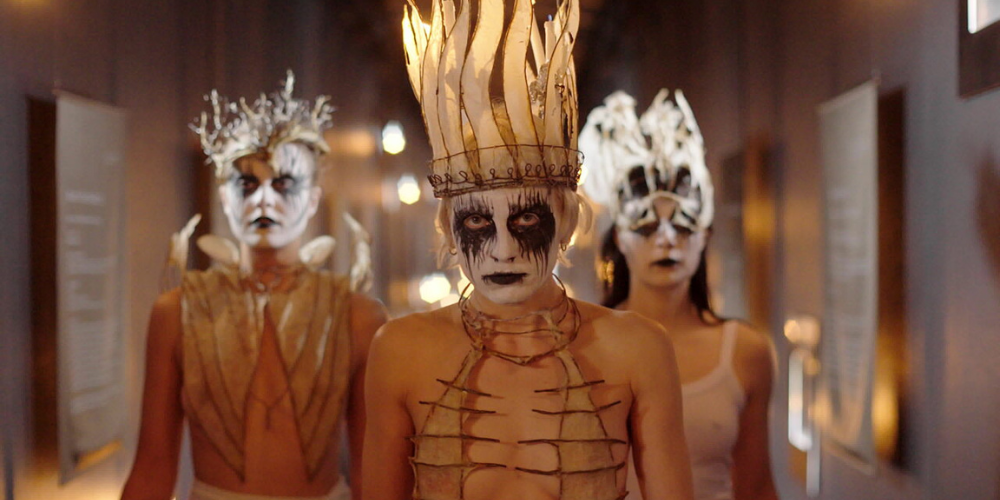
I wish I had one euro for every time I’ve said documentaries are allowed to be fun. And yes, music docs open new audiences. Especially now, in turbulent times, you need some levity while still engaging culture intellectually.
It also feels increasingly rare to speak to someone who’s been involved with a festival from the beginning and stayed in programming. How has your programming approach changed from when you were 23, a recent graduate, to now?
I think we’ve become much more aware of the responsibility we carry. I’m a different person now. I’ve been doing this festival for half my life.
The festival’s role is also very different. But the red thread remains. We still explore borders. We stay open and curious. We keep trying to expand what documentary is and can be, and to bring different parts of reality into the screening room. That includes politicians, experts, musicians, artists, and activists.
What has changed is that when the festival was smaller and more local, it was easier to work closely with activists without constantly questioning our role. The world has changed, too. It has become more polarised. It was already polarised around 2003, during the Iraq War, but it has shifted.
Today, we’re a huge cultural event in Denmark. We’re more aware of our platform and the importance of curating an open space for democratic dialogue, where different opinions can meet and be exchanged. That doesn’t mean we avoid controversial films. We still programme films that are radical in form and in viewpoints.
The festival’s role is also very different. But the red thread remains.
Can you give some examples?
This year, the big topic, as in recent years, has been Israel–Palestine. Like other festivals, we’ve received criticism from pro-Palestinian activists, mostly for not taking a very clear stance, for not raising the Palestinian flag. It’s a complex matter, and I could say more, but that’s one critique.
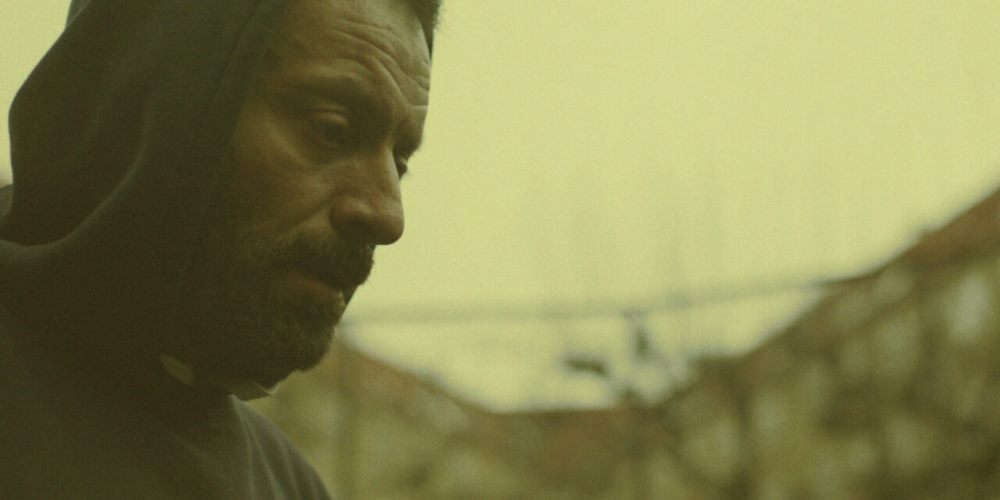
And I think we’ll receive more criticism in Denmark, similar to the criticism politicians directed at Berlinale this year, because we have selected a new film by Omar Shargawi, a Danish-Palestinian filmmaker. He is a controversial figure in Denmark, especially since he approached several journalists aggressively on the street about half a year ago, and that incident is in the film.
I’ve already had a very critical interview with Danish journalists about why we selected it. For me, it’s important to say that selecting a film, controversial or not, does not mean it is «the CPH:DOX viewpoint.» We programme around 200 films a year, which means 200 different perspectives, some of them opposed to each other.
Our role is to share different viewpoints and try to build bridges over the gaps between them. That feels more and more important. And yes, that is also a political act.
I’ve felt in the last few years that CPH:DOX has been more positive on these issues than some other festivals.
But with a film like the one you mentioned, and a figure who is controversial in Denmark for tangible reasons, how do you ensure the dialogue around that film actually happens in a constructive, safe, and open way?
One specific thing about CPH:DOX is that from the beginning, we haven’t only curated screenings. We curate debates.
Alongside the film programmers, we also have a team organising panels and debates, and here I’m not talking about our industry events, but our public programme of around 150 debates and panels around the screenings.
For the film Palestinian Unwanted, we will have several events. One is a debate with the director and the editor-in-chief of a major Danish newspaper, because the film is very much about Danish media representation of the war in Gaza – and their clash is part of what went viral. We’ve convinced them to meet on stage for the first time since that incident to discuss what happened and how dialogue is possible. We’re also arranging a broader panel bringing together editors-in-chief from different newspapers. It’s crucial to have a really good moderator. Both events will touch the Israel-Palestine issue because that’s where the real clash lies.
From a curatorial point of view, this is central to us, to try to build the bridge even when the conversation is contentious and difficult. Of course, we prepare for the possibility that the dialogue becomes confrontational in a way that makes the space unsafe. We have protocols and plans.
But the basic act of trying to build that bridge matters in an increasingly polarised atmosphere.
Building bridges and compromises is important. And in the liberal left world we exist in, it’s also important not to fall into constant reinforcement of our own ideas.
the basic act of trying to build that bridge matters in an increasingly polarised atmosphere.
Sometimes you look at programmes and wonder how different the viewpoints really are between participants and the majority of the audience. Does it become a forum for dialogue that can actually move things, or a kind of mutual back-patting?
When you’re receiving huge numbers of submissions, how many films come from filmmakers or production houses that are openly conservative, or representing a conservative viewpoint that doesn’t match what 95 percent of the audience might expect? Do those films even arrive at CPH:DOX, and what conversations do you have when they do?
You’re right that broadly, «liberal left» describes much of the documentary community, and that means deliberately conservative films representing the national conservative ideas that are winning politically at the moment do not appear in large numbers.
But I do think it’s important to curate a programme that also hears those voices. That can be inside the film programme. For example, during the first Trump administration, we curated a night of films made by Steve Bannon. I discovered during the election that he had produced many documentaries.
If you dive into that conservative world in the US, including podcasters, you notice a lot of them have had some involvement in film at some point. It’s interesting.
It was super interesting for us to present Bannon’s worldview to our audience, but curated properly, not just presented without context. We framed it with talks and opposing viewpoints.
Whether it’s a leftist pro-Palestinian filmmaker or a neoconservative filmmaker, presenting the work and discussing it can open your eyes to what they are saying. It doesn’t mean you have to agree.
For us, and especially now that we are not only a festival in Copenhagen but also a festival for people all over Denmark, that bridge matters. We arrange screenings in over 60 cities and towns. Bridging the gap between Copenhagen’s cultural elite and people in the countryside is extremely important.
And I truly believe we have a very important role, supporting documentary, supporting democracy, supporting basic rights, especially freedom of speech and artistic freedom. That means curating difficult questions and letting people meet each other even when they disagree.
If Denmark were to become an authoritarian regime, our role would be different. But that’s not the case now. In a democracy, continuing to uphold democratic dialogue is part of our role.
I’ve always felt that CPH:DOX has a stronger connection to the US documentary industry than some other European festivals do. With recent political friction between the US and Denmark, has that played into your curation or US representation? Any practical upheaval, politically or structurally?
Not really. We make a distinction between artists, filmmakers, ordinary people on one hand, and political elites on the other.
Even practically, visas or travel documents? I’ve heard from other festivals that some people have had trouble, or organisations that used to subsidise travel have been affected, especially during the Trump period.
No, not really.
On the broader level, our role is to put tensions on the agenda through curation. We are not a foreign policy actor. We are a film festival. Our response should be curatorial, not political slogans.
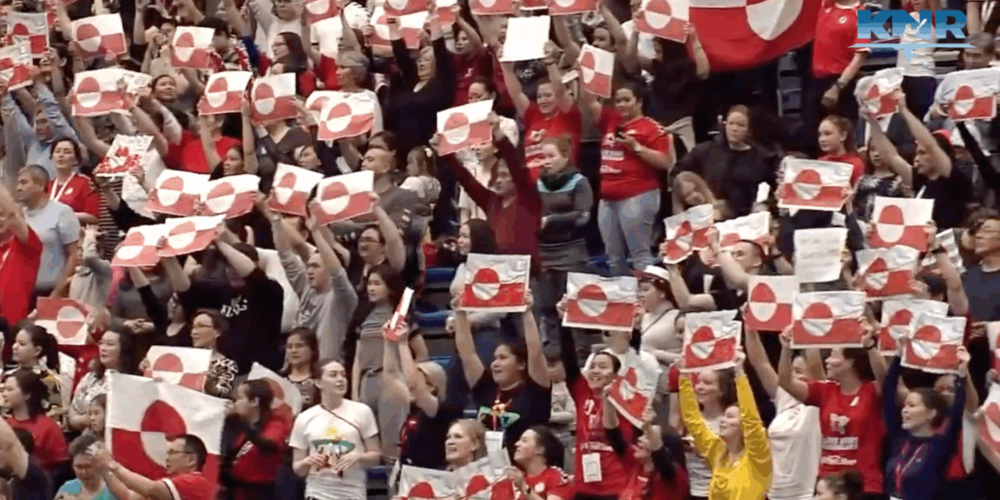
So you won’t see CPH:DOX waving the Greenlandic flag on social media. Instead, we screen a film about the Greenlandic flag and its history.
And yes, since we moved the festival dates from November to March in 2017, we’ve seen a growing relationship with the US sector, as it sits well between Sundance in January and Copenhagen in March.
We’ve always been interested in documentary as art, and also the more popular documentary, the kind that reaches wide audiences. That creates a natural tendency to look at American films across genres.
With growing tensions between the US and Europe, it becomes even more important that we are here as a festival where viewpoints can meet. I’m looking forward to welcoming many American filmmakers.
American documentary holds huge importance in the broader landscape. The vastness of US culture makes it impossible to overcompartmentalise. When media narratives homogenise things, you need context and information rather than agenda and reinforcement.
Personally, I got into documentary through episodic docs about American subcultures. That was my entry point.
Some of the best and most important Danish documentaries in the past 10 to 15 years have been made by American filmmakers within Danish production contexts. Joshua Oppenheimer is an example of someone who came into the Danish community and made hugely important films.
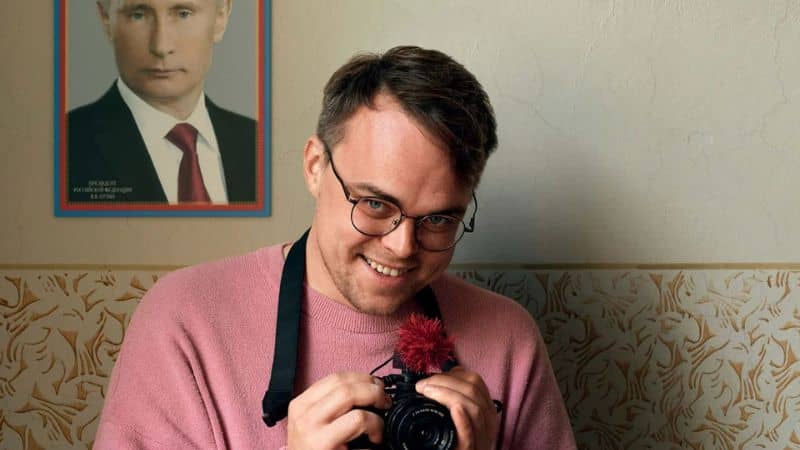
And this year’s Oscar-nominated Danish documentary, Mr Nobody Against Putin, is a Danish production by an American filmmaker. So the ties are strong.
I hope people come to CPH:DOX to be surprised by something they didn’t predict, to have their viewpoints questioned, and to leave with a new perspective on the world.
Think of the typical CPH:DOX audience member with no connection to the documentary industry. When you programme, what do you want that person to take away from the CPH:DOX experience?
No audience is braver than people who come to documentaries. Sometimes they don’t get enough credit.
I hope people come to CPH:DOX to be surprised by something they didn’t predict, to have their viewpoints questioned, and to leave with a new perspective on the world.
We’ve conducted two major external analyses in recent years in which we asked audiences about this, and the numbers are impressive. People change perspective. They learn things they didn’t know before.
That is the most important role of our festival, and I hope we can continue to serve audiences with surprises and worldview-changing films.