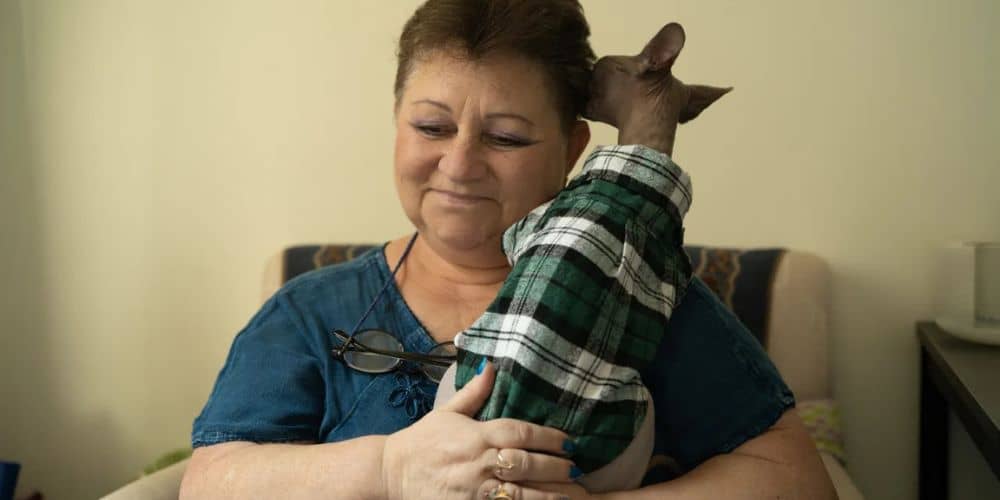
«All Is Well» – a mantra that people say to themselves to somehow survive another day and to bring consolation to the closest ones – is a returning motif in Petra Lataster-Czisch and Peter Lataster’s documentary observation of the Ukrainian #refugees in a Dutch city of Weesp that premieres at #IDFA. Repeated many times a day, on various occasions, and by different people, the three words exorcise the grave reality of sudden #displacement, severe stress, and fear for those who stayed behind, connected with the uncertainty of tomorrow. In this group picture of people of different ages and professions, from various backgrounds and places across the Ukrainian territory, one can still see glimpses of their former lives before the #war and the circumstances that led them to the shelter in the Netherlands. They might stay here for a few months before going somewhere else. Where? When exactly? Why? None truly knows what will happen next.
Dealing with the loss
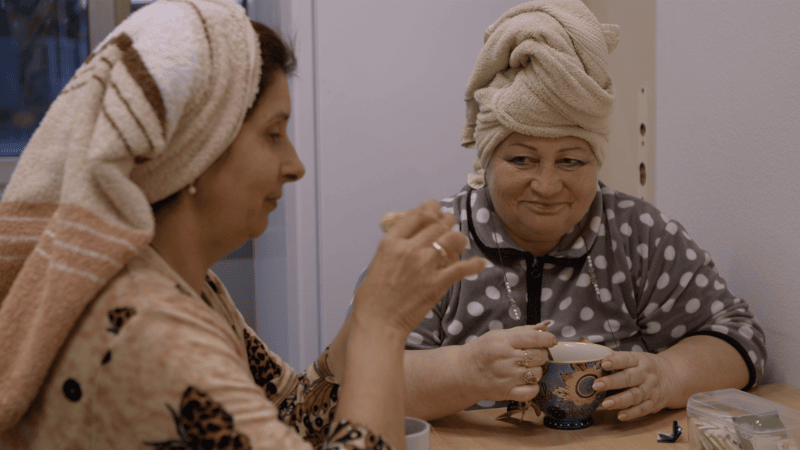
On many levels, All Is Well is a picture of various ways people deal with this uncertainty and the loss of a sense of rootedness. Some close themselves up, unwilling or unable to share their thoughts and emotions; others cry and suffer mood swings; others still devote their time and thoughts to work, cooking elaborate dishes, or painting their nails in different colours. All these means aim to recover their broken sense of normal life in reality, which, although friendly, is far away from the life they used to call their own.
Kyril and Danil – two 17-year-olds – came to the Netherlands to study just before they reached their 18th birthday, which is the age of obligatory military conscription in Ukraine. They both seem to feel the weight of the future on the front lines on their shoulders, as do so many other young boys departing the country and staying in the shelter temporarily.
This overview of the coping mechanisms in a situation of severe stress, uprootedness, and uncertainty gradually gives way to a panorama of impossible choices each of the characters faces in the turmoil of war.
Natasha, herself ill with #cancer, left her son with his family behind and remained in the Netherlands with her daughter. Having problems with mobility, she talks to people and follows the news, fearing what can happen to her son, his wife, and 16-year-old grandson, who stay in Ukraine and do not want to escape.
Zoia, who lost her son to war, spends hours in a kitchen, taking care of her son’s wife and his son. She starts a day by talking to her dead son’s picture and tries to convince her husband, who fights on the frontlines, to leave Ukraine after years of service. He often consoles her, saying that it is still not the time for him to leave the fight and that there are still many things to do in Ukraine.
This overview of the coping mechanisms in a situation of severe stress, uprootedness, and uncertainty gradually gives way to a panorama of impossible choices each of the characters faces in the turmoil of war. Youngsters leaving their parents to go to distant countries; mothers splitting with children to protect them; and fathers staying behind to fight. The choices are made by everyone regardless of their age – they are more or less conscious, more or less feared, and more or less regretted afterwards, but, as a result, they split families, endanger or secure safety (although it is not always clear which is which), and put to the test one’s whole life. We see these decisions in the individual stories of everyone in the Weesp’s shelter and wonder what their long-term consequences will be and for how long the people will have to suffer this havoc.
No safe choices
The multiple characters in All Is Well come and disappear, moving on, exchanging experiences, and spending little time together. They all compulsively watch the news and listen to various political discussions around Ukraine and Ukrainian immigration – they all want to go home. Their tears are not only for their individual stories but also for the enormous suffering of others around them and the whole world they spent their lives in, which now lies in ruins. Even if they go back and see their home miraculously standing still, it may change any minute as the showers of rockets and drones fly over incessantly. Those Ukrainians who stay live in danger of dying any minute; those who leave live in a void, traumatised by what is happening at home. There are no safe choices in this conundrum of the war that should have never happened, and All Is Well captures this reality in a discreet, light-toned, and unobtrusive way.