
After the death of Gadafi, #Libya became uncontrollable, and that has been the situation ever since. For Europe, that is a critical situation because of the ongoing migration from #Africa. For that reason, #Sahel has become a new focal point, especially #Agadez, the vast region in Niger bordering Libya to the south.
A new documentary, On the Border, looks inside at this wild desert area, twice the size of Germany and mainly inhabited by #Tuareg tribes. Libyan gangs are operating in the terrain, and forces from the #EU and #UN are trying to control the situation. The Europeans got into contact with the government of #Niger and, among other things, were promised to help stem the economic downturn resulting from this. The help seems to be coming, but it stays in the capital city of Niamey, leaving the locals in Agadez feeling totally abandoned.

Draconian laws
The film takes us around breathtaking landscapes where daily life is dire. For ages, the Tuareg have been making a living by transporting goods through the desert, but the tense situation in the whole Sahel region has left them with little alternative. Transporting migrants to an unknown future in Europe became a business, and that has dried up with the new draconian laws that came with the European influence in the region. Transporting people without an ID, as is often the case with migrants, is punishable with up to 25 years in prison, and the Europeans offer no compensation.
As is often the case with programs like that, the effort focuses on new and more security measures. From a distance, you can see the modern bases of the foreign forces and watch the drones pass by in the sky.
The film takes us around breathtaking landscapes where daily life is dire.
This is the trap local populations often find themselves in when these aid programs enter developing countries. It looks nice on the outside, but at the end of the day, it is mostly about Western self-interest. One proud Tuareg who was taking the film crew around explains that the situation forces the locals to bypass the #surveillance systems because smuggling people has become a way of life, exactly like the transportation of illegal drugs and weapons.
A human bomb
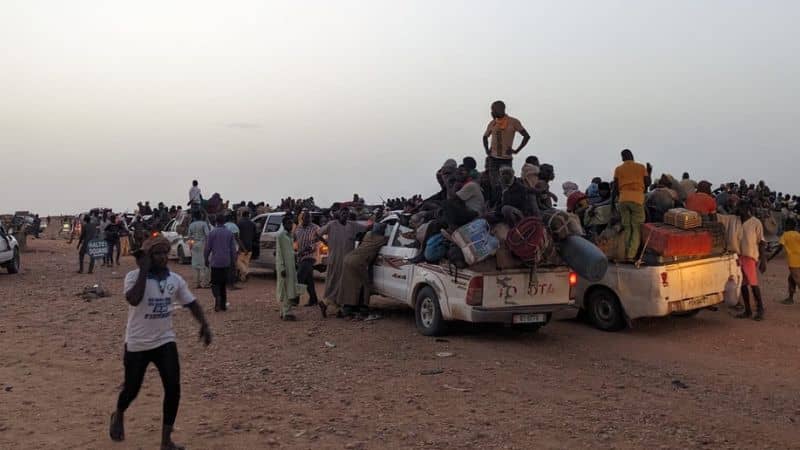
The documentary offers fascinating and scary pictures from a desert meeting point, where a convoy with armed guards picks up migrants on their way to the Libyan border. Everything seems to be well organised and, of course, illegal, according to the regime and its European backers. An unnamed person in the mayor’s office explains, that 60 percent of the population are younger than 15, and their only expectation from life is unemployment. This is a human bomb, and if the Europeans want to stop the migration-related economy, they will have to pay up. They created the bomb, and the only future lies in mutual exchange.
Over a period of five years, this amazingly important film follows the daily struggles of three townspeople against social and political injustice. It is a sensitive portrait of the city of Tuarag at the crossroads of cultures, revealing the failure of the pact with Europe. It goes deeply into the daily matters and thoughts of the people in the middle of this cultural breakup. One person tells about family members who have already moved to Europe in search of a better future and a secure life with a paycheck at the end of each month. This is a deep dilemma for a lot of people, seeing the migrants passing by, but he has chosen to stay and face the problems at home. #Nomadism is a way of life and a deeply rooted tradition that you will not find anywhere else. You do not have the vast expanses in Europe, where borders are a natural part of your existence. Here borders seem unnatural, people are on the move as a natural thing, and now you try to stop them by turning Niger into a European border station.
Until 2023, Agadez was the European Union’s security anchor in West Africa. From here, migration flows were monitored, and police and border guards were trained. A virtual border ensured that only a few migrants were allowed to cross from Agadez to the Mediterranean. For a long time, the locals accepted the invasion of Western wishes because, in return, the citizens were promised that youth #unemployment, #crime, and #corruption would be tackled. Nothing has materialised, and instead, the tragedy is unfolding.
In 2023 and 2024, the junta decided to expel the Europeans and internationals. The corrupt government took over responsibilities by destroying what the Europeans did not destroy before them. There is no tourism anymore, and nobody thinks of the natural riches in the underground that could save this impoverished country. This strong film is a testimony to the wrongs created by European powers to stop the African migration. It closes with symbolic pictures of discarded plastic bags and leftovers from the Europeans flying in the desert wind and polluting the pristine town of the Tuareg people. The plastic is stronger than me, says one of them. A strong message.