We are just about to forget that it was only two and a half years ago the world closed down in a baffled reaction to a new world threat. The #covid-19 pandemic took us off guard. Lockdown and isolation seemed to be the only correct measures to take; however, Sweden decided to go for another strategy. Sweden was the only country that never closed down its primary schools throughout the pandemic, and they also let the restaurants and the bars run as usual. Their laissez-faire approach received enormous attention worldwide as no other state dared to gamble with the lives of its citizens in such an experimental manner.
Backstage
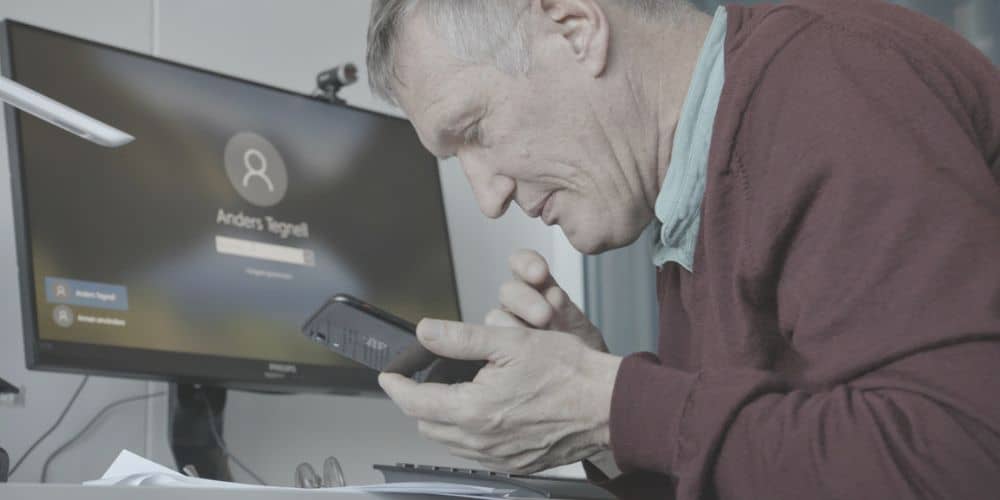
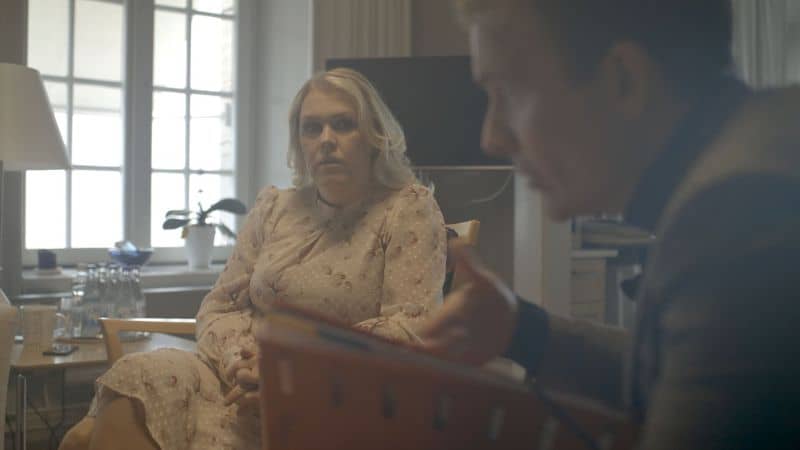
Viktor Nordenskiöld takes us backstage at how this strategy, or what appears to be a lack of strategy, came to be. What makes Behind the Swedish Model unique is that Nordenskiöld secured exclusive access to the main players, #Anders Tegnell#, the state epidemiologist and #Lena Hallengren#, the Health Minister of Sweden. He follows them from the very beginning of the outbreak in January 2020 to what appears to be the end of that crucial year.
What I can’t make out throughout the film is Nordenskiöld’s point of view on the Swedish corona strategy. This makes me feel that the film is first and foremost interesting for the Swedish public, who knows the outplay of their policies. But, unfortunately, it can be difficult for the rest of us to follow the film with the same engagement from the beginning to the end.
What does become apparent is that the government relied heavily on the recommendations done by one person alone, Anders Tegnell. In this aspect, the decision-making process resembles #feudalism more than #democracy. Government officials are more preoccupied with correct political appearance than protecting their most vulnerable citizens. #Ann Linde#, the Minister of Foreign Affairs, is first and foremost busy keeping Sweden’s reputation untarnished.
What does become apparent is that the government relied heavily on the recommendations done by one person alone…
The Health Minister, Lena Hallengren, is impressive in her presence, wearing high pumps and elegant dresses. She knows how to avert criticism with dignity and posture as a professional politician. This becomes increasingly important as she works in the line of fire when the corona strategy fails to show a positive outcome. What is rather unsettling is that Hallengren is not making any decisions; she is merely approving Anders Tegnell’s recommendations despite growing unease among herself and her staff members. The first and only confrontation took place when the corona deaths reached a new height in November 2020. Hallengren asks Tegnell if he would call this «the second wave», to which Tegnell answers with a confident no. The Health Minister, rather dumbfounded, responds that if he calls it the second wave when referring to Europe, it must be alright to call it a second wave when referring to Sweden!
At this point, the government imposed restrictions such as reducing gatherings to eight people. However, Tegnell does not play along. When he announces on public television that people should wear face masks, he quickly adds that such measurements have little effect.
Maybe this is what Nordenskiöld wanted to reveal. Rather than providing us with answers, he instead opens up the discussion if so many lives should rely on the recommendation of one expert only. The politicians and civil servants often claim throughout the film that there was no one strategy and that decisions were made due to an ongoing discussion. However, we never see anyone discussing alternative approaches throughout the film.
Other sources
Behind the Swedish Model does not give us any final assessments of the Swedish corona policies. We have to look at other sources for that kind of information. Reports show that Sweden did not do poorly compared to the rest of Europe regarding the death rate per capita. This could indicate that the lockdowns, face masks, and mass testing was, in fact, ineffective measures. On the other hand, several factors playing in such evaluations hardly translate into numbers. The findings are rather alarming when we compare the Swedish result to their Scandinavian neighbours. During the second wave, Sweden had ten times higher deaths per capita than Norway.
Recent studies published by British researchers indicate that if Sweden had adopted a lockdown like the Danish, it could have reduced its death rate by 78%. A Corona Commission appointed by the Swedish government, however, claimed that their overall policies had been good for society. Still, they agreed that the Public Health Agency had failed to protect the elderly.
Behind the Swedish Model feels like a feature-length reportage lacking commentary rather than a documentary film. I don’t mind the reportage-style cinematography as it suits its mission. What I see as a weakness is that the director relies heavily on the film score, brilliantly done by Martin Landquist, to set up the dramatic line in the film. I feel this covers up deficiencies in the editing process as the film lacks a dramaturgic build-up and some clear punch lines.